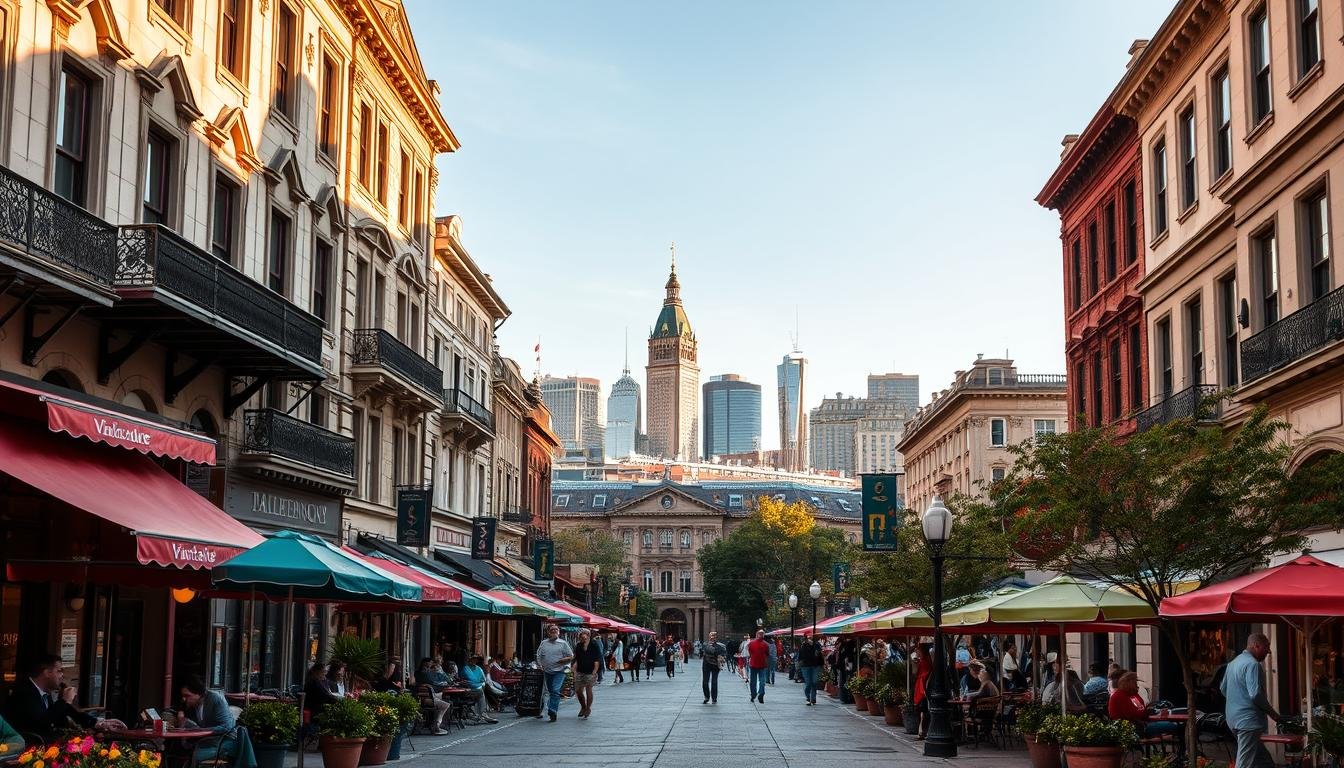
Welcome to an inviting look at Columbus Park, a neighborhood with a warm Little Italy legacy and lively streets. This introduction sets a friendly tone and shows what to expect as you explore local food, community hubs, and everyday life in the area.
The neighborhood grew from waves of Italian immigration starting in the 1860s, with many settlers from Sicily who built family businesses and parish life around Holy Rosary.
By mid-century, road shifts and the I-35 corridor changed blocks and led to the official name change to Columbus Park in 1967. Community anchors like Don Bosco and Garrison still matter today.
Food and gatherings keep the area lively: beloved spots serve savory spiedini and sugo, farm-forward brunch, and bold coffee tied to local advocacy. Expect brick streetscapes, multi-generational warmth, and easy visits from nearby downtown and River Market.
This article gives beginners a clear, upbeat map for a morning, afternoon, or weekend in this historic neighborhood.
Key Takeaways
- Columbus Park blends Sicilian roots with modern neighborhood life.
- Holy Rosary and Don Bosco shaped local community support.
- Dining highlights include classic Italian dishes and fresh brunch spots.
- Mid-century highway work reshaped the area’s layout and access.
- The neighborhood offers easy trips from downtown and the River Market.
Welcome to Columbus Park: A Beginner’s Guide to the North End next to River Market
Tucked just north of Independence Avenue, this compact neighborhood sits beside the river market but is cut off by Missouri Route 9. The close rails and highways make the setting gritty, yet the area keeps a clear, independent beat.
First‑time visitors often notice a calm, quirky vibe. Murals, cozy cafés, and small businesses give the side of town a creative edge that feels lived‑in rather than polished.
- Walkable loop: Park once and stroll a few blocks for coffee, a bite, and quick stops.
- Look for landmarks: Community gardens and pocket greens offer pleasant pauses.
- Bring a camera: Textures and signage make for photogenic streetscapes.
Think of this part of kansas city as the laid‑back counterpart to its flashier neighbor. Take your time, follow your curiosity, and you’ll find a favorite corner of town that feels like a small, steady discovery.
From North End to “Columbus Park”: Little Italy roots, resilience, and change
Many early families read the neighborhood like a map of work, worship, and shared meals. The North End grew as Sicilian newcomers arrived in the 1860s, drawn to meatpacking, the River Market, and garment jobs nearby.
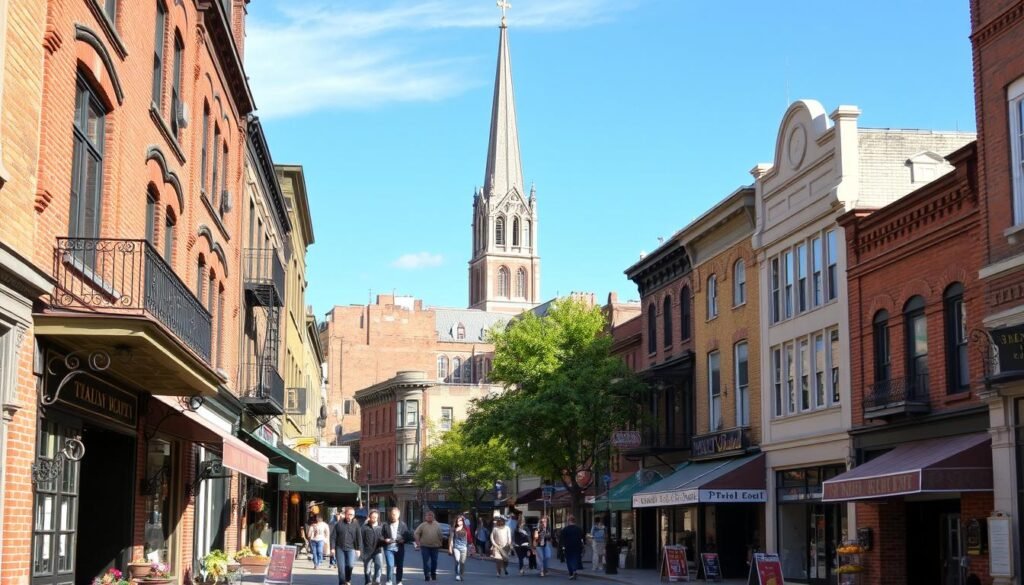
Daily life clustered around family-run stores and corner hubs inside tight blocks of brick buildings. Children split time between school and helping at home, and elders kept traditions alive through neighborhood routines.
Immigration, faith, and local anchors
Holy Rosary became the parish heart by 1890. After the original church burned on Easter 1903, the congregation rebuilt that year at Missouri Avenue and Campbell.
“The rebuilt church and its bells have long marked both sorrow and celebration for local families.”
Don Bosco and practical support
The Don Bosco Community Center opened in 1940 across from Holy Rosary. It offered basketball, sewing, and boxing—programs that helped newcomers find friends and skills.
Roads, change, and a new name
Mid-century highway work reshaped the area when the Sixth Street Trafficway moved toward I-35 and cut parts of the neighborhood. Residents adapted and, in April 1967, the area officially took the name Columbus Park.
- Italian immigration shaped the North End’s population and pace.
- Holy Rosary served as a cultural and spiritual anchor through wars and celebrations.
- Community spaces like Don Bosco eased integration and built local resilience.
Where to eat and drink in Columbus Park Kansas City
Start your food tour where old-school signage meets homemade recipes and a soundtrack that feels like another era. The neighborhood serves classic Italian staples, farm-forward brunch, and bold coffee in tight, walkable blocks.
Garozzo’s Ristorante
Garozzo’s opened in 1989 and is famed for its Chicken Spiedini, house-made sugo, and Garozzo Cellars wines. Reserve ahead, soak up 1940s–50s music, and watch the green-white-red sign declare a beloved, family-run staple.
Happy Gillis
Since 2013, Happy Gillis champions local farms with brunch menus served in signature ceramics and fresh flowers. It also hosts neighborhood happenings like the Columbus Park Art Crawl on third Fridays and occasional beer dinners.
Café Cà Phê and nearby flavors
Café Cà Phê is launching a brick-and-mortar with a bold dragon mural and a focus on Vietnamese coffee drinks. Founder Jackie Nguyen has led AAPI advocacy and partnered with peers during the pandemic to fund repairs and support the local community.
Quick tips
- Start at Garozzo’s for spiedini, then loop to Happy Gillis for brunch or an Art Crawl sip.
- Drop by Café Cà Phê for a mural photo and strong coffee before heading to the River Market for dessert.
- These spots welcome families and feel like corners of a single, friendly neighborhood space.
Community spaces, parks, and things to do
From a century-old field house to a grassroots skatepark, this area offers hands-on experiences for all ages.
Garrison Community Center: a historic hub for wellness and connection
The Garrison Community Center began in 1914 as the Garrison Field House, designed by Adriance Van Brunt & Co.
Named for abolitionist William Lloyd Garrison, it still serves the public as a weekday heating and cooling center, open 8 a.m.–5 p.m.
The center offers low-cost adult passes and free youth boxing classes, creating an approachable center for fitness and skill-building.
Harrison Street DIY Skatepark: grassroots creativity and what’s next under Buck O’Neil Bridge
The Harrison Street DIY Skatepark started in 2014 when skaters reclaimed a 12,000-square-foot lot and turned a neglected corner into a lively creative space.
Development pressures could level the site, but city leaders and partners — including Councilman Eric Bunch and Burns & McDonnell — are working on supplies and plans to move the park under the Buck O’Neil Bridge on the west side of the river corridor.
“What started as a scrappy project shows how persistent neighbors protect places where young people learn and belong.”
Columbus Square park and East Bottoms neighbors
Columbus Square park offers shaded sidewalks and a quiet spot to rest between stops.
Venture east to the East Bottoms for experiences at J. Rieger & Co. or live shows at Knuckleheads, then return to the local loop.
- Drop into the Garrison Community Center to see history in active use and to cool off or warm up.
- The skatepark is a model of neighborhood pride and may find a new home beneath the Buck O’Neil Bridge.
- These community spaces show the area’s heart, where neighbors meet, learn, and relax.
Whether you visit solo or with friends, these stops add variety to a short itinerary. They reveal how public places shape daily life in columbus park, kansas city and help newcomers feel welcome in the neighborhood.
Homes, architecture, and the neighborhood vibe
Sturdy rowhouses and narrow flats give the area a lived‑in look that reflects decades of family life.
Brick buildings, split-level flats, and multi-generational roots
Many streets showcase sturdy brick façades and compact flats. These buildings hint at the neighborhood’s long history and practical design.
Older multifamily homes sit next to single-family houses. You can still spot porches and stoops where neighbors pause to talk.
Families often shared tight quarters in earlier decades. Some accounts recall relatives sleeping on balconies to stay cool before air conditioning.
That history gives the streets a calm, layered rhythm today. Weathered signage, simple trim, and mixed-use blocks keep a consistent visual identity.
- Sturdy brick exteriors and compact flats reveal the area’s roots.
- Multi-generational living shaped daily routines and neighborly ties.
- Architectural details reward slow, unhurried walks and photos.
Columbus Park still feels like a place where people make a home and look out for one another.
Getting around: river, rail, and the routes that shape the area
The junction of water and rail shaped both industry and the small blocks where neighbors meet. Historic maps show levees, jetties, and rail lines that guided early growth and still influence movement today.
Missouri River edges, Kaw Point, and the East/West Bottoms context
The Missouri River frames the story of this land. A 1924 aerial revision map highlights levees, creeks, and Goose Island, plus Kaw Point where the Kansas and Missouri rivers meet.
That junction anchors the east and west Bottoms, linking industrial roots with bridges and riverside views.
Missouri Route 9, proximity to downtown, and River Market connections
Missouri Route 9 creates a clear edge between the neighborhood and the river market, making the market a quick hop for farmers and events.
If you drive, expect easy access from I-35 and nearby arterials—mid‑century construction shaped these practical routes.
Walkers and cyclists benefit from a compact grid that strings green spaces, cafés, and photo spots into a short loop.
- Rail lines and overpasses add texture and occasional framed views of industrial and residential space.
- The mix of river engineering and tracks shows how transport shaped the area, and how people still move through it.
Living in the neighborhood today
This side of town balances quiet weekday rhythms with regular community gatherings and local creativity.
Day to day, columbus park blends heritage with fresh energy. Longtime residents and newcomers back small businesses, events, and spots that feel like home.
Housing ranges from older multifamily homes to modest single-family houses. The mix suits people who want character and easy access to downtown kansas city.
Community pride shows in simple gestures: neighbors greeting each other, cafés hosting art nights, and families grabbing weekend brunch close to their door.
Local anchors like the Garrison Community Center add stability. Projects such as the Harrison Street DIY Skatepark show how public space can adapt, and monthly art crawls keep the area lively.
- Easy walks link quiet streets to the River Market and transit.
- Newcomers often become regulars at corner cafés and shops.
Living here makes it simple to split time between calm blocks and nearby destinations, and to plug into a warm, welcoming neighborhood at your own pace.
Conclusion
,Take one last walk through this neighborhood to feel its living history and present warmth.
The North End’s 19th‑century arrival of Sicilian families set a durable tone. Holy Rosary, rebuilt in 1903, still rings as a neighborhood anchor. The Don Bosco community center continued that support after 1940.
Mid‑century construction, including the Sixth Street Trafficway toward I‑35, reshaped the land and defined new edges. An April 1967 vote gave the area the name Columbus Park, and its buildings and corners kept working for residents.
This article aimed to map essentials for a visit: where to eat, where to pause, and how local history meets today’s small businesses. Take your time here. Look up. Every corner has a story that makes this town feel like home.
Leave a Reply