
Kansas City sits on two major migration flyways, placing this metro in the path of huge spring and fall movements. Spring peaks in early May, while fall runs from mid-August through November. This guide gives clear, actionable information to plan outings across the year.
Expect dozens to hundreds of birds during migration seasons. Local clubs and agencies support beginners and vets alike, and several lakes, parks, and refuges consistently deliver great views. Use this short guide to map top spots, time your trips around the spring fall windows, and add simple gear and app tips for a successful outdoor adventure.
Key Takeaways
- KC lies on the Mississippi and Central Flyways, so migration numbers can be high.
- Plan for a spring peak in early May and a fall window from August to November.
- Top metro sites include lakes, wetlands, and prairie patches near the urban area.
- Local groups and state conservation programs offer events and support.
- Bring binoculars and apps like Merlin or Audubon for better sightings.
- Follow ethical field practices to protect habitats for seasons to come.
Why Kansas City Is a Migration Hotspot Right Now
Two major migration highways slice through the metro, concentrating spring and fall arrivals into local green corridors. These flyways force migrants to funnel through riparian zones, woodlands, prairies, and wetlands that act as essential refueling stops.
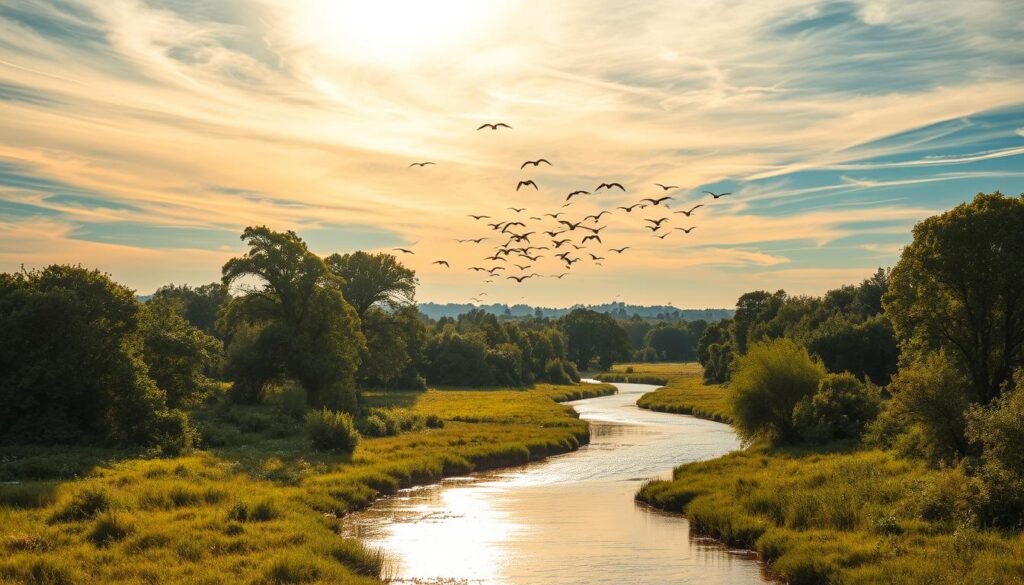
Peak spring passage hits the first week of May. The full spring window runs from mid-April to mid-June. Autumn movement extends from mid-August through mid-November.
Along the Missouri River corridor, wooded bluffs and marsh edges host warblers, thrushes, raptors, and waterbirds. Nearby national wildlife refuges and state parks boost stopover quality and species counts.
- Plan early-morning visits; timing matters for active sightings.
- Community conservation efforts, including the state-led May 1–15 competition, raise awareness and protect habitat.
- Use tools like BirdCast to predict nightly arrivals and choose the best sites.
| Season | Primary Habitats | What to Expect |
|---|---|---|
| Spring | Riparian corridors, woodlands, prairies | Wave arrivals, warblers, thrushes, early raptor passage |
| Summer | Breeding fields, forest edges | Resident species, territorial songbirds |
| Fall | River flocks, wetlands, urban parks | Extended movement, waterbirds, raptor kettles |
Top places for bird watching kansas city locals love
From large reservoirs to small prairie remnants, these areas deliver reliable sightings for short trips or full-day outings.
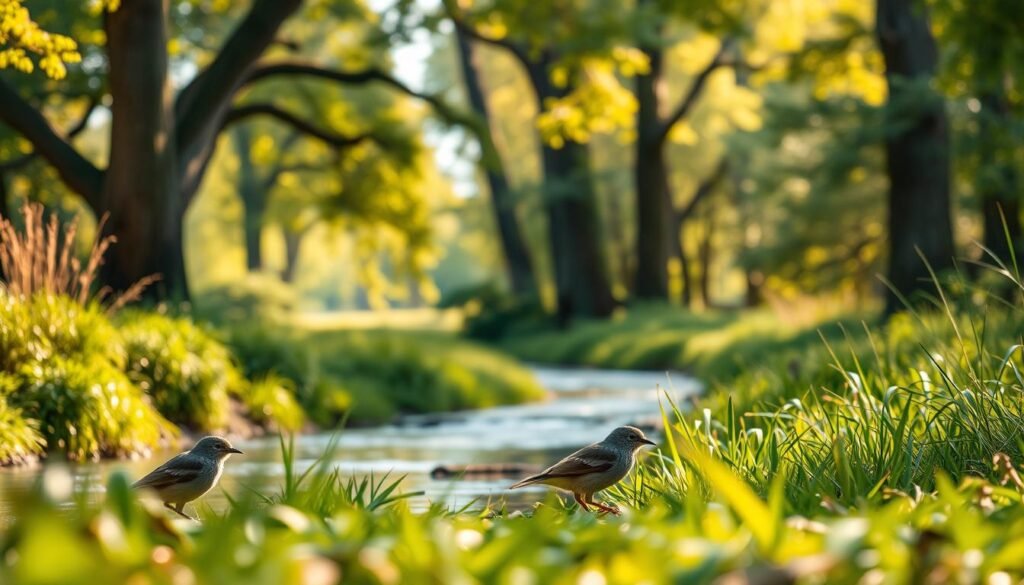
Smithville Lake
Nearly 7,200 acres of open water attract pelicans, loons, cormorants, swans, and winter scoters. Scan from multiple access points with steady binoculars for distant waterfowl.
Blue Springs Lake Wetland
Below the dam at Lake Ridge Rd., this wetland shines in winter. Expect grebes, hooded mergansers, nesting wood ducks, and raptors along the edges.
Jerry Smith Park
The metro’s largest remnant prairie supports buntings, dickcissels, and summer tanagers. Controlled burns keep wildflowers and grassland species healthy.
Weston Bend State Park
Missouri River overlooks and forested trails are prime for warblers, tanagers, and cuckoos during migration.
Other top spots
Prairie Center and Kill Creek Park offer open fields and mixed habitats for scissor-tailed flycatchers and meadowlarks. Tomahawk Park is an urban magnet—arrive early to beat heavy visitor traffic.
“Pack binoculars, layer clothing, and plan short walks between habitats to maximize species counts.”
Nearby refuges and sanctuaries expand your options for waterbird concentrations and varied wildlife beyond the metro area.
Best seasons, habitats, and target species across the metro
Each season brings a distinct mix of habitats and target species across the metro area.
Spring and fall migration peaks
Spring peaks in the first week of May, with movement from mid-April to mid-June. Warblers, thrushes, and vireos stack up in wooded habitat along the Missouri River and mature parks.
During fall, movements stretch from mid-August to mid-November. Sparrows and thrushes use brushy edges while raptors soar on afternoon thermals.
Winter on open water
Winter birding improves where water stays open. Wyandotte County Lake and large reservoirs like Smithville Lake can concentrate swans, diving ducks, scoters, and rare gulls after cold snaps.
Summer breeding season
Summer is prime for breeding behavior. Look in prairies and mixed forests for buntings, dickcissels, meadowlarks, tanagers, woodpeckers, and flycatchers.
“Mix habitats—lake margins, riparian woods, and adjacent fields—to build a larger list and see more variety.”
| Season | Key habitat | Target species | Best time |
|---|---|---|---|
| Spring | Riparian woods, parks | Warblers, thrushes, vireos | First week of May |
| Summer | Prairies, mixed forest | Buntings, tanagers, woodpeckers | June–July mornings |
| Winter | Open water, reservoirs | Swans, diving ducks, gulls | After cold snaps |
Plan your birding adventure: gear, apps, and local communities
A little prep goes a long way. Choose the right optics, load a couple of apps, and tap local groups to make outings more productive and fun.
Binocular basics — 8x to 10x for comfort and clarity
Pick 8x–10x magnification for stable views. Expect to spend about $200–$300 for optics that cut eye strain and last for years.
Look for brands with refurbish and repair services to extend gear life.
Smart tools — Merlin, Audubon Bird Guide, and BirdCast
Use Merlin for sound and photo ID and the Audubon Bird Guide for geolocated logs. BirdCast helps time trips by forecasting nightly migration.
Clubs, walks, and counts — join local groups and events
- Pick up MDC’s free “Enjoying Missouri’s Birds” at Anita B. Gorman or James A. Reed for concise field information.
- Join Burroughs Audubon Society, Jayhawk Audubon, or the Missouri River Bird Observatory for guided walks.
- Mark GBBC, Global Big Day, and the state May 1–15 competition on your calendar for goal-driven days outdoors.
| Item | Why it helps | Where to use it |
|---|---|---|
| 8x–10x binoculars | Clear views with less shake; reduces eye fatigue | Parks, wetlands, reservoirs |
| Merlin & Audubon apps | Fast ID by sound/photo; keep a running list | Field ID, backyard checks, post-trip review |
| BirdCast forecasts | Plan dawn patrols and prime migration time | Nightly checks before early-morning outings |
“Create a simple routine: check forecasts, pack optics, pick a target habitat, and record dates to learn patterns.”
Conclusion
From large reservoirs to small prairies, this area yields fresh sightings year-round.,
Kansas City sits on two major flyways and links metro parks with refuges like Loess Bluffs and Marais des Cygnes. Prime windows run mid-April to mid-June and mid-August through mid-November, while winter water checks and summer fields add reliable options.
Use simple gear and local groups — Merlin, the Audubon Society, and state events — to deepen skills and find new locations. Stay curious, respect habitat closures, and pair a big lake with nearby woods or prairie to boost your list and enjoy more varied species and sightings across the year.
Leave a Reply