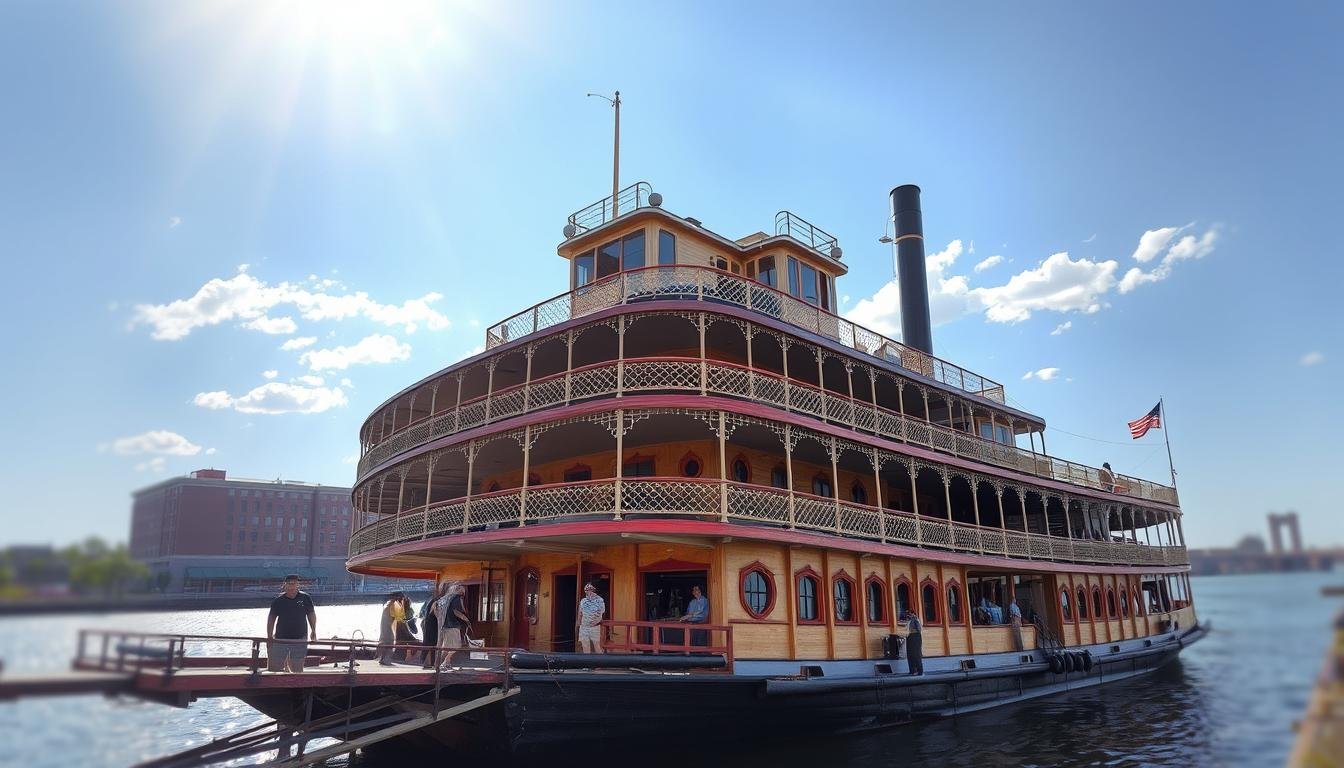
Step into a rare time capsule housed in Kansas City’s River Market. This 30,000-square-foot space showcases 200 tons of cargo salvaged from a sunken 1856 vessel. The collection forms one of the largest single groups of pre-Civil War artifacts left intact.
Visitors begin with short intro films that set the scene. Those brief videos explain the river snag, the rescue effort, and the social life tied to the cargo. Then you move through exhibits, an open preservation lab, and a full-scale 171-foot main deck walk-through.
Expect to see original boilers, an engine, anchor pieces, a mule skeleton, a six-ton stern, and a reconstructed paddle wheel. Staff and interpretive media make the complex history clear and engaging for all ages. Take your time; close looking rewards you with stories of frontier commerce and daily life.
Key Takeaways
- Experience an authentic collection that brings 1856 to life.
- Short films prepare visitors for the exhibits and context.
- The open lab and deck walk-through highlight real engineering and artifacts.
- Staff interpretation makes the story accessible for families and learners.
- Allow extra time to explore both small items and large industrial pieces.
Why the Arabia Steamboat Museum Matters Today
A rare collection from 1856 turns abstract dates into vivid, everyday stories for curious visitors.
A perfectly preserved window into frontier life
The recovered items offer a clear snapshot of how people lived, worked, and traded. Everyday objects and cargo reveal routines, needs, and the innovations of the 1850s.
Curiosity here pays off. Intro films, labels, and friendly staff connect excavation efforts to conservation work. Visitors often note the strong storytelling and thoughtful displays.
- Preservation efforts: Decades of care keep materials stable for study.
- Hands-on learning: Items and cargo become touchpoints for deeper history.
- Why it matters today: The collection links past supply chains and travel to modern questions about commerce and technology.
| What to notice | Why it matters | Visitor tip |
|---|---|---|
| Everyday objects | Show daily routines | Compare similar items |
| Cargo labels | Reveal trade networks | Read captions slowly |
| Conservation lab | Illustrates preservation | Ask staff about techniques |
arabia steamboat museum
Set in Kansas City’s lively River Market, this institution preserves one of the largest pre‑Civil War cargo collections recovered from the Missouri River.
The site opened on November 13, 1991, and has evolved over the years with ongoing conservation and updated exhibition work. It balances public galleries and an open lab so visitors can watch preservation in action.
Location: River Market, Kansas City, Missouri
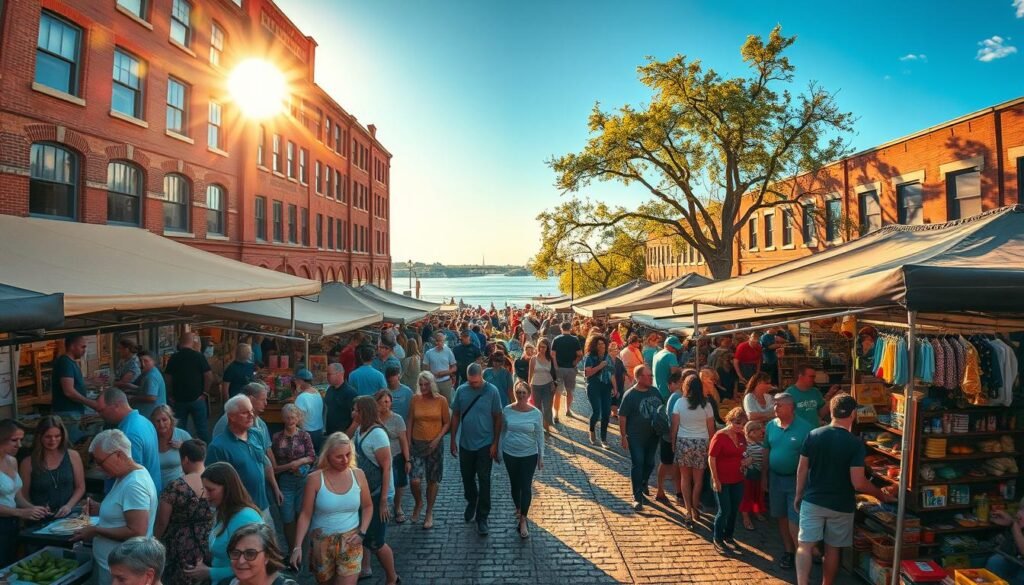
The facility sits in the River Market district, a central hub with shops and dining. Its spot near the Missouri River explains how shifting channels hid the wreck for more than a century.
Established in 1991 and still evolving in the present
The display presents material culture from the steamboat arabia and its contemporaries, firmly placing finds into regional history. Visitor flow begins with short films, moves through curated exhibits and the preservation lab, and finishes on a reconstructed main deck walk‑through.
The breadth of items ranges from textiles and tools to machinery and preserved foods, so both casual visitors and specialists find value. Check the official site before you go for current exhibition notes or temporary additions. Combining a visit with other River Market and downtown attractions makes for an easy, rewarding day out.
| Feature | What to expect | Visitor tip |
|---|---|---|
| Opening year | 1991 — continuous growth | Note special exhibits on the calendar |
| Location | River Market, near the Missouri River | Pair with local dining and shops |
| Exhibit flow | Intro films → galleries → open lab → deck walk | Watch films first for context |
| Collection | Textiles, tools, machinery, preserved foods | Take time to read labels and compare items |
The 1856 Sinking on the Missouri River
A hidden tree trunk pierced the wooden hull on September 5, 1856, and the vessel foundered within minutes. The incident happened on the Missouri River during the busy steam era, when submerged snags were a common and deadly hazard.
From snag to sinking: how it happened
The submerged snag ripped a hole in the hull, forcing a rapid sinking that left no time for the craft’s structure to be saved.
All 130 passengers survived, but valuable cargo—an estimated 220 tons meant for frontier towns—was swept away by powerful currents.
Passengers, cargo, and the river’s changing course
Rather than a simple wreck, the event became part of regional history. Within a few months the Missouri River shifted course.
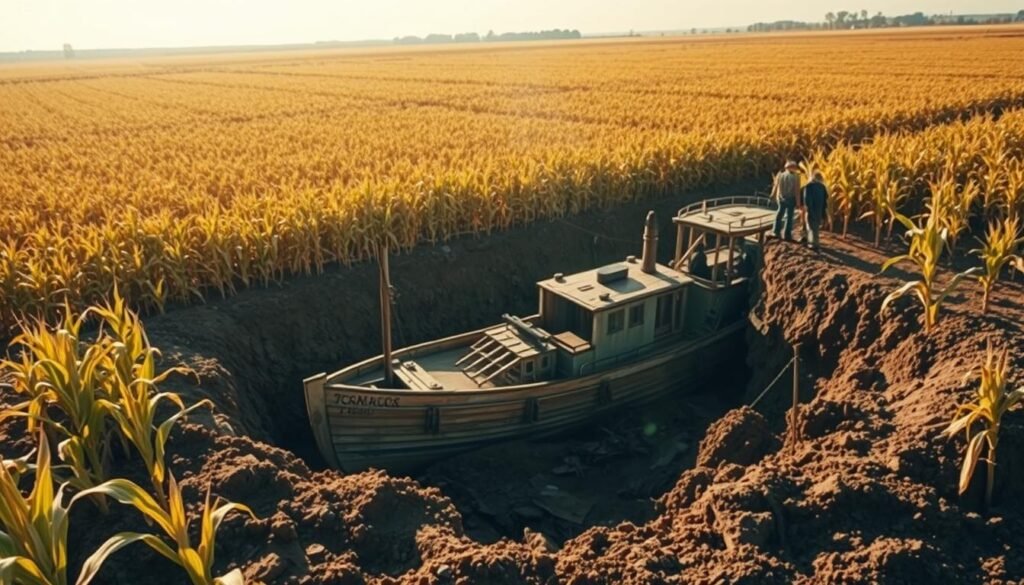
The channel moved off its original bed, leaving the wreck trapped inland and eventually buried beneath a Kansas cornfield.
Buried for 132 years: preservation beneath sediment
Over the following years, layers of silt sealed the site in low-oxygen conditions. That sediment slowed decay and preserved wood, metals, and goods.
The story shifts from disaster to discovery: what began as loss turned into a time capsule. The museum frames the event as the start of a preservation journey, and visitors can still see original boilers and structural components to appreciate the scale and power of a working steamboat.
| Fact | Impact then | What to look for now |
|---|---|---|
| Snag puncture | Rapid sinking, hull failure | Exposed hull parts and iron fittings |
| 220 tons of cargo | Loss for 16 frontier towns | Packed goods and trade items on display |
| River shifted course | Wreck left inland | Site buried under farmland for 132 years |
| Sediment preservation | Low-oxygen storage | Well-preserved wood, leather, and metal |
Discovery and Excavation: From Cornfield to Museum
When the Hawley family and partners lifted the first crate, they realized a remarkable story lay buried beneath the corn.
The site was located in 1988 and excavated from November 1988 to February 1989. Local permission and careful research let the team work on private land.
The Hawley family and River Salvage Inc.
David, Greg, and Bob Hawley joined Jerry Mackey and David Lutrell under River Salvage Inc. Their persistence turned a hunch into a long project.
Unearthing 200 tons of cargo with perseverance
The excavation used pumps, heavy equipment, and delicate hand tools. Workers faced mud, ice, and tight timelines to protect fragile artifacts.
About 200 tons of cargo came up in crates and timbers. Stabilizing each item on the spot was critical.
From treasure hunters to historians
A turning point came when the team chose stewardship over sale. They planned a public institution and began long-term conservation efforts that continue today.
Archival footage and films that bring the dig to life
Archival clips from the dig play in the galleries. Ask staff about scenes you see; they link the gritty work to the founding of the museum.
Inside the Collection: Thousands of Artifacts, One Time Capsule
Walking the galleries, you encounter shipments that never reached frontier storefronts—still labeled and ready to sell.
The display contains thousands of artifacts that map everyday life in 1856. Textiles, cookware, metal hardware, tools, and preserved food sit in cases as if waiting for buyers.
Everyday life objects
Compare similar pieces to see small differences in craft and use. Rows of goods show the choices store owners offered to new towns.
Highlights to look for
- Footwear wall: 4,000+ boots and shoes that stunned researchers.
- 247 hats, 235 ax heads, 328 pocket knives, and 29 jars of pickles.
- Metal goods and tools that helped build farms and towns.
“An Aladdin’s cave of objects from the year 1856.”
| Category | Count | Why it matters |
|---|---|---|
| Boots & shoes | 4,000+ | Shows supply for frontier families and workers |
| Hats & accessories | 247 | Indicates styles and trade demand |
| Tools & metal goods | Multiple types (ax heads, knives) | Foundation for agriculture and building |
| Preserved food | Jars and tins (29 pickles noted) | Reveals diet, packaging, and trade links |
Think of the collection as a time capsule: items frozen at one moment, preserved by low‑oxygen burial, and now decoded by clear labels and displays. Return after the films and deck walk—context makes small details jump out.
Preservation in Action: The Lab and the Process
In the lab, conservators move slowly and deliberately to turn waterlogged relics into stable, viewable artifacts.
Step one: organic wood and leather are soaked in baths of polyethylene glycol (PEG).
Conservators replace water molecules with PEG to stop shrinkage and cracking. They change concentrations over many weeks to protect grain and shape.
Freeze-drying and sealed foods
After PEG, freeze-drying removes moisture while keeping form. Bottled foods receive nitrogen injection to block oxygen and slow chemical change.
Textiles, metal, and precise work
Fragile garments often need hand-restitching because original cotton threads dissolved. Metals are cleaned with tiny mechanical tools and erasers to lift oxidation without harming surfaces.
- Time: a single nail can take an hour; boots may need three months.
- Tools: fine picks, microscopes, and chemical baths guide each step.
- Outcome: careful choices ensure long-term display stability.
| Material | Treatment | Typical time |
|---|---|---|
| Wood & leather | PEG baths → freeze-dry | Weeks to months |
| Sealed foods | Nitrogen injection → storage | Short term to stabilize |
| Metal hardware | Mechanical cleaning with fine tools | Hours per item |
| Textiles | Cleaning → hand-restitching | Weeks to months |
This preservation work is ongoing: completing the full collection may take another 10–12 years. Stop by the open lab to ask staff about the science and see treatment plans in real time.
The Exhibition Experience: What Visitors See
A sequence of brief films primes visitors with the story of loss, recovery, and careful excavation. Four short 5‑minute reels and a 14‑minute feature set the scene for what follows. Watch them first to grasp the sinking, discovery, and conservation timeline.
Full-scale deck walk
The 171‑foot reconstructed main deck lets visitors feel the size and layout of a working vessel. Walking the length shows how crew and cargo shared limited space and why river travel shaped daily life.
Iconic originals on display
See original boilers, the engine, the anchor, and the mule’s skeleton—objects that personalize the human side of the sinking and excavation.
Special features that anchor the gallery
The dramatic six‑ton stern and a reconstructed paddle wheel dominate the hall and provide visual spectacle alongside close‑up cases of items from cargo.
Items, artifacts, and active conservation
Exhibit cases hold boots, shoes, preserved food, and other artifacts recovered from crates. Pause at the open lab windows to watch conservators stabilize objects and to connect lab work with display labels.
- Tip: Watch the films first for context.
- Study cases carefully—small details reveal trade and daily routines.
- Archival footage in the galleries explains excavation methods and challenges.
| Feature | Why it matters | Visitor action |
|---|---|---|
| Introductory films | Provide narrative context | Watch before exploring |
| Deck walk | Conveys scale and working life | Walk slowly, look up and down |
| Open lab | Shows active preservation | Ask staff questions |
The exhibition balances spectacle with scholarship, pairing large engineering pieces with clear labels and archival clips so varied learners—visual, auditory, and hands‑on—leave with a fuller understanding of history and trade on the river.
Planning Your Visit to the River Market
Block a solid stretch of time to move through films, galleries, and the full deck without hurry. Most visitors find 1.5–2+ hours lets them watch the intro reels, read labels, and walk the reconstructed deck at a calm pace.
Best use of time
Allow at least 90–120 minutes to take in films, explore cases, and pause in the open lab. If you love details, add extra time to linger over the cargo displays and ask staff questions.
Tickets, hours, and updates
Check 1856.com before you go for current hours, admission, and any special programming. Policies and photography rules can change, so confirm details today to avoid surprises.
What to wear and bring
Wear comfortable shoes and light layers. You will be on your feet and may move between cool lab areas and warmer galleries. Bring curiosity and a flexible schedule for a richer experience.
| Plan | Why it helps | Tip |
|---|---|---|
| 1.5–2+ hours | Enough to watch films and walk the deck | Start with the intro reels |
| Check 1856.com | Confirm hours and tickets | Look for special events |
| Comfortable shoes | Many exhibits require walking | Light layers for lab visits |
| Plan a meal nearby | Extend the visit with River Market dining | Discuss highlights over a meal |
Getting There and Onsite Essentials
Arrive a few minutes early so you can watch the short intro films and plan your route through the galleries. This helps visitors calm in and get the most from each exhibit.
Parking and public transit options
Nearby parking garages and surface lots serve the River Market area, but spaces fill fast on weekends and market days.
Consider the KC Streetcar, local bus routes, or a rideshare for a simpler trip into kansas city during peak times.
Accessibility and contacting staff
The facility is generally accessible, and staff will assist with seating and wayfinding when needed.
Contact the museum before your visit if you have specific mobility or sensory needs so the team can prepare accommodations.
Onsite tips
- Arrive a few minutes early to orient yourself and watch films.
- Bring a small bag for comfort; check entry policies in advance.
- Wayfinding signs and staff can guide your route through galleries.
- The River Market neighborhood has restrooms, cafes, and services within short walking distance.
| Need | Advice | Action |
|---|---|---|
| Parking | Limited on busy days | Use transit or arrive early |
| Transit | KC Streetcar & buses nearby | Check routes before you go |
| Accessibility | General access available | Call ahead for special needs |
Tips to Enrich Your Visit
Watching the opening films first gives each object a clear place in the bigger story. Start here to frame the sinking, discovery, and conservation before you move into galleries.
Watch the films first to deepen context
Films set the pace. They explain the excavation and highlight key artifacts so you notice details in cases that would otherwise seem random.
Chat with staff for excavation and preservation insights
Ask staff about favorite finds or moments from the dig. Their stories add color and link labels to real people and fieldwork.
- Focus on a few items you care about, then broaden your view for context.
- Compare similar objects to spot differences in materials and craft.
- Watch the open lab for active conservation and before/after examples.
- If you’re short on time, use exhibit maps to prioritize must-see sections.
- Turn a visit with kids into a scavenger hunt to keep visitors engaged.
End with questions for staff; they can point you to more reading and local history connections, making the visit richer and more memorable.
Recognition, Loans, and What’s Next
The collection has drawn national attention, earning steady praise in travel guides and strong visitor reviews that affirm its role in public history. Media mentions and rankings—such as a spot on US News & World Report’s best things to do—underscore public trust in the site’s scholarship.
National acclaim and strong visitor reviews
Critical and public praise supports the staff’s goal: share accurate, engaging history while caring for fragile items.
Notable loans: “Pittsburgh’s Lost Steamboat” exhibition
In 2014, about 2,000 artifacts were loaned to the Heinz History Center for a major exhibition. That partnership brought the collection to new audiences while meeting strict preservation standards.
Present-day outlook: lease through 2026 and relocation plans
With the current lease running through 2026, leaders are planning future steps. A National Steamboat Museum concept at Marshall Junction aims to expand interpretation, support new excavations, and house items like the Missouri Packet engine, a rare piece of early steam history.
The Hawley family’s stewardship and ongoing conservation work guide decisions. Follow official channels for updates: loans and partnerships will widen access, but preservation remains the priority.
Nearby Kansas City Attractions to Pair with Your Trip
Build an itinerary around the River Market so you can move from hands‑on history to iconic art and sweeping riverfront scenery.
Start your day at the Arabia Steamboat site in the morning, then spread other stops across the afternoon and evening. Distances below help you plan transit and timing.
Union Station and the National WWI Museum
Pair these for a full day of Kansas City history and culture. Union Station is about 1.72 miles away, and the National WWI Museum sits roughly 2.01 miles from the River Market.
American Jazz Museum and Negro Leagues Baseball Museum
Both sit near 1.6 miles from the River Market and offer complementary views of American arts and sports heritage. They make a natural second stop after morning exhibits.
The Nelson‑Atkins and Kemper Museum of Contemporary Art
Art lovers can drive about 4.4 miles to the Nelson‑Atkins or 4.37 miles to Kemper for world‑class collections and quiet galleries.
Kaw Point Park and Riverfront Heritage highlights
For outdoor context, Kaw Point Park lies about 1.62 miles away at the Missouri River confluence. It’s ideal for river views and a reflective end to the day.
Tips for visitors: start with the Arabia Steamboat in the morning, book tickets in advance for popular sites, and enjoy nearby dining to round out your visit.
| Attraction | Approx. distance (mi) | Best pairing |
|---|---|---|
| Union Station | 1.72 | Combine with National WWI Museum for history |
| American Jazz Museum | 1.59 | Follow with Negro Leagues for culture & sports |
| Negro Leagues Baseball Museum | 1.60 | Short walk from Jazz Museum |
| Kaw Point Park | 1.62 | Wrap up with river views at the confluence |
| Nelson‑Atkins Museum of Art | 4.44 | Quiet afternoon of world‑class art |
| Kemper Museum of Contemporary Art | 4.37 | Modern art within a short drive |
Conclusion
A cargo once buried beneath a Kansas cornfield now teaches us about tools, trade, and survival on the frontier. The arabia steamboat museum gathers thousands of objects—boots, hardware, tins, and crates—into a single, compelling narrative. Hundreds of small details reward close looking and return visits. Active preservation and the conservation process keep these artifacts stable for years more.
See history in motion: watch conservators at work, study labeled items, and let the excavation story deepen your view of frontier life. Plan your trip, check 1856.com for hours, and pair a visit with nearby Kansas City highlights for a full day. Take your time, ask questions, and let steamboat arabia’s journey turn lost cargo into public treasure.
Leave a Reply