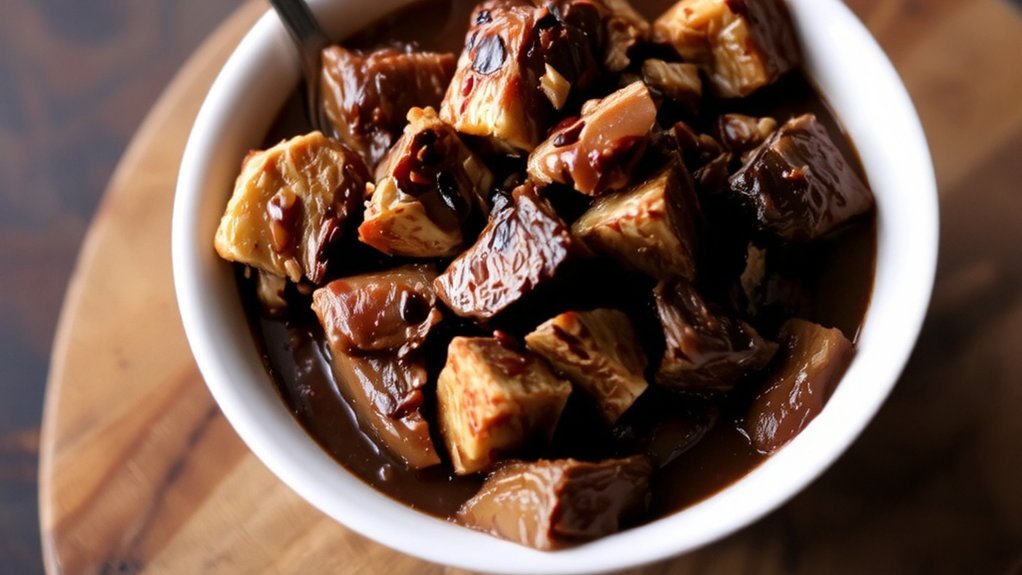
You’ll recognize burnt end chili by its lacquered bark and gelatin‑rich interior, where Maillard sugars meet rendered smoke oil. In Kansas City, Gates leans sweet‑vinegary, Jack Stack nails low‑and‑slow collagen breakdown, and Slap’s layers smoke and saucing for intense bite. You’ll want to compare texture, glaze and spice — and then plan your next stop.
What Makes Burnt End Chili So Irresistible
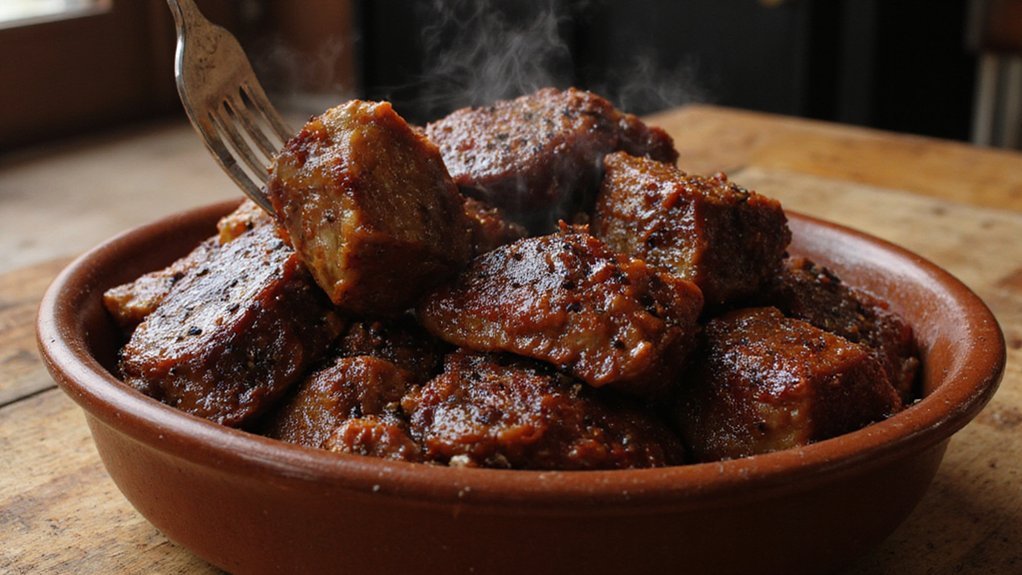
Irresistibility starts with contrast: charred, caramelized bark gives you a smoky top note while tender, gelatin-rich brisket melts in your mouth.
Irresistibility lives in contrast: charred, caramelized bark and gelatin-rich brisket that melts, smoky and unctuous.
You calibrate heat and time to coax collagen into gelatin without drying the cube—low-and-slow smoke at 225–250°F for hours, then rest.
The burnt ends’ smoky richness comes from Maillard reactions intensified by rendered fat and sweet vinegary mop.
You aim for a lacquered exterior: a caramelized crust that cracks under bite, releasing concentrated seasoning and smoke oil.
Regionally, Kansas City technique favors sugar and molasses balance; you adapt that profile, trimming precisely and choosing post-smoke sauce glazing.
Every tweak—wood species, humidity, sauce viscosity—translates into measurable texture and flavor gains you can reproduce.
You’ll experiment with blends and documentation to iterate consistently at scale.
Comparing Gates Bar‑B‑Q, Jack Stack, and Slap’s BBQ
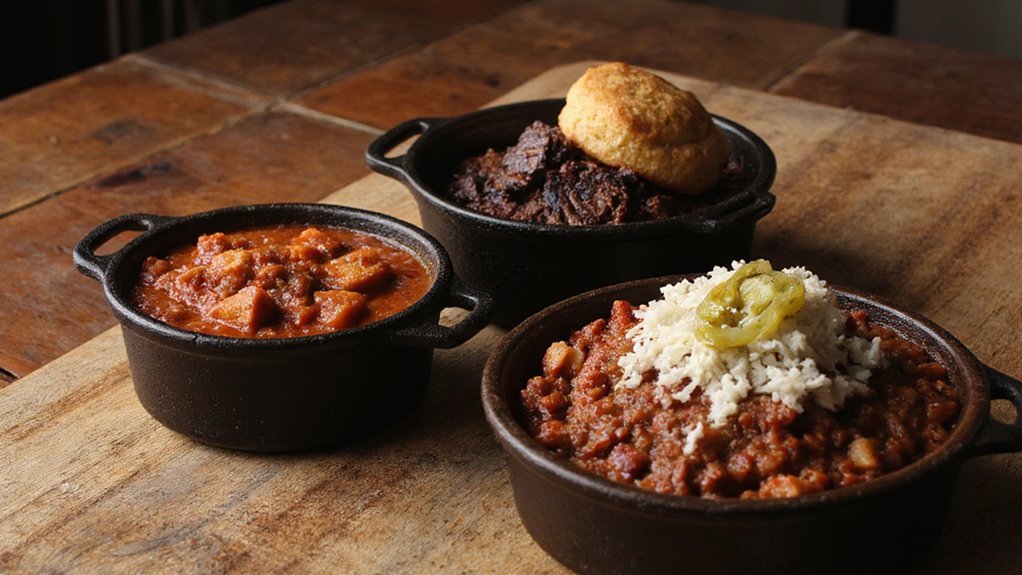
If you follow the science of burnt ends—bark formation, gelatinized interior, glossy glaze—you’ll spot how three Kansas City stalwarts take different technical routes to the same goal.
You’ll notice Gates favors brisk, direct-contact finishing and a sweeter glaze that amplifies Maillard crust; Jack Stack pursues precise low-and-slow control, rendering collagen into a silky mouthfeel with restrained sweetness; Slap’s BBQ pushes smoke intensity and repeated saucing for layered char and tang.
In service comparison, Gates trades speed and theatricality, Jack Stack offers consistency and plated refinement, Slap’s emphasizes rustic pace and smoke-forward identity.
For an innovator, these smoking techniques are instructive: they’re modular variables you can remix—heat profile, respite times, glaze chemistry—to evolve your own regional interpretation. Experiment deliberately, measure, and iterate for mastery.
Where to Order and What to Try
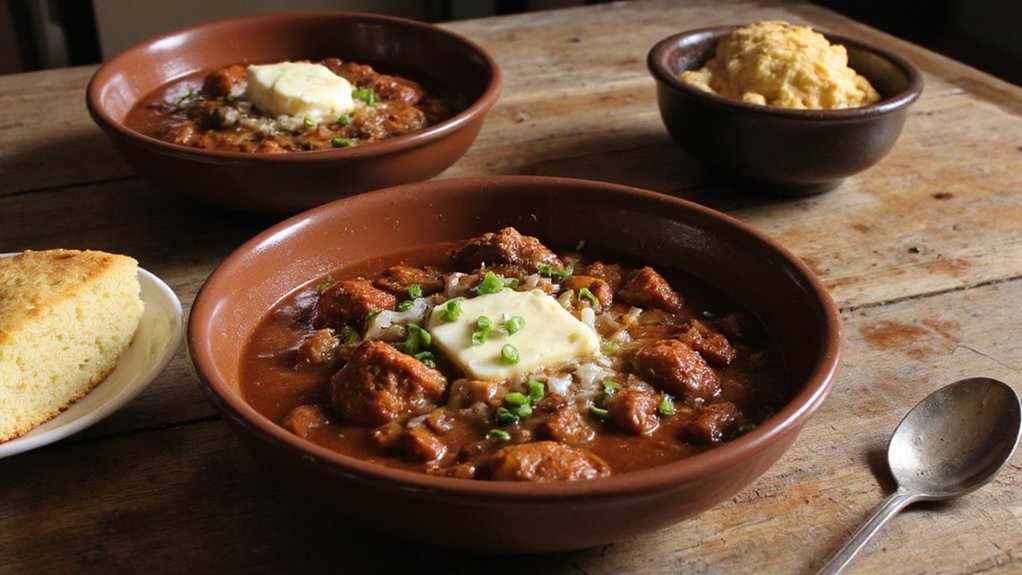
Where do you start? You order from proven pits: Gates for charcoal-smoke clarity, Jack Stack for controlled pit-roast caramelization, Slap’s for wood-fired bark complexity.
Specify burnt end weight, fat render level, and reheating method so chefs dial in texture. Ask about menu highlights — burnt end chili, brisket bites, lacquered ribs — and request sauce on side to preserve bark.
Specify burnt end weight, fat render level, reheating method; request menu highlights and sauce on the side to preserve bark.
For events, tap local catering teams who understand portion yield and hold times; demand staging racks and heat lamps. When you taste, note smoke ring penetration, collagen breakdown, and spice equilibrium; pair with regional sides like cheesy corn and potato salad.
If you want innovation, request hybrid rubs or barrel-aged reductions. You’ll get precise feeding guides, pickup windows, and plating cues to replicate results at home.
Conclusion
You’ve tasted charred brisket cubes lacquered in saccharine‑vinegar glaze, and you know why burnt end chili hooks you: Maillard‑deep bark meets rendered collagen, smoke oil perfumes the broth, and balanced acidity cuts fat. Gates leans sweeter, Jack Stack nails low‑and‑slow collagen melt, Slap’s layers smoke and saucing for concentrated bark. When you order in Kansas City, you’re chasing that regional interplay of smoke, sugar and spice — precise, soulful, and utterly addictive, every single bite.
Leave a Reply