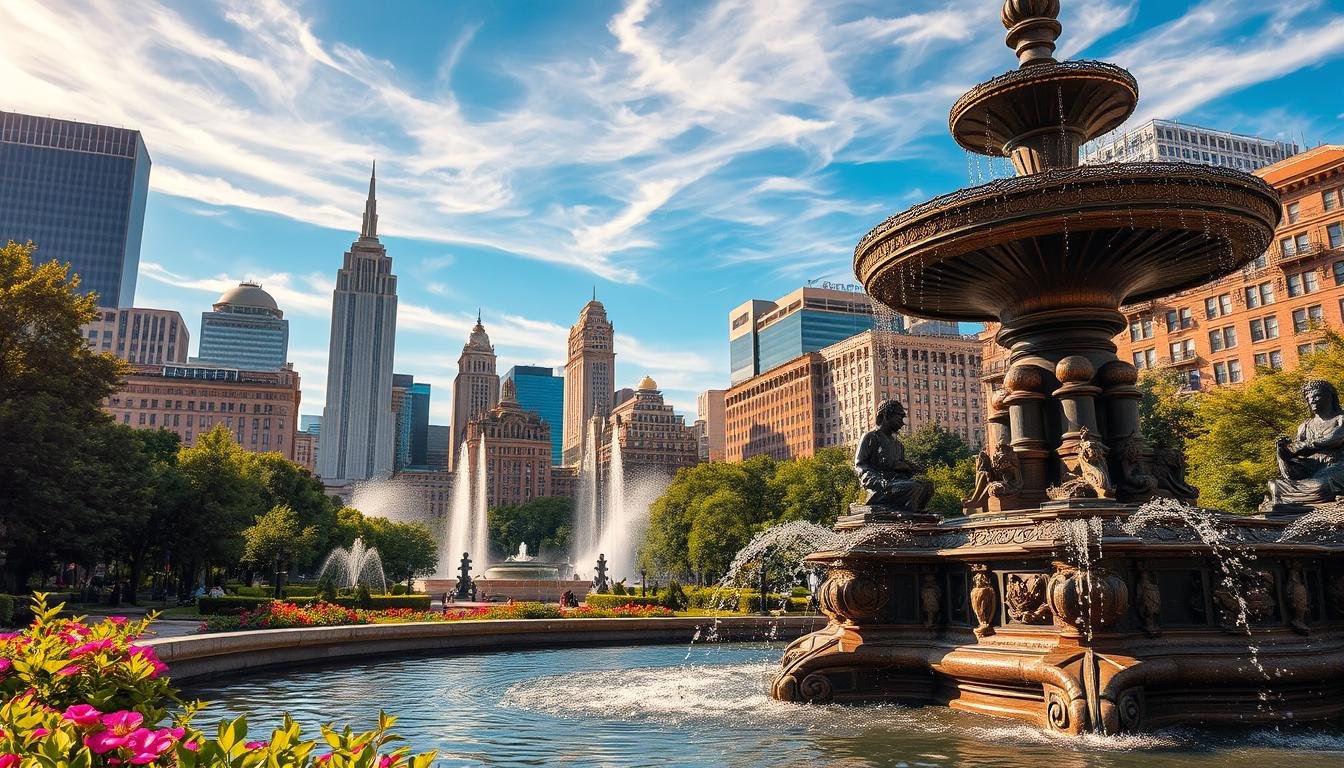
Welcome to a walking and driving guide that put the best public water art within easy reach. In this area, over 200 fountains once animated parks, plazas, and boulevards with sound and movement. Many were turned on each spring during Fountain Day, when the season’s flow returned across the metro.
The route below offers a curated path to the most photogenic stops. Expect a mix of sculptural pieces, rearing horses, and choreographed shows that make for iconic visuals. Highlights cluster near Union Station, Crown Center, and the Country Club Plaza, so it’s simple to see multiple sites in one outing.
This guide balanced quick photo ops with linger-worthy spots for families and architecture fans. You’ll get brief history notes, family-friendly tips, and suggestions for pairing fountain hopping with nearby dining, museums, and shopping. Save or print the plan to map favorites before you go for an easier, more rewarding visit.
Key Takeaways
- More than 200 fountains enliven parks and plazas across the metro.
- Fountain Day in April marks the seasonal return of flowing water.
- Top clusters around Union Station, Crown Center, and the Plaza.
- The tour mixes quick stops with longer, history-rich locations.
- Good for photographers, families, and architecture lovers alike.
From drinking troughs to icons: how Kansas City became the City of Fountains
Early fountains in this metro began as simple drinking stations that met basic needs for people and animals. Tiered basins and spigots served passersby, horses, and dogs, a humane design that predated ornamentation.
Origins of public drinking fountains for people, horses, and dogs
The first municipal water features appeared in the late 1800s. Landscape architect George Kessler added formal fountain designs in 1898 during the City Beautiful movement.
Fountain Day and the City of Fountains Foundation’s preservation mission
The City of Fountains Foundation began in 1973 to restore and maintain these water works. Each spring a ceremonial Fountain Day switches on 48 publicly operated features, a yearly moment of civic pride.
“The switch-on signals spring and the return of public life around these works.”
Where to find them: over 200 fountains across parks, boulevards, and the Country Club Plaza
More than 200 fountains now dot the area, concentrated in parks, boulevards, and the Country Club Plaza near J.C. Nichols projects. Look closely: many pieces pair engineering with allegory—sculptures of children, horses, and mythic figures tell local stories.
- Practical roots: drinking stations evolved into public art.
- Historic growth: Kessler’s plans connected fountains to landscape.
- Preservation: the fountains foundation keeps works flowing for visitors.
Plan visits from spring through fall for the best chance to see large displays operating. Next, we map the must-see stops on your listicle tour — from Plaza classics to choreographed downtown shows.
Iconic stops on your Kansas City fountains listicle tour
These select stops showcase public art that ranges from playful jets to powerful memorials.
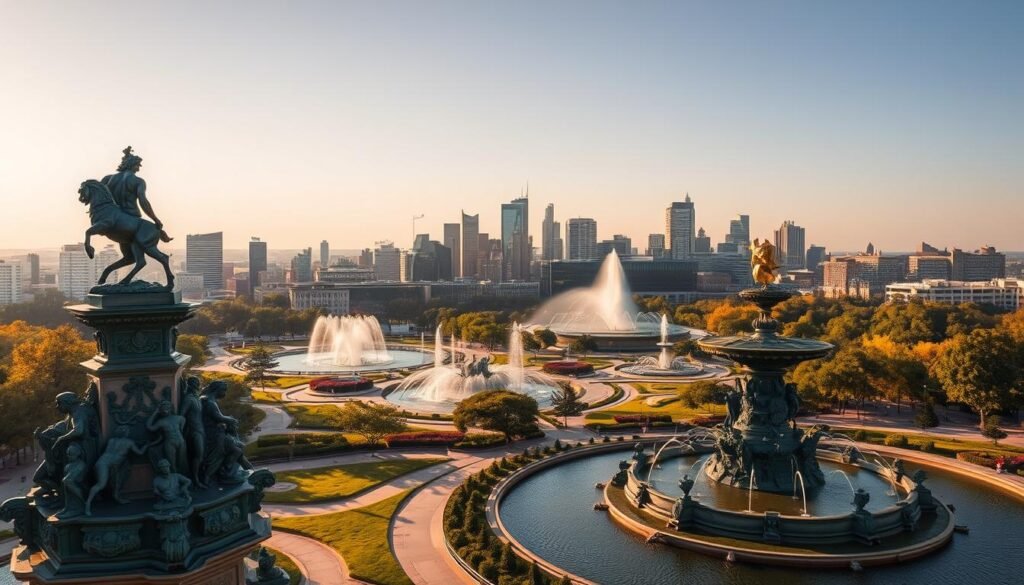
Mill Creek Park by the country club plaza is a must-see. Henri-Léon Gréber’s rearing horses and children represent four great rivers and draw photographers year-round.
Henry Wollman Bloch Fountain at Union Station uses 232 jets. Expect a five-minute choreographed water show every 90 minutes set against black granite.
- Firefighters Fountain and Memorial—a solemn memorial fountain honoring six fallen firefighters with dramatic cascades.
- Crown Center Square—family-friendly dancing jets timed to music recorded by members of the Kansas City Symphony.
- Women’s Leadership Fountain at 9th & The Paseo—the oldest-operational municipal fountain, preserved and restored.
| Stop | Feature | Highlight | Nearby area |
|---|---|---|---|
| Mill Creek Park | Figurative sculpture | Four rivers; horses | Country Club Plaza |
| Henry Wollman Bloch | 232 jets | 5-min shows; black granite | Union Station |
| William Volker | Bronze ensemble | 28-ft waterfall; Milles figures | Brush Creek |
| Seville Light / Muse / Plaza Classics | Renaissance & replicas | Neptune, Pomona, Mermaid | Plaza / Downtown |
Finish at the Liberty Memorial precinct for reflective pools and quiet views near the National WWI Museum. These stops make a compact, walkable loop that highlights sculpture, water, and civic memory.
Plan your kansas city fountains adventure: routes, seasons, and local tips
Choose a route that matches your pace—short plaza walks or a broader driving sweep. With simple planning you can see sculpture, dramatic jets, and reflective pools in a single outing. Below are practical options and seasonal notes to shape your day.
Best routes and tours
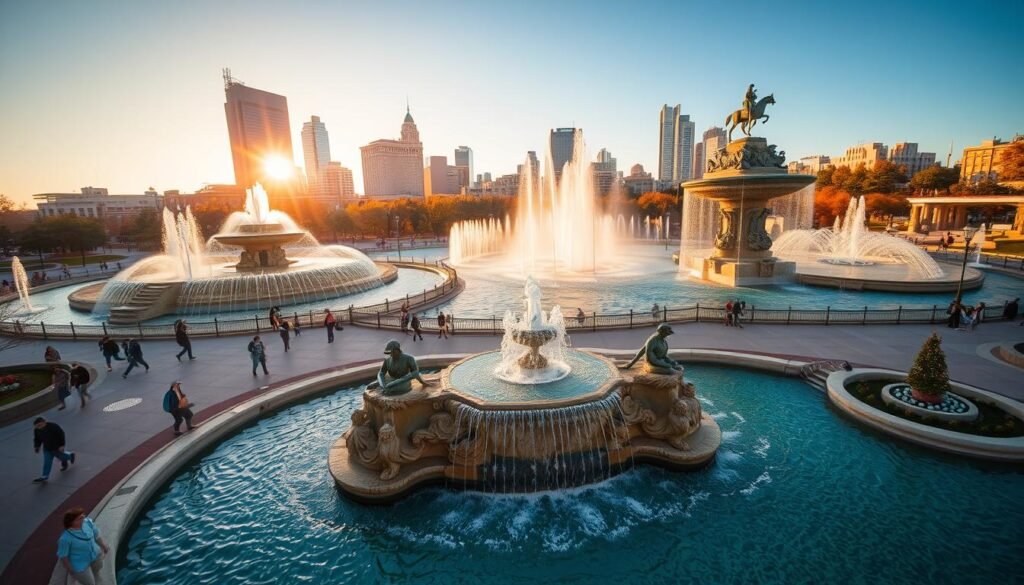
Plaza walks: Book a guided KC Fountain Tours walk to cover most of the 17 highlights at the country club plaza, including Neptune and the Seville Light Fountain. Walking keeps stops compact and photo-friendly.
Downtown clusters: Pair the Henry Wollman Bloch fountain at Union Station with the Muse of the Missouri and the Liberty Memorial precinct for a half-day route that balances spectacle with quiet memorial fountain moments.
Driving sweep: Use the Clio driving tour for 49 stops or the city fountains foundation Google map for a broader neighborhood tour. Both help you explore beyond the core area.
Seasonal moments and local tips
Fountain Day in April marks the seasonal switch-on of 48 public features, often with events at mill creek park. Time visits around that weekend for lively programming.
- Bloch shows run roughly every 90 minutes—plan to catch at least one performance.
- Watch for dyed water events (Royal blue) during baseball season; these follow strict park protocols.
- For families, crown center’s dancing jets are splash-friendly—bring towels and shoes.
- Parking is easiest near the Plaza and Crown Center; downtown garages suit multi-stop itineraries.
| Route | Key stops | Best for |
|---|---|---|
| Plaza walk | Neptune, Mermaid, Seville Light, Mill Creek Park | Photography, short strolls |
| Downtown cluster | Bloch Fountain, Muse of the Missouri, Liberty Memorial | Half-day tour, memorial visits |
| Driving tour | 49 Clio stops via map, regional list from fountains foundation | Full-day exploration, neighborhoods |
Conclusion
End your visit with a short loop that ties together public art, waterworks, and quiet memorials.
From late-19th-century drinking basins to more than 200 sites today, kansas city shows how practical design became public art. Plan around Fountain Day in April to see many displays come alive.
Pick a cluster, set a pace, and soak up both choreographed shows and a calm memorial fountain. Use maps and tours from the fountains foundation to help plan visits and support restoration.
Return in another season—each outing reveals new layers of history and local pride.
Leave a Reply