Blog

  • Barbecue Wings — Char Bar, Q39, Joe’s KC, Slap’s BBQ

    Barbecue Wings — Char Bar, Q39, Joe’s KC, Slap’s BBQ

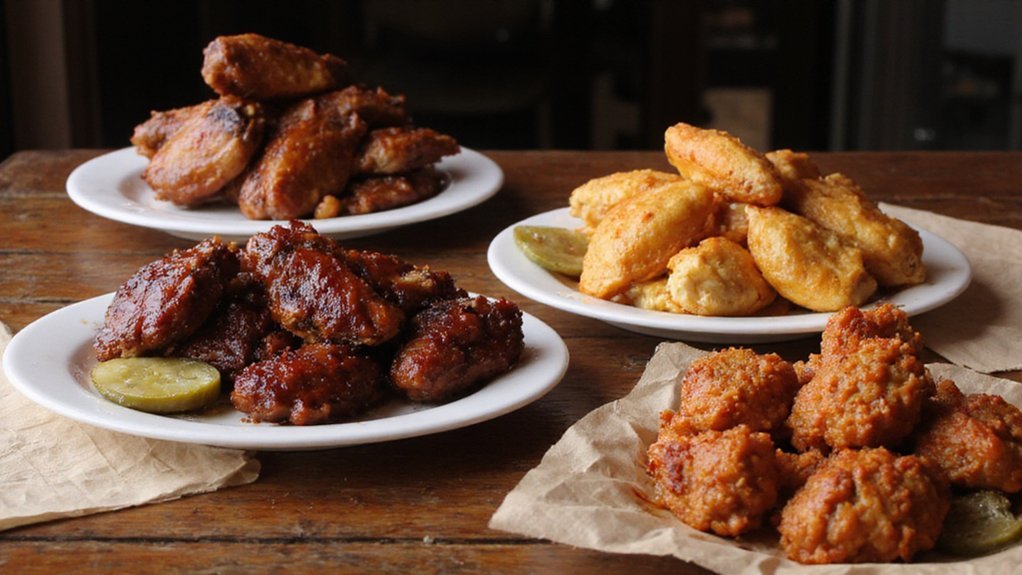
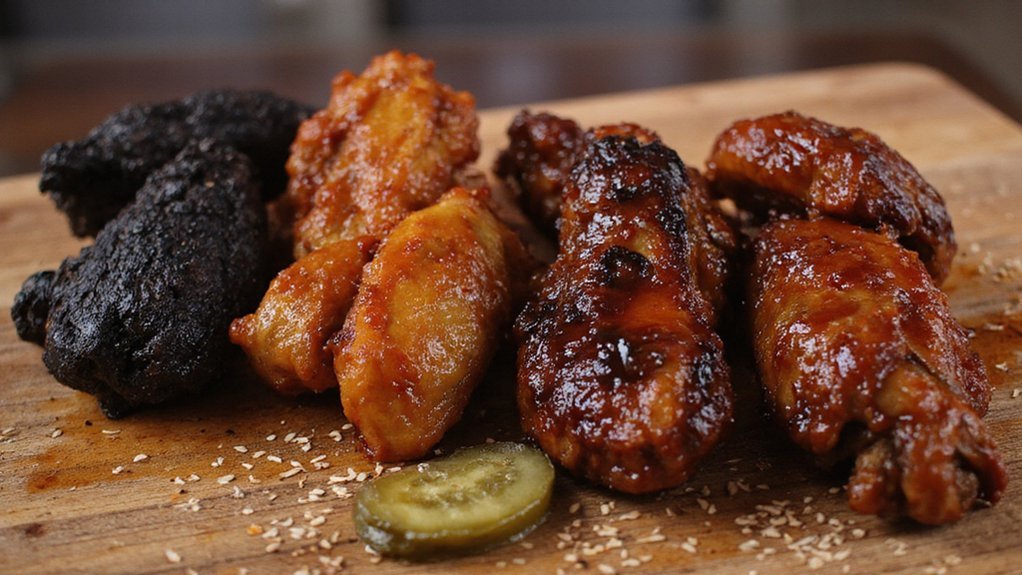
    When you hunt Kansas City barbecue wings, you want char that snaps, skin that crisps, and meat that pulls silkily from the bone. Char Bar leans lacquered and bittersweet, Q39 builds fierce bark and reverse-seared tension, Joe’s favors deep caramel comfort, Slap’s perks with bright vinegary lift. Weigh smoke against texture, and decide which wing will win your next order…

    What Makes an Outstanding Barbecue Wing

    crisp smoky skin balanced

    A great barbecue wing hits you with a whisper of smoke, a crackling skin and meat that pulls clean from the bone; you want contrast more than clutter.

    You prize crisp skin that snaps under your teeth, revealing silky, smoky flesh beneath; texture drives your judgment. You compare edges — blistered char versus even mahogany color — and favor surfaces that promise both bite and succulence.

    Crisp skin that snaps to reveal silky, smoky flesh — texture rules, edges from blistered char to mahogany promise bite and succulence.

    Balanced seasoning matters: salt, acid, and a hint of heat should amplify, not mask, the smoke. You’ll innovate by tweaking rub granularity, rest times, or wood mix to tune chew and moisture.

    In the end you choose wings where tactile interplay and restrained flavor let the barbecue identity shine clearly and reward bold, thoughtful experiments on cooking technique.

    Char Bar — Smoky, Sauce-Forward Bites

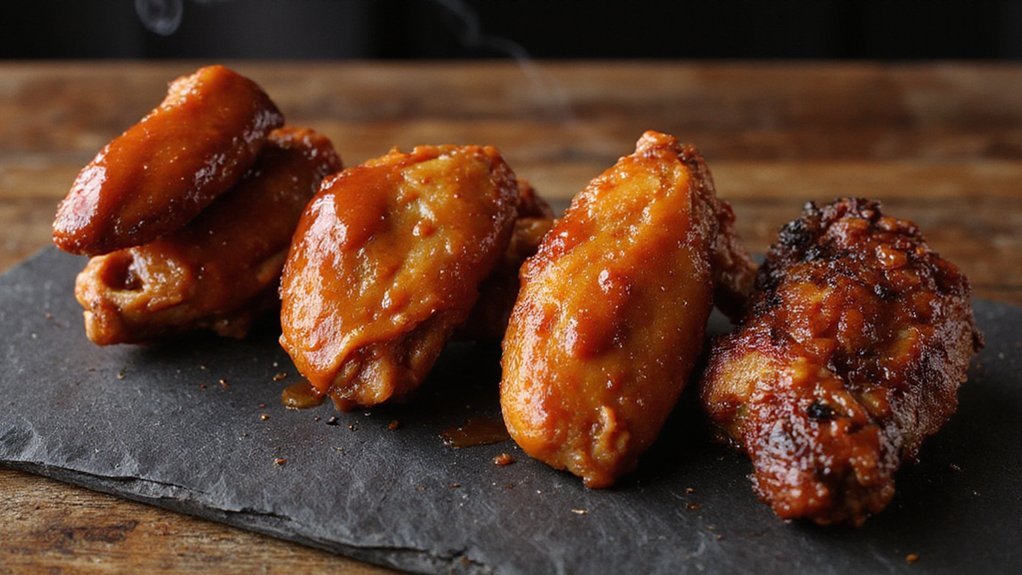
    smoky lacquered charred wings

    Char Bar wings strike a darker note: you get bold surface char that fractures into crisp flakes and a lacquered glaze that insists on attention. You’ll notice a smoked caramel edge, where flavor chemistry turns simple sugars into bitters and toffee, and smoke threads into the glaze.

    The skin snaps, yielding a moist interior that feels engineered rather than accidental. Compared with lighter preparations, Char Bar pushes sauce to the foreground, balancing tannic char with vinegar brightness so each bite reads like a study in contrast.

    Cultural influences surface in spice blends that nod to regional traditions while daring you toward new textures and sauces. They reward experimental palates consistently.

    Q39 — Competition-Level Char and Texture

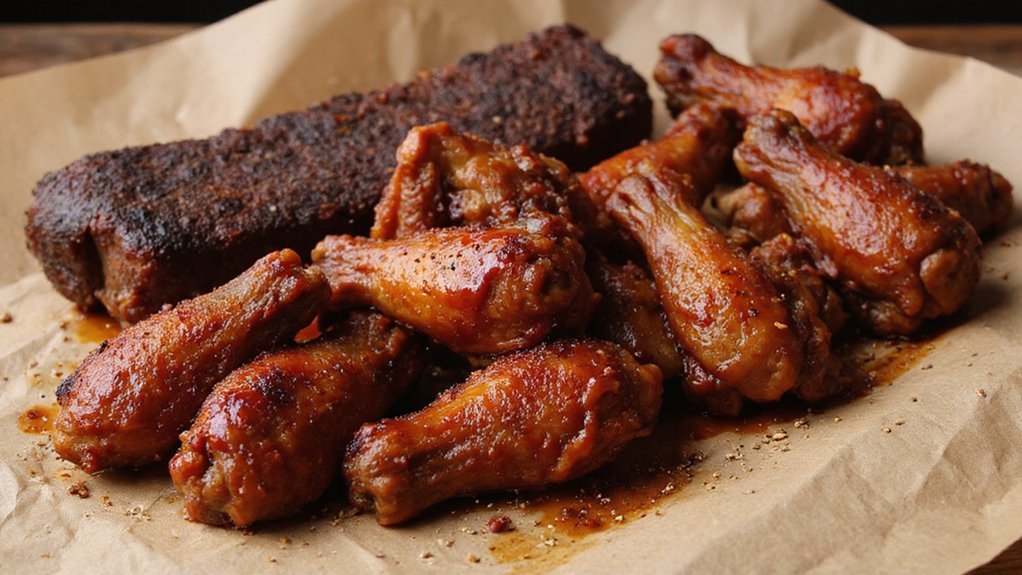
    crisp bark silky interior

    You learn to read lacquered glaze and smoked caramel edges as signs of technique when you aim for competition-level char and texture.

    You favor wings where bark snaps, skin tensile yet yielding, interior juices silk-soft against a defined crust.

    Q39 pushes char that’s deliberate — not scorched — balancing Maillard brown with smoke ring whisper.

    Compare that to sauce-forward joints; here texture is the trophy.

    Use reverse searing to set crisp boundaries, then finish over higher heat to bloom sugars without drying.

    Monitor pellet profile for consistent combustion and nuanced smoke: fruitwoods for brightness, oak for backbone.

    You iterate, tasting bite by bite, calibrating timing and feed to achieve a wing that fractures precisely, releases fat, and lingers with layered smoke and refined balance.

    Picking the Right Spot for Your Wing Craving

    crunch smoke texture ambience

    Where will you find wings that snap cleanly and sing with smoke?

    You scout spots by texture: crisp lacquered skin, meat that yields with a tooth, and bark that carries ember notes.

    Compare char profiles—bite through Char Bar’s focused sear, Q39’s layered smoke, Joe’s KC’s straightforward caramel, Slap’s playful tang.

    Match your mood via ambience selection: communal patio for smoke-dense boldness, minimalist bar for precise crisp, family booth for saucy comfort.

    Consider innovation in sauces and techniques; favor places that experiment with aging, glazing, and heat management.

    Finally weigh delivery options—does carryout preserve crust, does courier timing flatten texture?

    Choose the place that keeps crunch, amplifies smoke, and fits how you like to eat wings.

    Trust texture cues over hype when testing any joint.

    Conclusion

    You taste how Char Bar’s lacquered snap hits first, then Q39’s competition bark and reverse‑sear give a silky, smoke‑kissed interior that pulls clean from the bone. Joe’s KC cushions you with rich, caramelized succulence while Slap’s bright, vinegary tang cuts and lifts. You’ll want crisp skin, measured seasoning and honest smoke; choose by whether you crave lacquered sweetness, bark-driven texture, comforting richness or a tangy, vinegary finish that sings of oak, hickory and char true.

  • Burnt End Pizza — Waldo Pizza, Zarda BBQ, Minsky’s Pizza, Joe’s KC (specials)

    Burnt End Pizza — Waldo Pizza, Zarda BBQ, Minsky’s Pizza, Joe’s KC (specials)

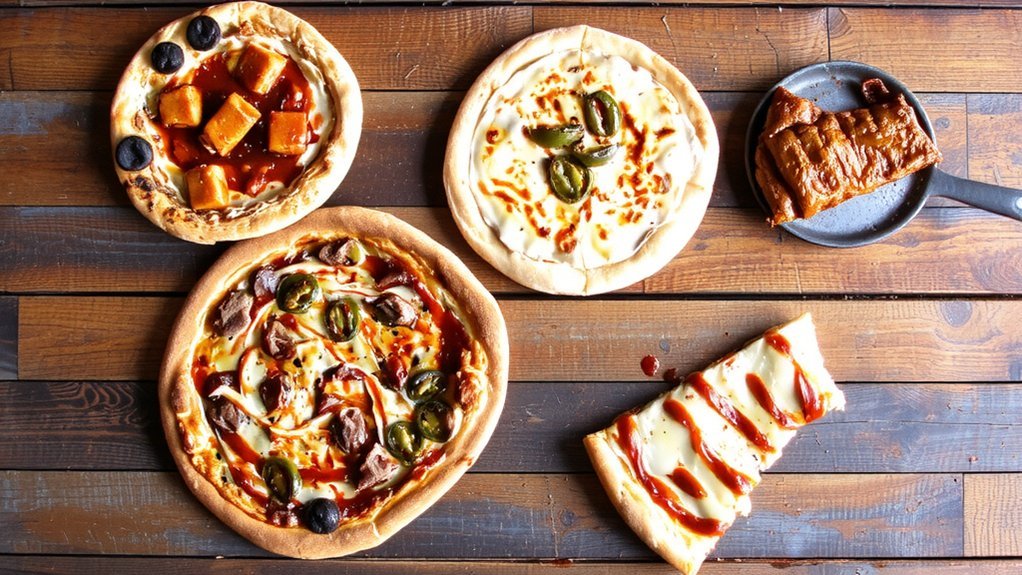
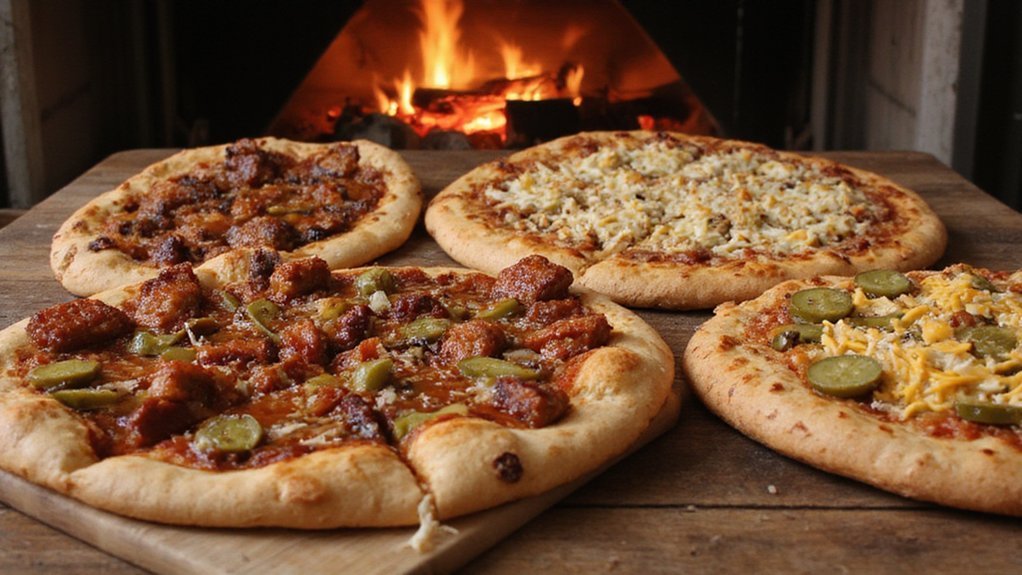
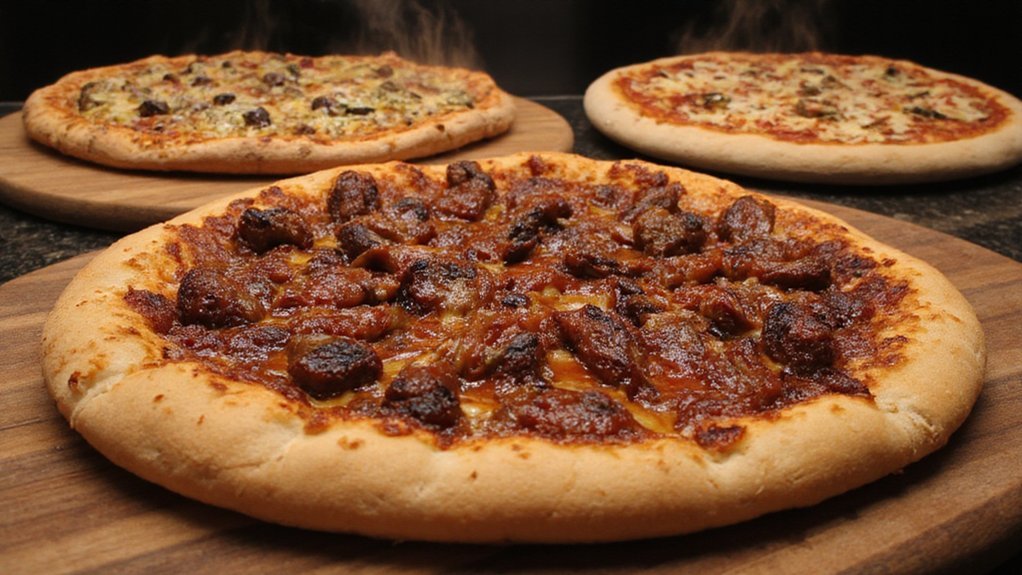
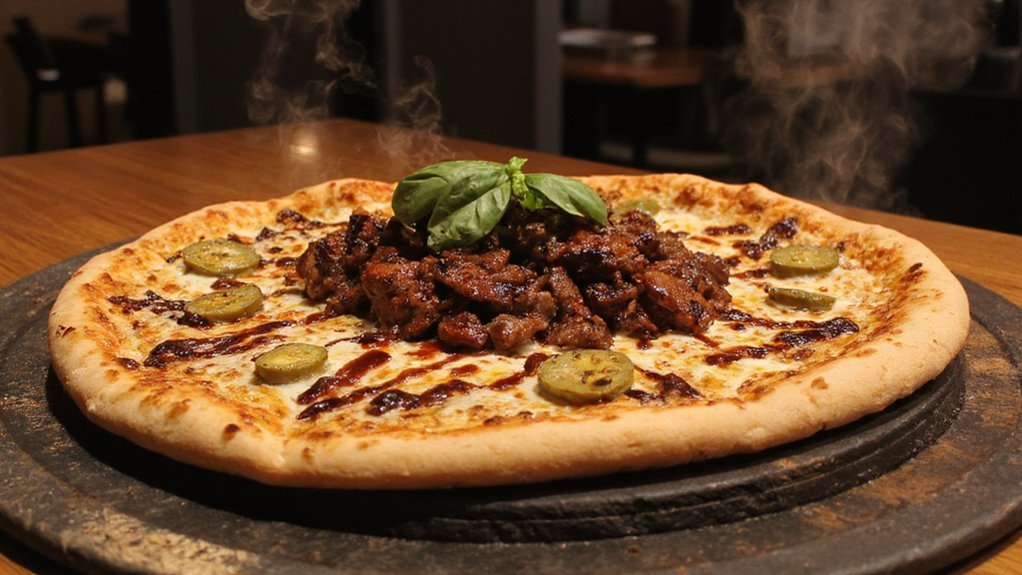
    You’ll spot glossy, caramelized cubes of brisket and pork belly topping distinctly different pies. Waldo’s brick oven gives airy, charred crusts; Zarda leans molasses‑sweet and deeply smoky; Minsky’s piles on molten cheese and pickles for contrast; Joe’s cycles clever, seasonal riffs. Each offers char and sweet‑savory tension — and you’ll want to know which bite earns the caramelized crown.

    Waldo Pizza — Wood-Fired Burnt Ends Experience

    wood fired caramelized burnt ends

    A glowing brick oven sits behind the counter at Waldo Pizza, and when they slide out the burnt-end-topped pies you’ll see why this place stands out: glossy, caramelized cubes of brisket and pork belly—charred at the edges, tender inside—lay like savory jewels across a blistered, wood-fired crust.

    You’ll notice their firebox design shapes every bite: intense, uneven heat creates those crisp blackened bits while preserving interior moisture.

    The crust tells another story—long dough fermentation yields complex tang and airy pockets that contrast the sticky, smoky topping.

    You’ll appreciate how restraint and risk combine here; they don’t drown the pie in sauce or gimmick.

    It feels inventive, disciplined, and a little defiantly delicious—exactly what you want when tradition meets experiment.

    Go hungry and take notes.

    Zarda BBQ — Sweet-and-Smoky Burnt End Pie

    molasses glazed smoky burnt ends

    When you lift a slice at Zarda BBQ, sticky, lacquered burnt ends cling to a smoky, molasses-bright glaze that practically hums with sweetness, and you’ll quickly notice how the sugar caramelizes into dark, almost-bitter edges that cut through the richness.

    Sticky lacquered burnt ends glazed in molasses—sugar caramelized to dark, almost-bitter edges that cut rich pork.

    You taste pork-forward char and a deliberate Sugar Glaze that keeps sweetness in check; toppings step back so burnt ends lead. You’re hungry for innovation, and this pie delivers smart contrasts—chewy crust, glossy cubes, molten cheese.

    Plan intentional Beer Pairings: a crisp lager to cut sugar or a roasty amber to mirror caramelized bark, and leave you thoroughly satisfied.

    • Small plate energy, big flavor.
    • Charred edges as seasoning, not accident.
    • Sugar Glaze earns its place, never cloying.
    • Order with Beer Pairings that respect smoke.

    Minsky’s Pizza — Cheese-Forward Burnt End Comfort

    gooey smoked burnt end pizza

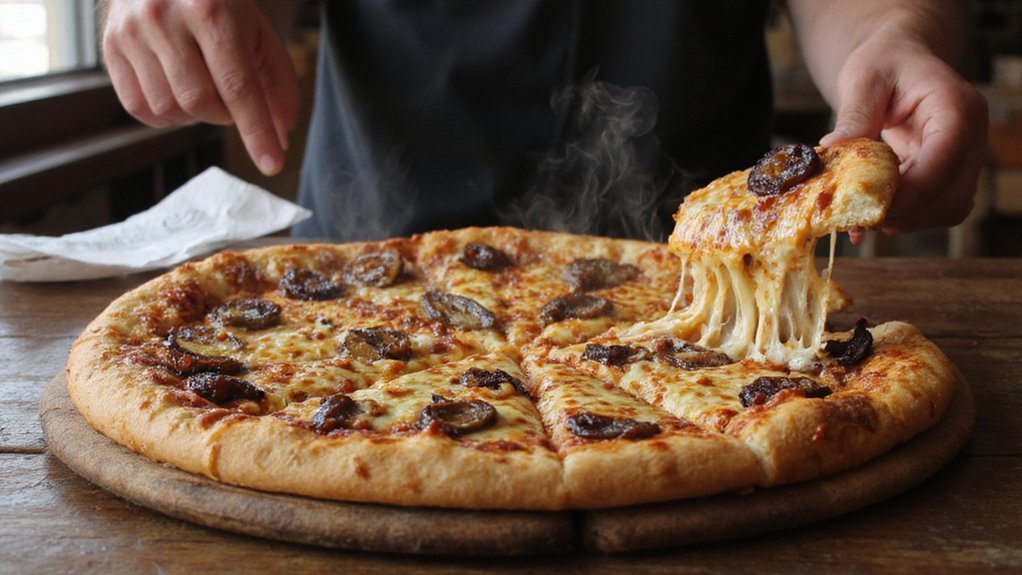
    At Minsky’s, burnt ends play second fiddle to an unapologetically gooey, cheese-forward approach that wraps smoky pork in creamy, salty blankets. You immediately notice a deliberate cheese balance: sharp provolone offsets molten mozzarella while a hint of aged cheddar pokes through.

    The kitchen experiments with melting techniques—low heat finishes and blowtorch spot-melts—to coax distinct textures without collapsing the crust. You’ll find contrast intentional: charred cubes remain toothsome beneath layers of elastic, savory dairy, and a scatter of pickled onions cuts richness.

    It’s comfort with curiosity; you won’t get traditional barbecue restraint here, but you’ll get a confident, innovative pie that privileges indulgence and technical play over restraint. You leave thinking Minsky’s rewrites comfort pizza rules without losing the simple pleasure of each bite.

    Joe’s KC Specials — Seasonal & Rotating Burnt End Creations

    rotating seasonal burnt end pies

    Rotating specials keep Joe’s menu electric; you won’t see the same burnt end pie twice in a season.

    You watch chefs chase bold contrasts—sweet molasses glaze, tangy slaw, peppery honey drizzle—each pie an experiment in seasonal pairings and texture.

    You’re tempted to judge a spot by its willingness to change, and Joe’s wins: they iterate fast, listen to crowds, and treat burnt ends like a canvas for limited releases that feel urgent, clever, and satisfying.

    • Smoky cherry glaze with whipped ricotta
    • Pickled pepper slaw and brown butter drizzle
    • Apple-chipotle compote with aged cheddar
    • Coffee-rubbed burnt ends, maple finish

    You’ll come back for the thrill of discovery. Expect new riffs monthly, and don’t hesitate to order the specials; you’ll truly taste innovation in every slice.

    Conclusion

    You’ll notice each burnt end pie flexes a different personality: Waldo’s blackened, airy crust sings of wood smoke; Zarda’s molasses glaze teases a sticky, bittersweet pull; Minsky’s molten cheeses and pickles deliver indulgent, tangy comfort; Joe’s rotating specials surprise you with clever slaws and drizzles. You’ll leave satisfied by char, contrast, and rich bites, convinced that burnt end pizza isn’t just a trend but a deeply rewarding, unapologetically flavorful obsession, and you’ll want leftovers tomorrow.

  • Green Rice (Tex‑Mex Side) — Mi Ranchito, Port Fonda, Ponak’s Mexican Kitchen

    Green Rice (Tex‑Mex Side) — Mi Ranchito, Port Fonda, Ponak’s Mexican Kitchen

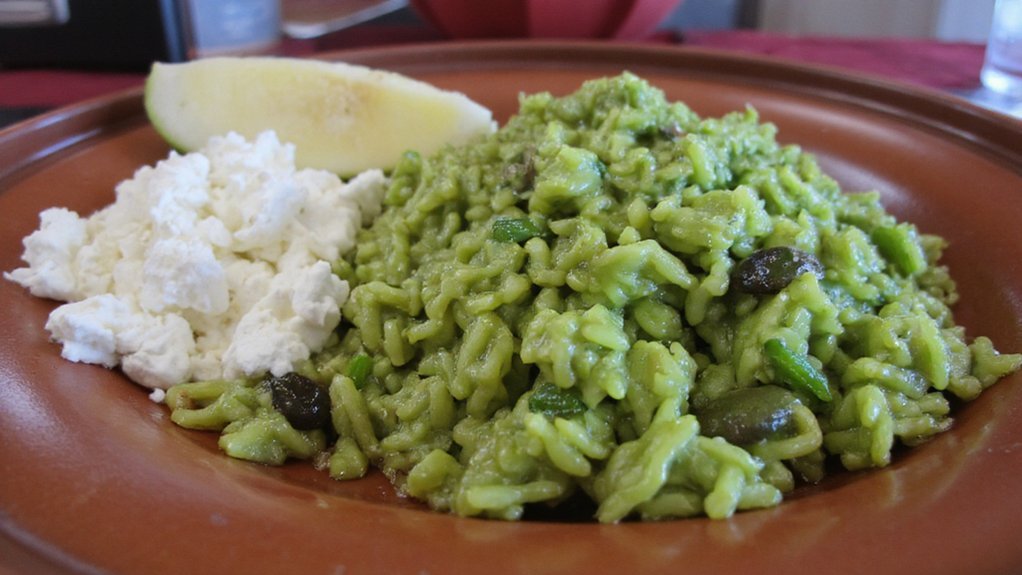
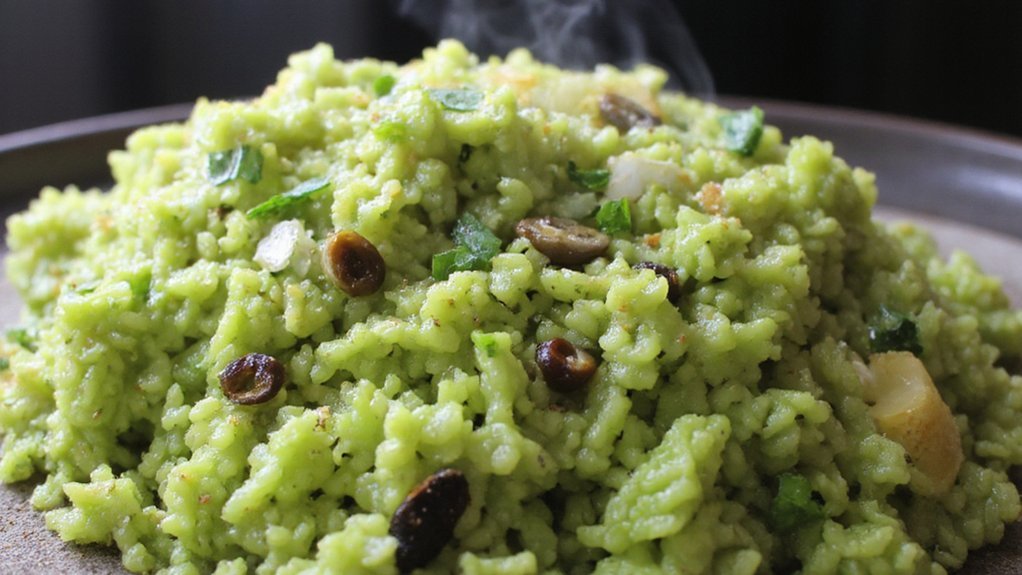
    You’ll notice how green rice at Mi Ranchito, Port Fonda and Ponak’s balances bright cilantro‑poblano herbiness with a whisper of charred jalapeño and lime. You can taste the toasted aromatics and the way the grains stay distinct yet lightly coated. It feels both rustic and calibrated, and you’ll want to uncover the small techniques that make each version sing.

    Origins and Tex‑Mex Influence

    pragmatic border culinary fusion

    Although it grew from Mexican arroz verde, Tex‑Mex green rice took root when Texas cooks adapted ingredients to local tastes and supplies.

    You trace Regional Origins to border kitchens where practicality met imagination; you see tortillas, smoked meats, and market greens reinterpreted into a vibrant side.

    Cultural Fusion appears as a deliberate negotiation: familiar techniques reframed by new produce, heat, and service styles. You notice how textures shift for hearty plates and how plating reflects brisk, convivial dining.

    As an innovator, you’ll appreciate the pragmatic creativity—repurposing leftovers, scaling for ranch meals, adjusting cook times—so the dish thrives in restaurants like Mi Ranchito, Port Fonda, Ponak’s Mexican Kitchen while staying rooted yet forward-looking.

    You can imagine small refinements turning tradition into signature house elements today.

    Herb and Spice Profiles

    cilantro citrus cumin coriander

    You notice cilantro cuts through the richness with bright, citrusy green notes that define Tex‑Mex green rice.

    Earthy cumin and floral coriander ground the dish, their balance steering it from smoky to sweet.

    You’ll see how fresh herbs versus toasted seeds change aroma and mouthfeel, altering the rice’s character.

    Cilantro’s Flavor Role

    When chopped fresh, cilantro brings a burst of citrusy, green brightness that lifts the rice and cuts through its buttery or oily richness. You’ll notice its enzymatic brightness acting as a palate cleanser between bites, revitalizing the dish and revealing subtle herbaceous layers.

    Use stems and leaves differently: finely chopped leaves scatter immediate top-note aroma, while tender stems release a deeper, slightly aniseed texture when sautéed briefly.

    You can calibrate quantity to steer the rice toward vivid freshness or restrained support; small additions amplify aroma without overpowering.

    Think of cilantro as a directional tool—brightening, balancing, and creating contrast. Experiment with timing and cut to innovate texture and scent while keeping the dish cohesive and modern. You’ll refine signature profiles through small, deliberate variations regularly.

    Cumin and Coriander

    The pairing of cumin and coriander anchors the rice with a complementary contrast: cumin lends a dry, smoky-earth warmth while coriander seed offers bright lemony-citrus and a faint floral sweetness.

    You tune proportions to steer texture and aroma—more cumin for grounding depth, more coriander to lift the profile into citrus clarity.

    Think like an experimentalist: map how each gram shifts perception and pairing possibilities across proteins and salsas.

    Note practicalities too; storage methods affect potency, so rotate stock and monitor humidity to preserve volatile oils. Watch marketplace trends for heirloom seeds and single-origin cumin that can recalibrate familiar dishes.

    Apply these insights and you’ll turn a simple Tex‑Mex side into a signature, forward-thinking taste statement. Experiment subtly; small shifts yield surprising culinary advances today.

    Fresh Vs Toasted

    Moving from the compressed interplay of cumin and coriander, think about how fresh and toasted forms rewrite those same flavor equations.

    You’ll notice fresh coriander and cumin seeds give bright, green, citrusy edges that lift salsa verde and rice, while toasting seduces oils out, yielding smoky, nutty depth.

    Choose fresh when you want lift and volatile top notes; choose toasted when you seek backbone and caramelized complexity.

    Consider Aroma impact: fresh spikes fragrance immediately; toasted prolongs presence and adds roasted nuance.

    Also weigh Shelf life—ground fresh herbs lose volatility fast, whole seeds or toasted spices stay potent longer.

    In practice, you can blend: bright, raw herbs for finish; a whisper of toasted powder for structure and persistence.

    Experiment continuously to refine your signature rice.

    Broth, Texture, and Rice Choices

    broth grain texture harmony

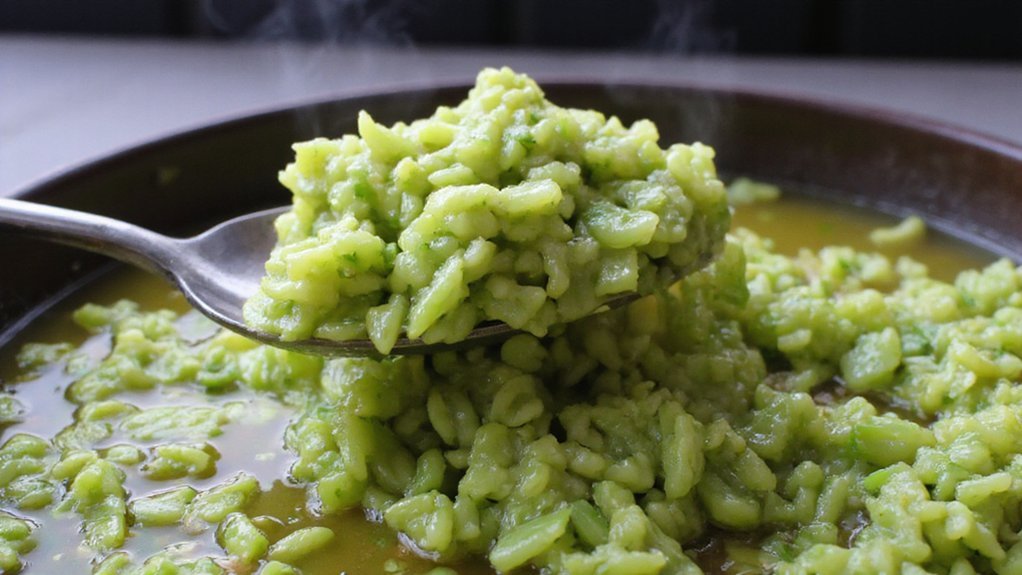
    Listen to the broth—its body and seasoning will be the backbone of your green rice, lifting herbal brightness or flattening it if it’s thin.

    Choose a rice with the right bite: long-grain for separate, fluffy kernels; medium or short-grain for creamier, clinging results.

    Match stock richness to grain behavior so each spoonful carries layered savory depth and the texture you want.

    Broth Flavor and Depth

    Layering broth flavor gives a green rice its soul: start with a rich chicken or vegetable stock and build depth with roasted aromatics, a hit of citrus or vinegar for brightness, and careful seasoning so you don’t overpower the herbs.

    You’ll coax complexity by adding controlled umami sources—anchovy, mushroom, toasted soy, or aged cheese rind—while using clarifying techniques like skimming and gentle straining to keep the broth lucid and vibrant.

    Think about mouthfeel: a silky, slightly viscous liquid clings to grains, carrying herbal oils and green purées.

    You’ll calibrate salt and acid late, tasting as you go, and experiment with concentrated reductions to intensify flavor without masking the fresh cilantro, parsley, or tomatillo notes.

    Record each tweak to hone the ultimate balance.

    Grain Type and Texture

    Many cooks prefer long-grain white rice for Tex‑Mex green rice because it yields distinct, fluffy grains that show off herb purées, but you’ll choose differently if you want creaminess: medium- or short-grain varieties and parboiled rice hold more starch and give a silkier bite.

    You’ll assess texture by tasting temperature and bite: al dente grains should separate but still bloom with sauce, while creamier rice embraces the broth, releasing herb oils.

    Think about milling impact — more polished rice loses bran oils and some flavor, while less milled kernels add chew and nuttiness.

    Aging effects matter too; older rice hydrates predictably and firms up, younger rice can clump. For innovators, mixing grain types or brief risotto technique expands the green rice palette and creative contrasts.

    Mi Ranchito’s Version: Key Features

    vivid herbaceous layered rice

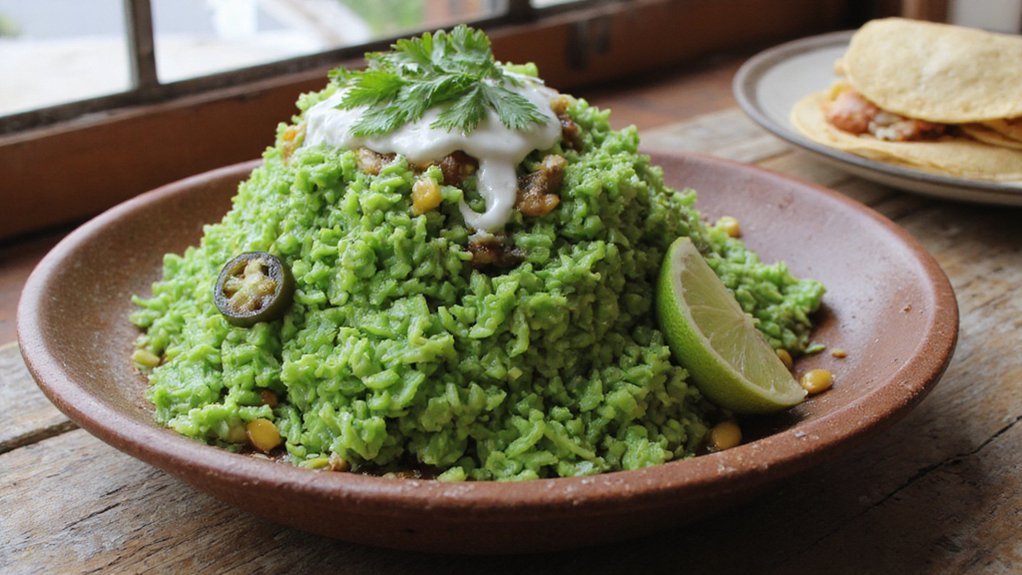
    Notice how Mi Ranchito’s green rice hits you with an immediate, vivid color — a deep, herbaceous green that signals cilantro and poblano or jalapeño at the core. You’ll find crisp aromatics and a subtle char balanced by citrus brightness; the cooks coax layered heat without overwhelming the rice’s delicate body.

    Texture stays slightly loose, each grain coated but distinct, so you taste herb, pepper, and a faint toasty base. The plate reflects purposeful portion sizing and smart menu placement, presenting the rice as an active component, not filler.

    Ingredients feel considered and slightly experimental — toasted pumpkin seeds, a whisper of crema — so you encounter familiar tradition nudged toward modern, confident refinement. It’s a poised, inventive side that invites repeat exploration.

    Port Fonda’s Version: Key Features

    herbaceous toasted rice plating

    How does Port Fonda’s green rice distinguish itself on the plate? You notice immediately a vibrant herbaceous hue and a restrained texture—rice grains separate, glossed but not mushy.

    You’ll appreciate how bright acidity balances fat, and how toasted aromatics underpin each bite.

    The kitchen treats garnish placement as design, tucking microcilantro and lime zest along one edge to invite interaction rather than obscure flavor.

    Portions are modern, meant to complement rather than dominate mains.

    Plateware choice amplifies contrast: shallow bowls with matte glazes set the verdant rice against warm ceramics, sharpening visual impact and signaling contemporary intent.

    You leave thinking about technique—precise toasting, measured stock reduction—and how small choices elevate a familiar side into something inventive.

    You’re prompted to recreate it in your kitchen.

    Ponak’s Mexican Kitchen: Key Features

    After savoring Port Fonda’s precise, herb-forward rice, Ponak’s Mexican Kitchen announces itself with a warmer, more textural approach: flavors hit with unapologetic depth and a home-kitchen immediacy that still respects technique.

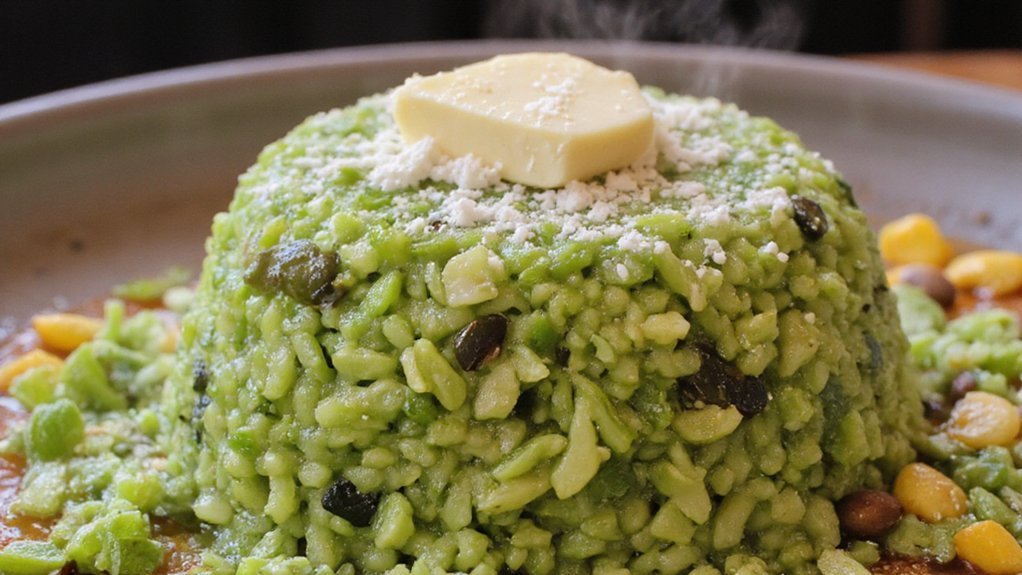
    You’ll notice rice studded with charred corn and rendered bits that create mouthfeel; bright herbs are tempered by toasty aromatics, so each bite balances comfort and craft.

    You’ll also register a menu that invites pairing—signature cocktails lean earthy, lime-driven, and sometimes smoky, nudging the palate toward savory rice notes.

    Presentation aesthetics favor rustic geometry: bowls stack height and color, garnishes feel deliberate, not ornamental.

    If you seek innovation, Ponak’s gives you tactile, layered rice that reads modern without abandoning soulful familiarity. Service cadence and ingredient sourcing underscore thoughtful, quietly disruptive culinary choices here.

    Tips for Recreating at Home

    When you set out to make this Tex‑Mex green rice at home, remember that balance—between toasty depth and bright herbaceousness—matters as much as ingredients. You’ll toast rice until edges shimmer, then deglaze with stock so the fond lifts and flavors marry.

    Use a blender technique to emulsify cilantro, tomatillo, jalapeño and lime; pulse rather than puree for texture and color.

    Mind salt early and adjust late; acidity sharpens without overpowering. Cook low and steady, fluffing to preserve separated grains.

    For efficiency, use batch freezing for portions you won’t eat immediately—flash cool on trays before bagging to avoid mush. Experiment with charred aromatics and citrus oil to push boundaries while keeping proportion and restraint.

    Taste at each stage; small tweaks transform the finished dish consistently.

    Conclusion

    You’ll notice green rice isn’t just a side but a balancing act: herbaceous cilantro and roasted poblano dance with charred jalapeño, toasted aromatics and a squeeze of lime. You’ll taste restrained crema or pumpkin‑seed crunch and a texture where grains stay distinct yet lightly coated. Reading each house version teaches you how technique—broth concentration, toasting, and char—shapes brightness and mouthfeel, and how this rustic, modern dish cuts richness and lifts smoky cocktails and invites pairing.

  • Cinnamon Rolls (With Chili) — Corner Café, the Classic Cup, Stroud’s

    Cinnamon Rolls (With Chili) — Corner Café, the Classic Cup, Stroud’s

    You’ll notice how Corner Café tames chili beneath a glossy cinnamon glaze, while the Classic Cup leans sweeter with gentler heat and Stroud’s pushes spice and tighter sauce ratios. You’ll feel the soft dough, savory umami, and balanced fat align into a repeatable sweet–savory thrill that explains the local pull—and there’s one detail that changes everything.

    How Each Spot Balances Sweet and Savory

    measured spice sugar texture

    While each bakery takes its own route, you’ll immediately notice how they balance sweet and savory by controlling three elements: spice intensity, sugar level, and texture contrast.

    You’ll read clear choices: Corner Café tames chili with restrained sauce ratios and subtle glaze, positioning its roll as an adventurous breakfast that won’t overwhelm. The Classic Cup heightens sugar level but trims spice, using menu positioning to invite first-time tasters toward familiarity. Stroud’s pushes boundaries, dialing spice intensity higher while tightening sauce ratios to maintain cohesion, and it frames the item as a seasonal innovation.

    You’ll evaluate each approach on consistency, repeatability, and crossover appeal; these criteria tell you which shop is optimizing balance for broader adoption. You’ll prioritize spots that scale without losing defining clarity.

    Flavor and Texture Breakdown of the Cinnamon Roll + Chili Pairing

    pillowy sweetness savory heat

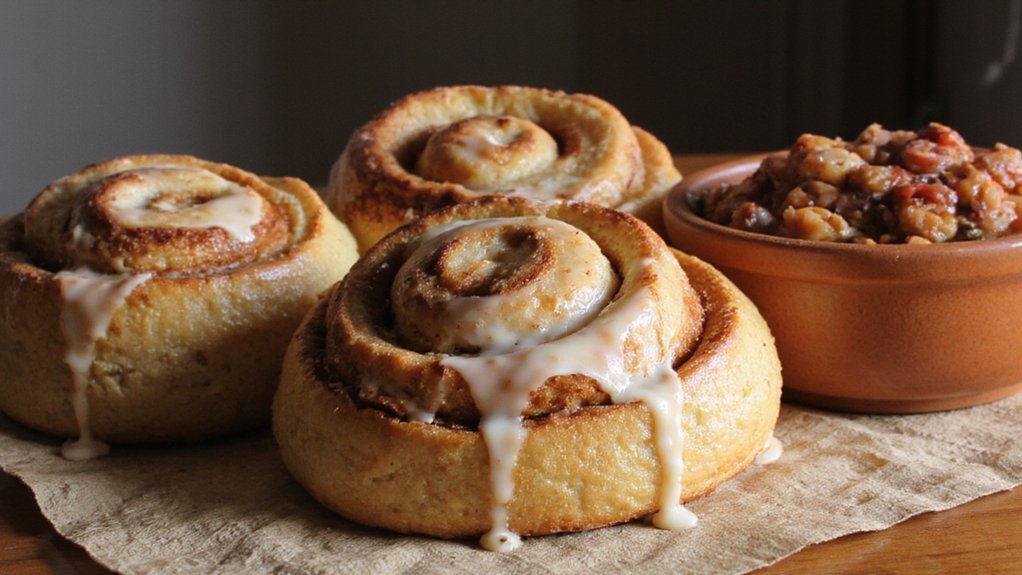
    When you bite into a chili-topped cinnamon roll, the pairing lives or dies on how flavors and textures layer: sugar and warm spice from the roll should meet upfront, then ceded to savory umami, heat, and acidity from the chili, while fat and salt anchor the mix.

    Sugar and warm spice meet savory umami, heat, and acid—fat and salt anchor the daring contrast

    You’ll note immediate soft, pillowy crumb against a glossy, chunky chili; that mouthfeel dynamics is pivotal — tender dough cushions coarse meat and beans, creating push-pull between slick fat and fibrous bits.

    Thermal contrast matters: a warm roll tempered by cooler chili or vice versa heightens perceived spice and sweetness.

    Evaluate balance sharply: too much glaze mutes chili, too greasy chili overwhelms cinnamon. Aim for precise contrasts that innovate without discord, and texture sequencing informs lasting flavor memory

    Why Locals Keep Returning for This Unlikely Combination

    chili cinnamon roll harmony

    Often you keep coming back because the dish delivers a dependable thrill: the sweet, pillowy roll tempers the chili’s heat while savory fat and salt sharpen the cinnamon, creating a harmony that feels both indulgent and grounded.

    You recognize how local chefs tune proportions so each bite surprises yet reassures; this balance explains loyalty. It’s a community tradition retooled for curiosity, marrying inventive seasoning with the kind of nostalgic comfort that anchors weekly habits.

    You value that boldness is never gratuitous—the combo respects textures, provenance, and diners’ memory. When you return, you’re drawn by consistency and a practiced willingness to evolve flavor. That clarity of purpose is why this unlikely pairing remains magnetically compelling to you and your neighbors across generations and tables daily.

    Conclusion

    You’ve tasted how each shop tweaks sugar, spice and texture to make the cinnamon roll + chili pairing sing. You feel Corner Café’s glossy cinnamon and restrained chili, the Classic Cup’s sweeter, gentler embrace, and Stroud’s sharper, spicier edge. You recognize the smart balance of umami, salt and fat across soft pillowy dough. You’ll keep coming back because these thoughtful calibrations hit nostalgia and novelty at once, delivering a reliably thrilling sweet–savory payoff every visit.

  • Ice Cream Treats — Betty Rae’s Ice Cream, Fairway Creamery, Glacé Artisan Ice Cream

    Ice Cream Treats — Betty Rae’s Ice Cream, Fairway Creamery, Glacé Artisan Ice Cream

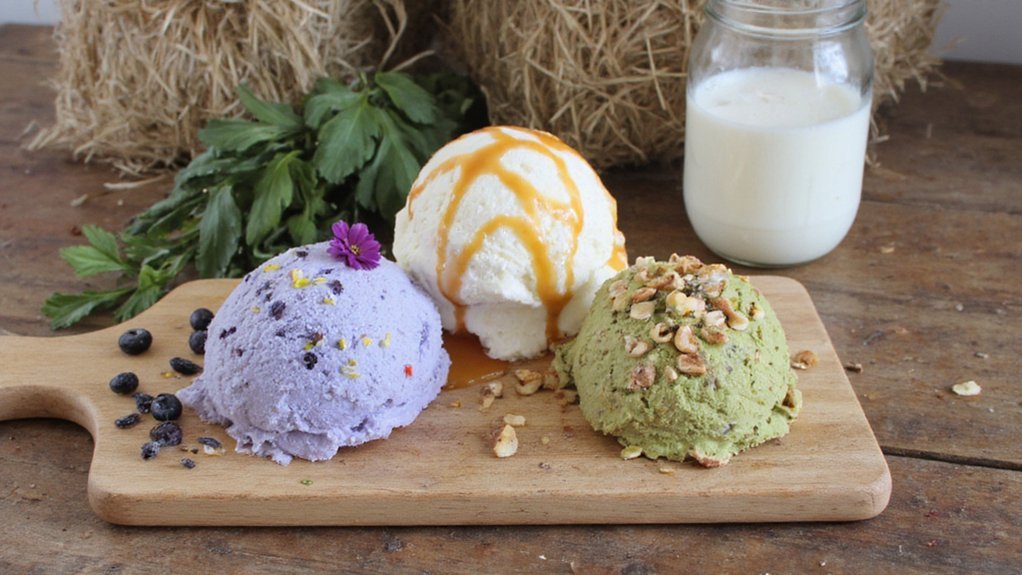
    You stroll past Betty Rae’s pastel window, tasting boozy chalkboard specials in your mind, then head to Fairway for farm-driven sorbets that sing of sun and soil. Glacé promises exacting, silky scoops in limited runs. Each shop reveals a distinct small-batch ethos, and you’ll want to compare their intentions and techniques to decide which feels truest—here’s why.

    Betty Rae’s Ice Cream: Neighborhood Charm and Boozy Flavors

    charming boozy neighborhood scoops

    Tucked on a quiet corner, Betty Rae’s Ice Cream feels like a neighbor you’d stop to chat with—you’ll notice the pastel facade, the chalkboard of rotating boozy flavors, and the hum of regulars lingering on stools.

    You’ll be drawn to inventive scoops that balance nostalgia with surprise: crisp cone texture, bright dairy clarity, and flavor combinations that flirt with cocktails without losing ice cream integrity.

    Staff explain the rationale behind Boozy Pairings, suggesting small tastings during Neighborhood Events where local makers and musicians converge.

    You’ll appreciate meticulous portioning and thoughtful ingredient sourcing; it’s playful but disciplined. If you want creative, community-rooted treats that respect technique while pushing boundaries, this spot delivers a confident, charming scoop. You’ll return expecting another batch of unexpected joy soon.

    Fairway Creamery: Seasonal, Farm-Forward Creations

    seasonal farm forward artisanal scoops

    Sourcing milk and produce from nearby farms, Fairway Creamery treats the season like its primary ingredient, rolling out small-batch flavors that change as fields do. You’ll notice bright, direct fruit notes in summer sorbets, herbaceous late-summer churns and rooty, caramelized creations in cooler months.

    Their seasonal sourcing is deliberate: you taste the farmer’s timeline, not a calendar. Pasture partnerships yield milk with clarity and a fat profile that lifts delicate infusions, and the creamery experiments—ferments, smoke, saline—without sacrificing balance.

    If you want innovation that respects provenance, Fairway reads terroir like a playbook, translating soil and sun into inventive, restrained pints that reward curiosity and repeat visits. Expect collaborations with cheesemakers and bakers, seasonal sorbets that surprise, and precise textures that feel purposeful and local.

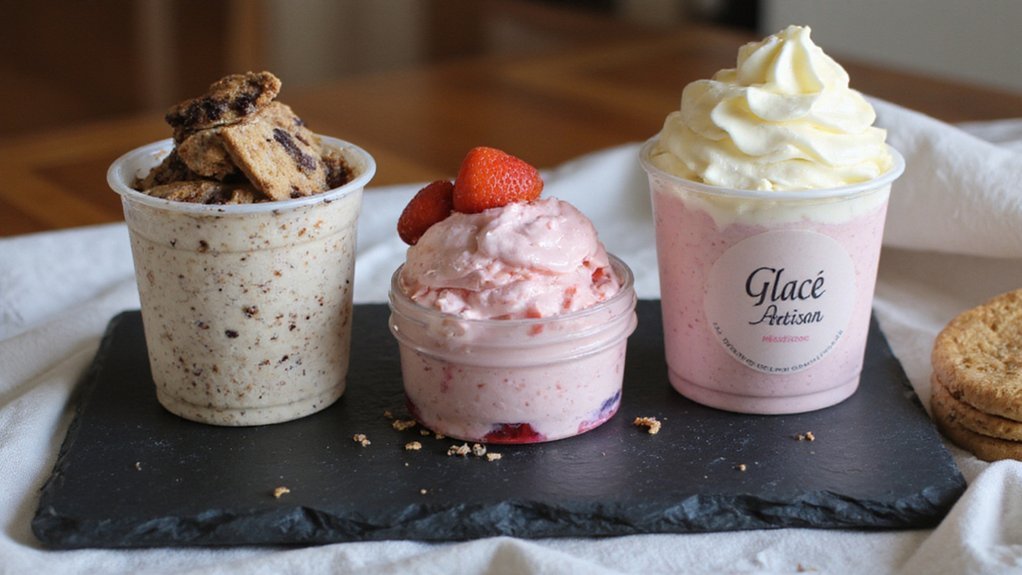
    Glacé Artisan Ice Cream: Silky, Handcrafted Pints

    silky handcrafted provenance driven innovation

    Crafting each pint by hand, Glacé Artisan Ice Cream delivers a silkier scoop that feels deliberate the moment you glide your spoon through it. You notice a Silky Texture that’s not just smooth but engineered—air folded in, churn times tuned—so flavors bloom cleanly on your palate.

    Their lab-like curiosity shows in Sourcing Ingredients from micro-farms and unconventional producers, and you appreciate the transparency about origins. You’ll evaluate each flavor for balance: acid, fat, and sweetness calibrated to excite rather than overwhelm.

    Texture and provenance inform every decision; packaging and limited-run experiments reflect a brand chasing refinement. If you want inventive, tactile ice cream that respects craft and pushes technique, Glacé earns your attention and repeated spoonfuls.

    You’ll find each pint worth a small pilgrimage.

    Conclusion

    You wander these small-batch shops and notice how each feels like a different kind of care: Betty Rae’s charms with pastel whimsy and boozy chalkboard surprises, Fairway translates sun-soaked seasons into bright, rooted scoops, and Glacé delivers silky, exacting craftsmanship in limited runs. You taste neighborhood joy, honest farm flavors, and thoughtful technique; together they map a joyful, serious love for ice cream that rewards returning, curious spoons, and simple smiles await you on repeat.

  • Fried Catfish Platters — Jazz: A Louisiana Kitchen, Niecie’s Restaurant, Corner Café

    Fried Catfish Platters — Jazz: A Louisiana Kitchen, Niecie’s Restaurant, Corner Café

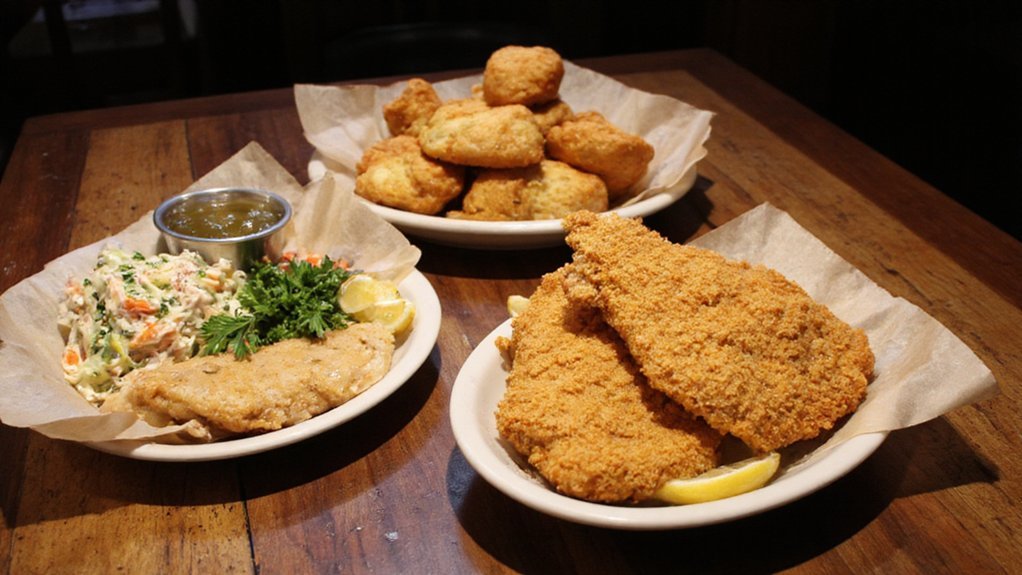
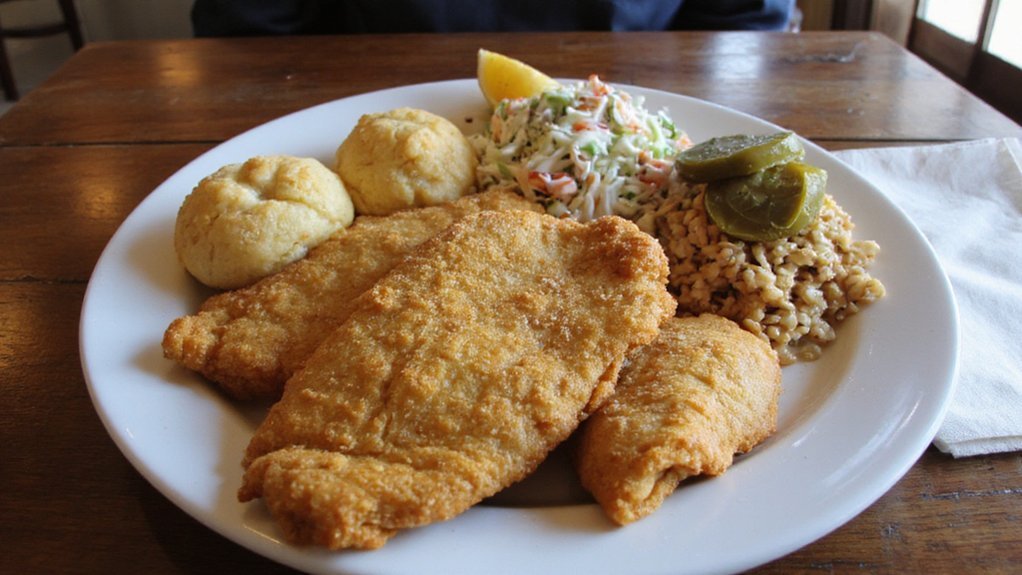
    You’ll find three distinct takes on fried catfish here: Jazz’s cornmeal-crisp, citrus-kick fillets with pickled slaw and smoked okra relish; Niecie’s coarse, peppery, home-style flakes with bright pickles; and Corner Café’s thin, paper-crisp classic paired with creamy slaw and fries. Each keeps the fish moist while steering richness in different directions—so which approach will suit your appetite?

    Jazz: A Louisiana Kitchen — Creole-Style Fried Catfish

    crisp citrus creole catfish

    Sifting hot cornmeal and spices into a crisp, golden crust, Jazz: A Louisiana Kitchen serves Creole-style fried catfish that hits you with bright, savory confidence. You notice how the crust shatters, releasing a citrusy heat and herbaceous notes; Creole seasonings are calibrated, not overpowering.

    The fillet beneath stays moist, flaky, a restrained richness that lets the spice speak. Portions arrive with inventive sides—a pickled slaw that cuts fat, a smoked okra relish that nods to tradition while nudging it forward.

    Coastal sourcing shows in a clean minerality and consistent texture; you appreciate the traceability and seasonality. Overall, the dish balances nostalgia and refinement, proving innovation can honor roots without pretension. You leave thinking about technique and flavor interplay, keen to replicate its disciplined creativity.

    Niecie’s Restaurant — Soulful Home-Style Fried Catfish

    peppery cornmeal crusted catfish

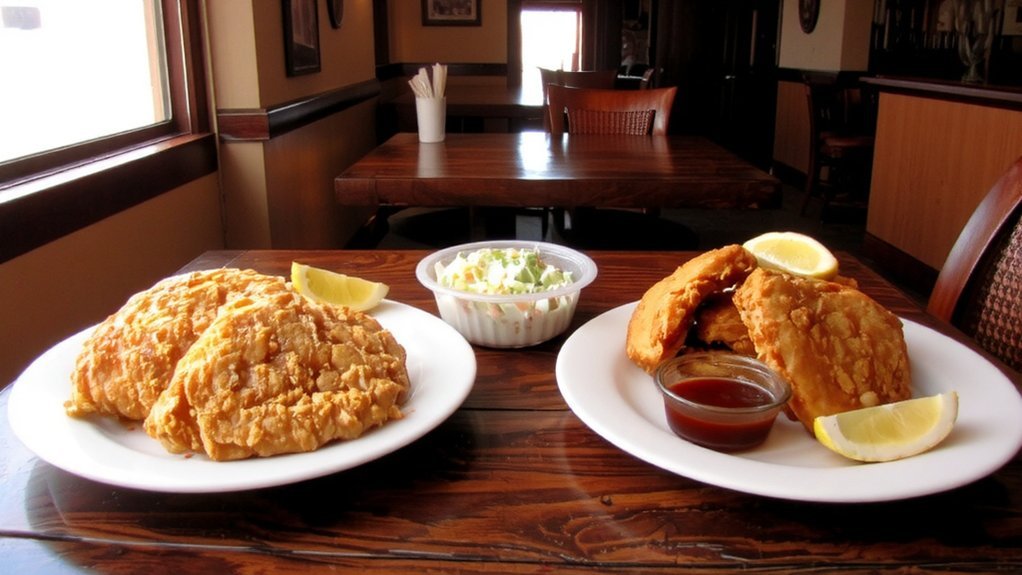
    A steaming platter lands before you, the catfish fillets crowned with a coarse, deep-golden cornmeal crust that cracks under your fork and lets loose a peppery, homey aroma.

    A steaming platter of cornmeal-crusted catfish—deep-golden, crackling crust releasing a warm, peppery, homey aroma.

    You taste Niecie’s soulful batter—bright spice, tender flakes—and you note how family recipes have evolved into purposeful, modern comfort. The restaurant respects memory while pushing texture and seasoning forward. You observe plating that honors community traditions yet suggests playful pairings. You appreciate subtle tweaks that reframe comfort food boldly.

    Consider these essentials for understanding Niecie’s approach:

    1. Crisp cornmeal crust — contrasts moist flesh, minimalist brilliance.
    2. Balanced heat — peppered warmth without overwhelming nuance.
    3. Thoughtful sides — pickled brightness to cut richness.
    4. Heritage technique — fried with care, refined for today.

    The dish reads as innovation rooted in love.

    Corner Café — Neighborhood Classic Fried Catfish

    crisp catfish inventive accents

    At Corner Café you’ll find a straightforward fried catfish that leans into dependable comfort: thin, even-browned fillets with a paper-crisp crust give way to moist flakes seasoned modestly but confidently, while familiar sides—creamy coleslaw, crinkle fries, and dill pickles—keep the dish rooted in neighborhood tastes.

    You step up to Counter Service where staff move with practiced economy, and the menu’s simplicity invites you to imagine subtle reinventions: lemon-scallion oil, a sherry vinegar drizzle, or smoked paprika aioli.

    The Daily Specials often flirt with those ideas, turning a classic into a small experiment without betraying its identity. If you want approachable reliability with a nudge toward inventive accents, this platter rewards curiosity and steady taste. Take notes; the simplicity makes adaptation satisfyingly effortless every time.

    Conclusion

    You’ll find each platter delivers a distinct Louisiana story: Jazz’s cornmeal crust and citrus heat wake your palate while pickled slaw and smoked okra add clever contrast; Niecie’s coarse, peppery flakes hit soulful, homey notes with bright pickles cutting richness; Corner Café’s paper‑crisp fillets and creamy slaw comfort without fuss. You’ll appreciate how texture, seasoning, and thoughtful sides balance moisture and flavor, letting regional nuance shine in every bite and invite repeat visits time after.

  • Toasted Ravioli — Cascone’s, Garozzo’s Ristorante, Carmen’s Café

    Toasted Ravioli — Cascone’s, Garozzo’s Ristorante, Carmen’s Café

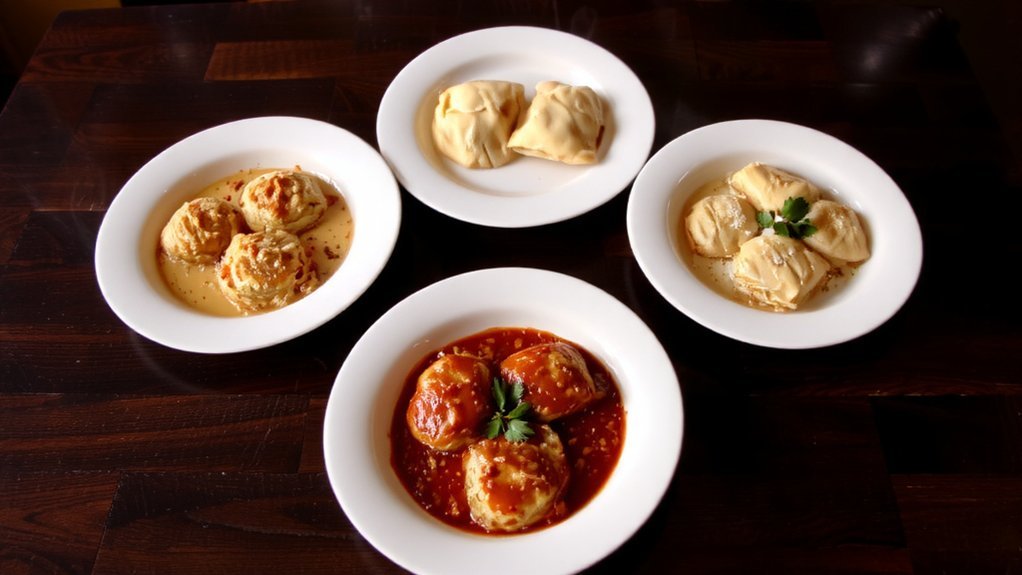
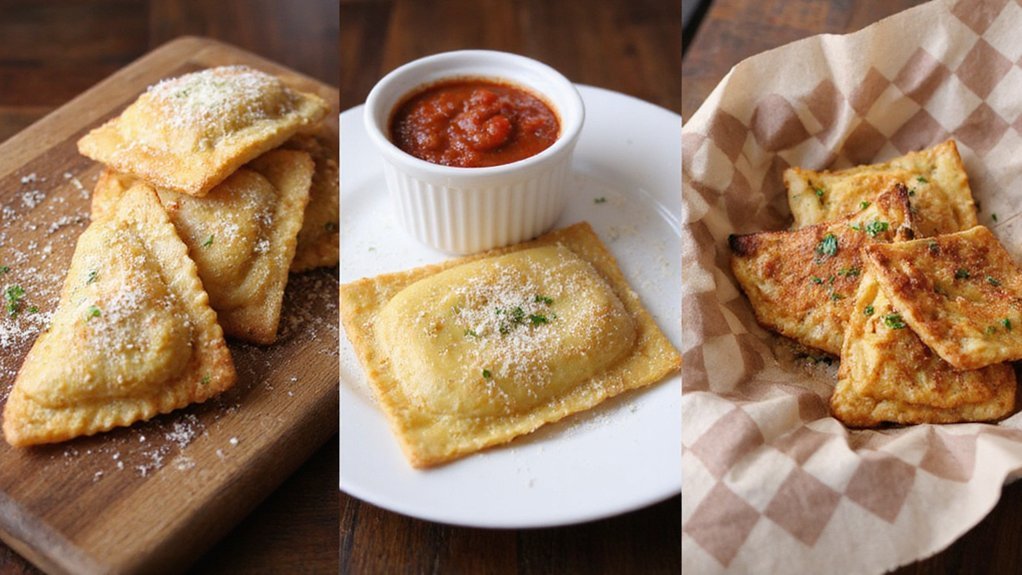
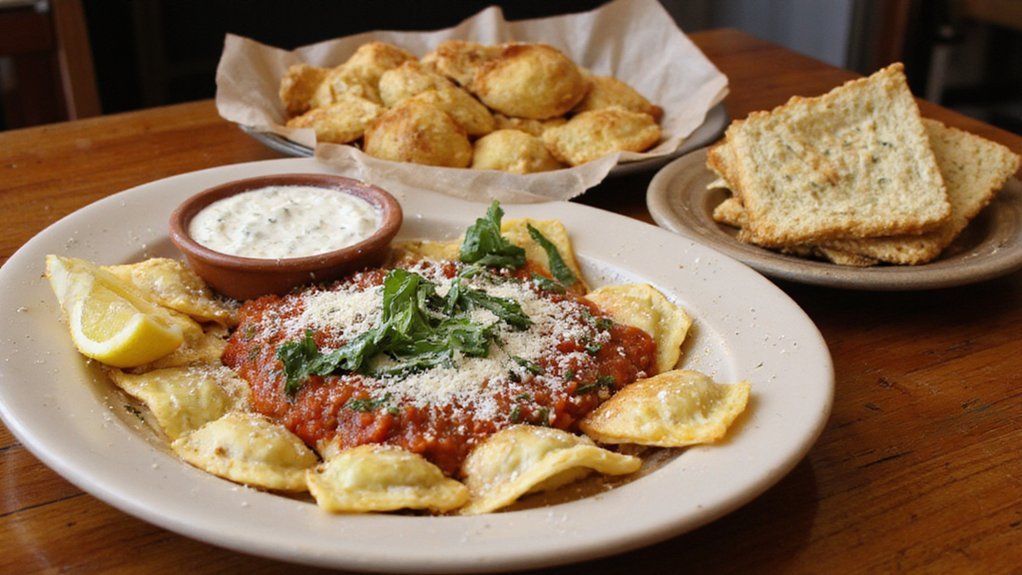
    When you bite into toasted ravioli in St. Louis, you’ll feel a dry, nutty crunch give way to warm, herb-bright filling at Cascone’s, a richer, beef-forward center at Garozzo’s Ristorante, or a peppery, slightly playful twist at Carmen’s Café. Each spot balances grease, sauce, and texture differently — and those small choices tell you a lot about place and tradition.

    History and Origins of Toasted Ravioli

    crispy st louis immigrant innovation

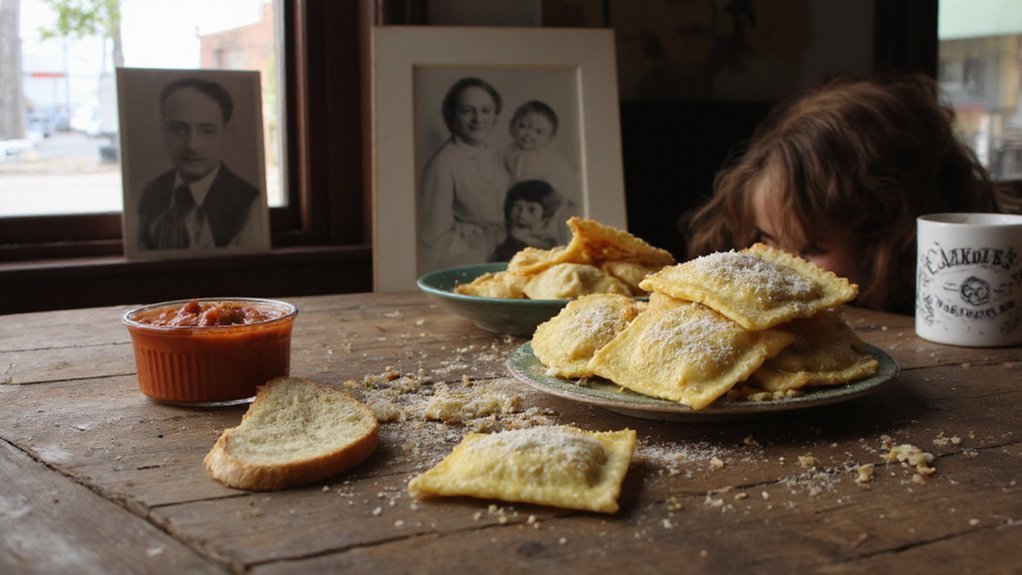
    Though its exact birthplace still sparks debate, toasted ravioli first grabbed attention in St. Louis, and you can almost hear the sizzle as pockets of pasta meet oil.

    Though its origins argue, toasted ravioli announced itself in St. Louis — crispy shells giving way to warm, savory centers

    You taste a crunchy exterior that yields to warm, savory filling — a contradiction that feels deliberate.

    You’ll trace its roots to Immigrant Influence, where Italian technique met Midwestern ingredients and improvisation.

    You judge it by balance: caramelized edges, herby depth, restrained grease.

    You recognize Culinary Evolution in each iteration, from tavern snack to plated starter, and you expect more experimentation — alternative fillings, unexpected batters, elevated dipping sauces. You’re invited to regard toasted ravioli not as novelty but as a living, adaptable symbol of regional innovation. You demand bold reinterpretations that honor roots while pushing boundaries today.

    Where to Try It: Cascone’s, Garozzo’s, Carmen’s Café

    st louis toasted ravioli tips

    In St. Louis, you’ll find toasted ravioli that crackle under a fork and release warm, herby steam.

    Head to Cascone’s, Garozzo’s Ristorante, or Carmen’s Café with practical expectations: check parking options nearby — street meters, lots, or valet at peak hours — then plan timing to avoid waits.

    When you enter, let aromas guide you and be decisive: order a dozen to share, or sample a half portion if available.

    Use ordering tips like asking for fresher batches or pairing with a bright sauce to cut richness.

    You’ll evaluate texture, seasoning, and temperature; trust your palate.

    These spots reward curious eaters seeking refined classics executed with confident, modern consistency.

    Bring an experimental mindset and take notes — you’ll refine preferences and inspire future culinary experiments at home.

    What Makes Each Spot Unique

    distinct toasted ravioli personalities

    Why does each spot’s toasted ravioli leave a different impression on your palate?

    You taste Cascone’s crisp, nutty shell and a restrained, herb-forward filling that pairs with a bright, tangy marinara; Garozzo’s hits you with a richer, beefier interior and a velvety tomato sauce that feels indulgent; Carmen’s Café experiments — a peppery heat, unexpected cheese blend, and playful drizzle.

    You’ll note Signature Sauces are decisive: one emphasizes acidity, another depth, another spice layering.

    You’ll also register Ambiance Differences: one room hums with tradition, another gleams with white-table innovation, the last buzzes casual and daring.

    Trust your senses, compare textures, and let these contrasts guide your next creative order.

    Take notes on balance, temperature, and crunch to refine what innovation you want next right now.

    Conclusion

    You taste St. Louis history in every toasted ravioli: Cascone’s sings with a nutty crunch and herb-bright filling that snaps against tangy marinara; Garozzo’s settles deeper, its beefy warmth and velvety sauce filling your mouth; Carmen’s nudges you with peppered zip, unconventional cheeses, and playful drizzles that surprise. You’ll judge texture, grease restraint, and sauce balance—each bite proving regional pride, tavern roots, and immigrant inventiveness remain alive and delicious every single visit, worth savoring, always.

  • Boulevard Beer (Local Favorite Pairing) — Boulevard Brewing Co. Beer Hall, Char Bar, Brick House KC

    Boulevard Beer (Local Favorite Pairing) — Boulevard Brewing Co. Beer Hall, Char Bar, Brick House KC

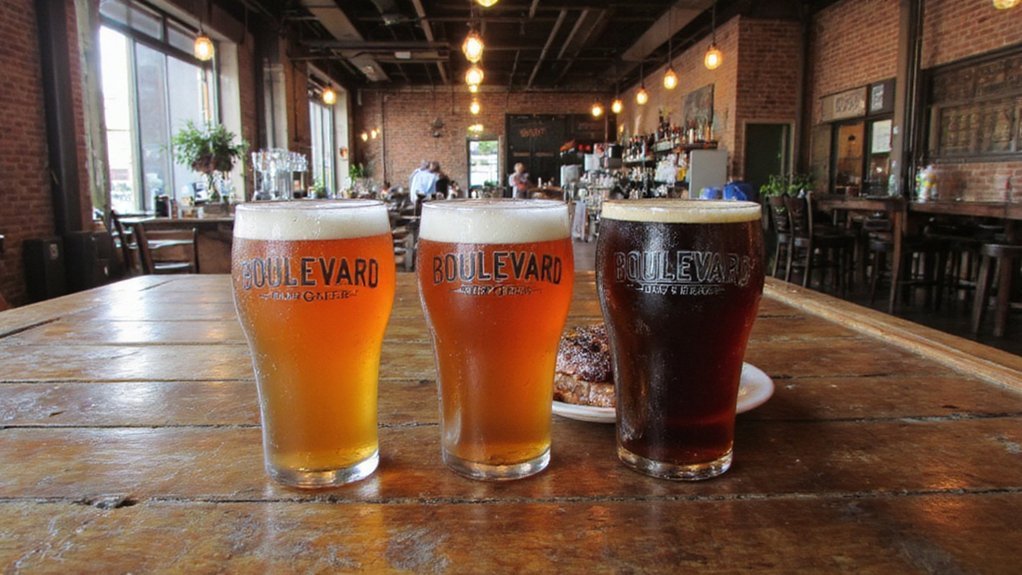
    You’ll find Boulevard’s range tastes as local as the limestone streets: resinous Tank 7 hop aroma, soft wheat creaminess, and roasty browns that beg for tangy goat‑cheese, smoke‑kissed ribs, or brown‑butter biscuits. At the Beer Hall, Char Bar, and Brick House KC you’ll pair by texture and contrast—citrus and vinegar cutting fat, malt soothing char—so keep going if you want exact matches.

    About Boulevard Brewing Co

    saison forward kansas city brewery

    Boulevard Brewing Co., born in Kansas City in 1989, crafts beers that hit you first on the nose—warm toasted grain, caramel, citrus peel, and resiny hop pine—then settle into a palate of rounded malt and bright bitterness.

    You trace its founding history through label stories and archive photos, tasting the regional ambition in every saison and rye.

    You’ll notice how recipes balance funk and clarity, how oak and stainless meet for texture.

    In the taproom you pair smoked meats, tangy cheeses, and herb-forward dishes, matching acidity and bitterness with precision.

    You value the brewery’s sustainability initiatives—water reclamation, energy reduction, and local sourcing—because innovation for you means flavor without compromise.

    You crave seasonal experimentation, limited releases, and collaborations that push regional culinary boundaries with purpose.

    Must-Try Boulevard Beers

    citrus funk seasonal complexity

    You’ll want to start with Boulevard’s flagships—Unfiltered Wheat’s bright citrus and Tank 7’s farmhouse funk show why they’re staples.

    Then sample seasonal and limited releases for bold malt, spice, or barrel-aged complexity that shifts with the calendar.

    Pair them with local eats—goat-cheese salads or spicy barbecue for the lighter beers, and smoked short ribs or sharp blue cheese for the richer, aged pours.

    Classic Boulevard Flagships

    A golden pint shimmers in the glass, its soft malt aroma giving way to bright citrus and honeyed biscuity notes that tell you why these flagships have become kitchen- and taproom-friendly staples.

    You’ll reach for Boulevard’s approachable but nuanced beers — Pale Ale’s resinous hops balancing caramel backbone, Unfiltered Wheat’s pillowy texture lifting salads and seafood, and Tank 7’s peppery farmhouse funk cutting through smoked meats.

    Each pour reflects a deliberate Brand identity and subtle Packaging evolution that signal quality without theatrics.

    Taste will guide your pairing choices: crisp acidity for fried dishes, rounded malt for roasted vegetables, and effervescent spice to refresh the palate. These classics invite experimentation while remaining reliably harmonious with food. You’ll discover new contrasts with each sip and bite regularly.

    Seasonal & Limited Releases

    When seasonal taps rotate, you’ll find beers that push the house strains into bolder, ephemeral directions: citrus‑zested summer ales with crushed coriander and bright pith, barrel‑aged winters thick with candied malt and baking spice, and farmhouse releases where peppery yeast, wood tannin, and a lick of orange peel cut through fatty dishes.

    You’ll watch the Release Schedule for crisp, hop-forward experiments or funk-forward ales aged in oak and rye; limited runs arrive with tasting notes that read like recipes. Label Art signals intent—minimalist drafts for dry saisons, illustrated decadence for pastry stouts.

    Smell is your first route into complexity: caramel, toasted coconut, zesty citrus, and lactic tang. Taste reveals texture—silk, carbonation snap, tannic grip—and shows whether a bottle is meant for now or cellaring.

    Pairings With Local Eats

    Pairing Boulevard beers with St. Louis’s bold flavors wakes your palate: you’ll match Saison-Brett’s peppery funk with charred octopus for bright acidity in Seafood pairings, or let Unfiltered Wheat lift lemon-dressed oysters.

    For Brunch pairings, pour a citrusy Tank 7 alongside shakshuka or smoked salmon benedict to amplify herbaceous hops and effervescence.

    You’ll seek texture contrasts—creamy yolks against prickly carbonation, fatty pork belly against resinous American ales—and flavor bridges—caramel malts echoing maple, floral hops cutting through spice.

    At Char Bar or Brick House KC, experiment with barrel-aged ales over tangy barbecue and vinegar-forward slaw.

    Trust sensory cues: aroma, mouthfeel, finish.

    Be bold, taste deliberately, and write your own local pairing rules. Start small, compare notes, and refine matches for memorable, modern city dining tonight.

    Boulevard Beer Hall: Flight Guide

    arrange smell sip record

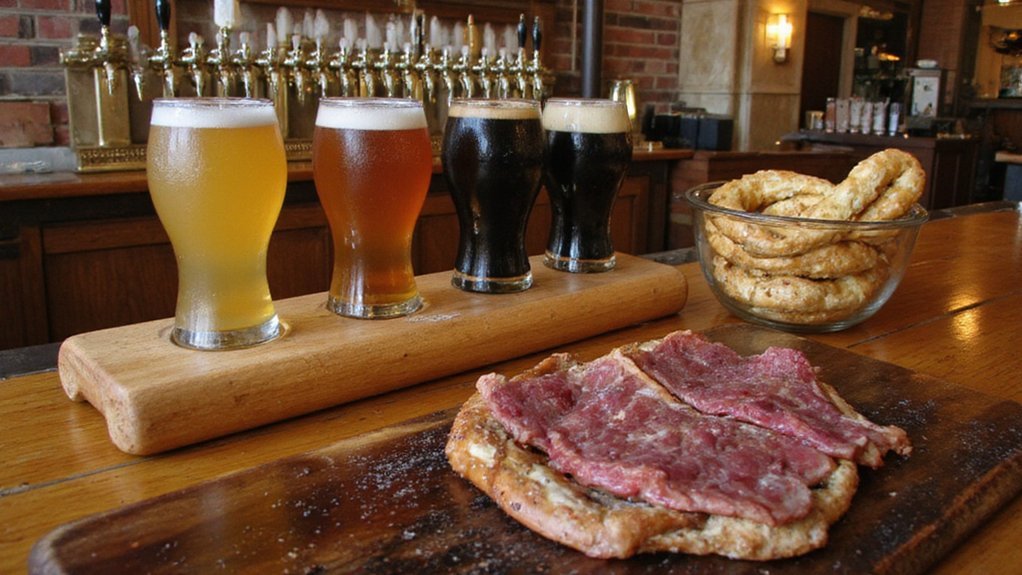
    How do you navigate a Boulevard Beer Hall flight to get the most flavor from every pour? Start by arranging beers by intensity and aroma to build a purposeful tasting progression; you’ll move from delicate, floral notes to resinous hops or roasted malt crescendo.

    Arrange your flight by intensity and aroma—from delicate florals to resinous hops and roasted malt crescendos.

    Pay attention to glassware selection — tulip or snifter concentrates aromatics, while a tulip-style IPA glass sharpens bitterness and carbonation.

    Smell first, sip slowly, note mouthfeel, acidity, and finish.

    Cleanse with a neutral bite or mineral water between samples.

    Challenge expectations: swap contrasts, try warm-versus-cool pours, or layer bites that highlight bitterness, sweetness, or tannin.

    Record details; iterate on your flight design.

    You’ll leave energized, tuned to nuance, and ready to invent new pairings and share discoveries with adventurous friends regularly.

    Pairing Boulevard Pilsner With Grilled Fare

    crisp citrus cuts char

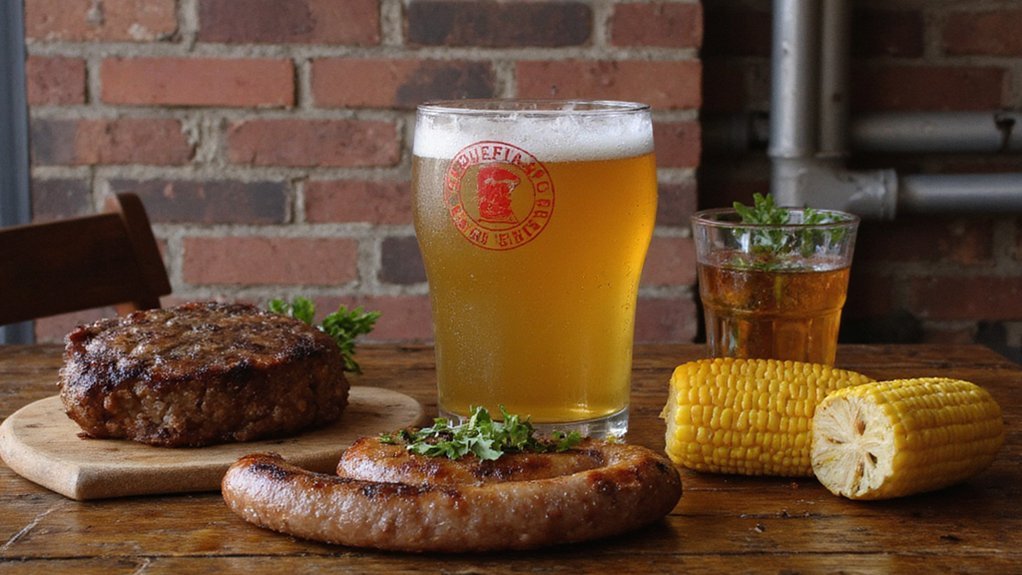
    After arranging a flight to map intensity and aroma, you’ll want a pilsner that cleans the palate and lifts charred flavors — Boulevard Pilsner does both with bright lemon-zest top notes, delicate cracker malt, and a clean, snappy bitterness.

    When you fire up the grill, think contrast: the beer’s crisp carbonation cuts fat and rescues char from lingering, while its citrus thread echoes Citrus Marinades you brush on chicken or shrimp.

    For Seafood Skewers, the pilsner heightens brine and char without overpowering delicate flesh.

    Try a minimal herb rub and let the beer’s grain structure play against smoky sugars from the Maillard crust.

    You’ll finish bites refreshed, noticing renewed aromatics and an urge to innovate your next charred plate. Experiment with seasonal wood chips.

    Pairing Hoppy Seasonals With Spicy Dishes

    bitterness cuts sweetness calms

    You can use hop bitterness to stand up to spicy dishes, its resiny pine and citrus cutting through chili heat.

    But you’ll often want a touch of malt sweetness in hoppy seasonals to calm the burn and round the palate.

    Taste for harmony—let bright hop aromatics contrast while residual sugars soothe so each sip refreshes and tempers the spice.

    Balance Bitterness and Heat

    While bitterness can sharpen the heat of chili, it can also tame it when you pair hops and spice with intention: pick a hoppy seasonal whose citrus, resin, or pine aromatics echo the dish’s flavors, and let its malt backbone and carbonation reset your palate between bites.

    You’ll want to think in contrasts: resinous pine lifts smoky chilies, bright citrus zest amplifies fresh salsas, and grassy bitterness frames complex chile oils.

    Use Dairy Soothing additions—yogurt, crema, or whipped cheese—to soften perception of burn while Citrus Brightening garnishes revive aromatics.

    Smell before you sip; let hop oils meet capsaicin on your tongue.

    Experiment with temperature and glassware so the beer’s volatile aromatics sing, and you’ll control heat without muting your dish’s character and preserve nuance.

    Malt Sweetness Tames Heat

    Because a touch of malt sweetness cushions capsaicin, reach for hoppy seasonals that balance assertive hop aromatics with a richer malt backbone so you can taste heat without being overwhelmed.

    You’ll notice caramel and toffee notes smoothing the burn, where sugar chemistry tames sharpness and rounds volatile bitterness.

    Choose ales with biscuity malt and moderate residuals to create mouthfeel modulation — a fuller body tempers spice and lets citrusy hops sing without clashing.

    On your palate, soft malt echoes creaminess, offering relief between bites of chili-sambal wings or peppered brisket.

    Experiment with late-addition hops and slightly higher mash temps to accentuate sweetness while preserving resinous aroma.

    That interplay elevates both beer and dish, pushing spicy pairings toward refined, innovative harmony, and culinary discovery ahead.

    Pairing Dark Ales With Rich Comfort Foods

    If you want a pairing that sings, let the roasted malt and cocoa aromas of a dark ale echo the char and caramel in braised short ribs or beef stew while its gentle carbonation lifts the gravy from your palate.

    You’ll explore velvety roasted notes against savory fat, and you’ll use cooking techniques to coax gelatinous richness into silky sauce.

    Contrast with sharp elements — cheese contrasts, pickled shallots, bitter greens — to reset your palate between bites.

    Think texture and temperature: ale’s warmth, the cool bite of a slaw, the unctuous meat.

    Try these experiments:

    • Layer a blue cheese foam over warm short ribs to puncture richness.
    • Serve stout-braised onions to amplify roasted sweetness.
    • Pair with rye bread to frame malt and tannin.

    Char Bar Pairings: Smoke and Suds

    Move from velvet braises to the high-heat theatre of the char bar, where smoke, char and spice meet beer head-on.

    You’ll guide plates toward open flame, matching Boulevard’s crisp saisons and hop-forward pale ales to grilled sweetness and bitter char.

    Guide plates to open flame—match crisp saisons and hop‑forward pales with grilled sweetness and bitter char

    Consider Woodchip Varieties—apple for subtle fruit smoke, hickory for backbone, oak for tannic balance—then tune Char Intensity to the beer’s bitterness and malt profile.

    Smoked salts, chile oil and citrus zest sharpen aromas while residual sugars in brown ales calm aggressive smoke.

    You’ll taste interplay: caramelized meat, tobacco-like smoke, resinous hops and citrus rind.

    In practice, experiment with short, hot sears for bright ales and longer embers for malty beers, always letting aroma lead pairing choices.

    You’ll refine pairings through quick tastings and notes.

    Brick House KC Pairings: Elevated Comfort Meets Boulevard

    When you sink into Brick House KC’s elevated comfort—think molten cheddar, lacquered burnt ends and a brown-butter biscuit—you’ll want Boulevard beers that cut, lift and echo those flavors: crisp saisons and pilsners to brighten fatty sauces and fried crusts, hop-forward pales to slice through caramelized meat and mustard glazes, and richer malt-forward ales or brown ales to mirror toffeeed edges and smoky sweetness.

    You’ll pair intentionally: choose contrasts to cleanse, complements to amplify.

    In Chef Collaborations expect curated pours that highlight technique; Live Music nights, pick beers that hold to volume and tempo. Try these approaches:

    • Bright saison with cheesy biscuits to refresh palate
    • Hoppy pale ale against lacquered burnt ends for lift
    • Brown ale with brown-butter biscuit to echo caramel

    Tips for Ordering a Perfect Pairing

    Ordering a perfect pairing starts with reading the plate and the pint: note the dish’s dominant textures and flavors—fat, char, cream, acid—and match them to beer by sight, smell and mouthfeel.

    Read the plate and pint—match dominant textures and flavors by sight, smell, and mouthfeel for perfect pairings.

    You’ll scan for contrast or chorus: a crisp pils tames fatty char, a hoppy IPA lifts acidic brightness, a malty amber cushions smoky sweetness.

    Smell first; tilt the glass, warm the hop oils, then sip to test mouthfeel against the bite.

    When balancing innovation and comfort, be bold with cross-genre matches but respect portion control so flavors don’t overwhelm.

    Don’t hesitate to ask server for samples, suggested tap swaps, or scaled plates.

    Read labels, probe provenance, and trust your palate — then order with clear intent.

    Savor each pairing and iterate confidently daily.

    Conclusion

    You’ll want to taste Boulevard’s range with intent: nose each pour, note citrus, barnyard funk, resinous hops and toasty malt, then match textures—crisp Pilsner with charred steaks, herbal saison with tangy goat‑cheese salad, resinous Pale Ale with smoky ribs, and brown ale with lacquered burnt ends and brown‑butter biscuits. Ask for samples, balance char with acid or cream, and savor contrasts that make every sip and bite sing for a truly local, layered tasting experience.

  • Chili Dogs — Fritz’s Railroad, Town Topic, Winstead’s

    Chili Dogs — Fritz’s Railroad, Town Topic, Winstead’s

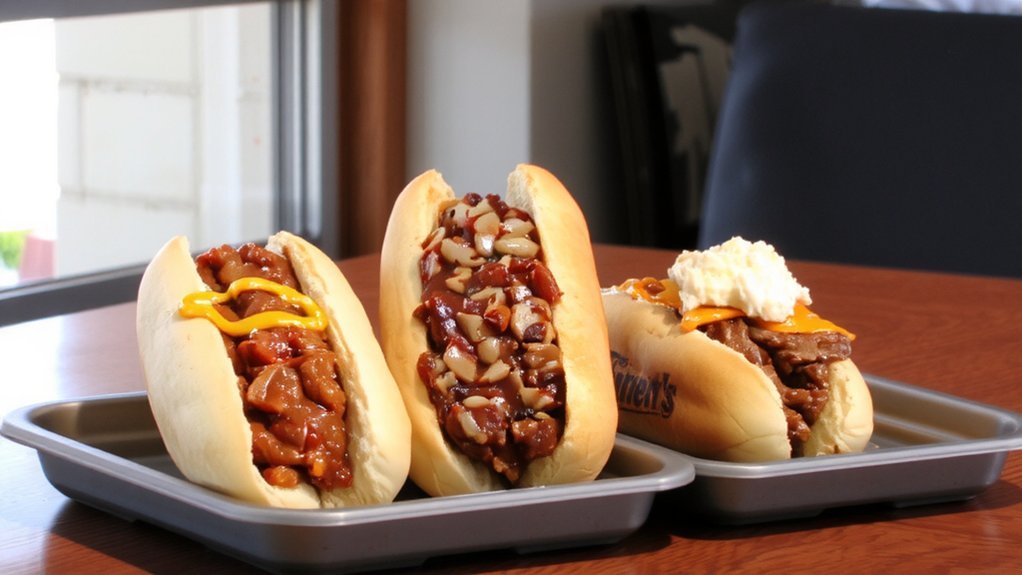
    You approach three chili‑dog philosophies—Fritz’s train‑delivered snap and cumin‑bright chili, Town Topic’s coarse, beefy Kansas City sauce with smoky paprika, and Winstead’s measured sweetness made to pair with a malted shake. You taste sausage snap, pillowy bun, salt, acid and lingering smoke. Decide which element matters most to you…

    Fritz’s Railroad — Train‑Delivered Nostalgia and the Original Chili Dog

    train delivered chili dog nostalgia

    Step aboard Fritz’s Railroad and you’ll get more than a meal—you’ll get a whiff of steam, warm metal, and chili-scented nostalgia that hits like a savory postcard from midcentury America.

    A steam-scented, metal-and-chili nostalgia — a savory midcentury postcard served on tracks.

    You watch miniature cars glide on tracks to tables, a clever train delivery that feels theatrical and efficient, marrying showmanship with workflow innovation.

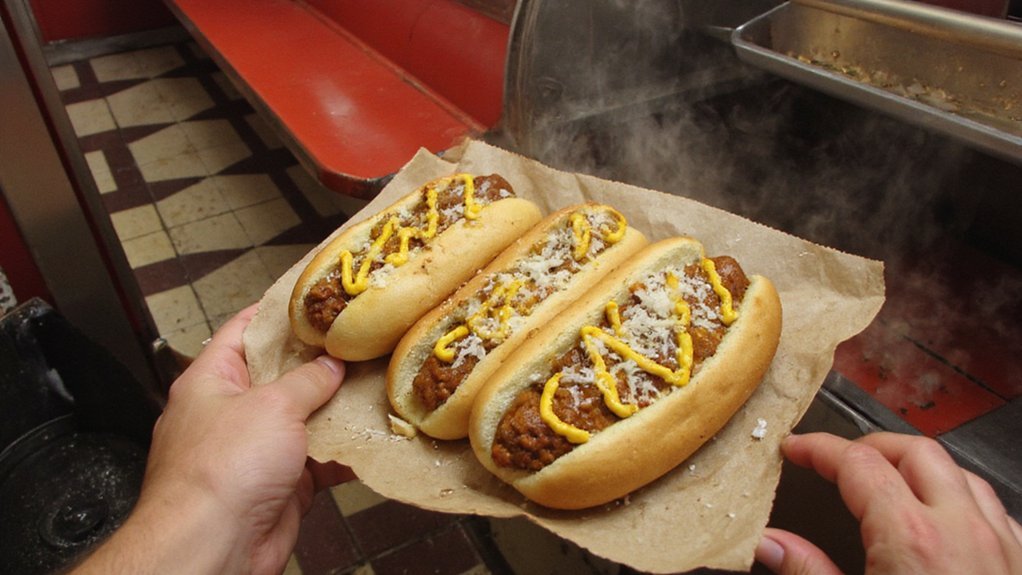
    The chili itself follows an original recipe: bright cumin, restrained heat, and a glossy, meat-forward texture that respects the hot dog rather than smothering it.

    You’ll note the balance — each bite calibrated for contrast: snap of the sausage, pillowy bun, and that tangy, smoky sauce.

    It’s not just retro kitsch; it’s a design-forward rethinking of service and flavor you’ll want to replicate.

    That challenges fast‑food complacency and sparks modern reinterpretations.

    Town Topic — Old‑School Counter Service and Beefy Kansas City Chili

    beefy kansas city chili

    When you slide onto a vinyl stool at Town Topic, the counter’s rhythm — clinking plates, the hiss of the grill, a server’s practiced pour — becomes part of the dish.

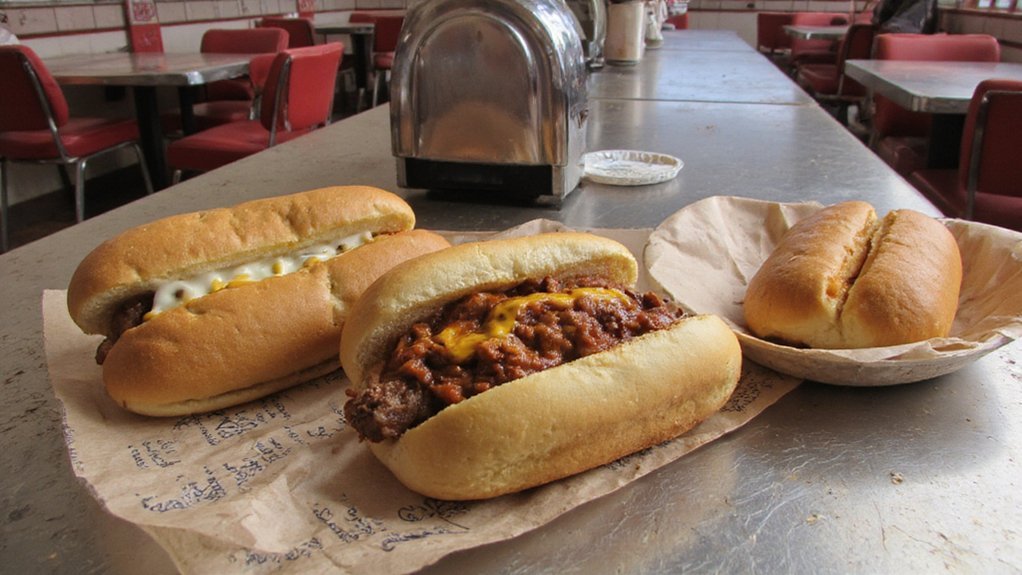
    You taste beefy Kansas City chili that refuses to be coy: coarse grind, glossy fat, reductive tomato depth. Counter nostalgia frames the experience, but you’re evaluating craftsmanship, not pastiche. The chili’s spice profiles are deliberate—cumin anchor, smoked paprika heat, a faint cocoa bitterness—balancing aroma and texture against steamed bun and snappy hot dog.

    You want innovation, so note how restraint and technique push tradition forward: no reckless gimmicks, just calibrated layers that honor provenance while nudging the chili dog toward something sharper, smarter, and unapologetically bold.

    You leave thinking reinvention can respect roots and future.

    Winstead’s — Classic Shake Pairings and Perfectly Spiced Sauce

    calculated malts balance spice

    How could a milkshake still feel essential to a chili dog? You lean into contrast: cold velvet cutting heat and fat.

    At Winstead’s, Malted Pairings aren’t nostalgia — they’re deliberate balance, vanilla malt smoothing spice, chocolate grounding smoke.

    At Winstead’s, malts aren’t nostalgia but calculated balance: vanilla to soothe heat, chocolate to anchor smoke.

    You analyze Sauce Chemistry: cumin, cayenne, tomato acids tuned to cling without drowning the bun. You want innovation, so you pair with daring textures and calibrate sweetness.

    1. Vanilla malt: calms spice, highlights beef savor.
    2. Chocolate swirl: amplifies roasted notes, adds depth.
    3. Salted caramel: elevates umami, teases sweetness.
    4. Coffee espresso: sharpens acidity, cleanses palate.

    You’ll taste intention; every sip and bite proves design, not accident. Trust that measured contrasts and bold tweaks will remake a classic into revelation today.

    Conclusion

    You taste nostalgia at Fritz’s — the train’s clack, the cumin-bright chili framing sausage snap and pillowy bun; you get Town Topic’s coarse, beefy Kansas City stew, smoky paprika and tomato grounding each bite; and you appreciate Winstead’s engineered sauce and malted shake balance, where measured sweetness and acid let smoked heat sing. You’ll prefer one based on whether you want theater, old‑school muscle, or scientific balance. Decide quickly — your palate won’t forgive compromises.

  • Cheese Sliders — Winstead’s Steakburgers, Town Topic Hamburgers

    Cheese Sliders — Winstead’s Steakburgers, Town Topic Hamburgers

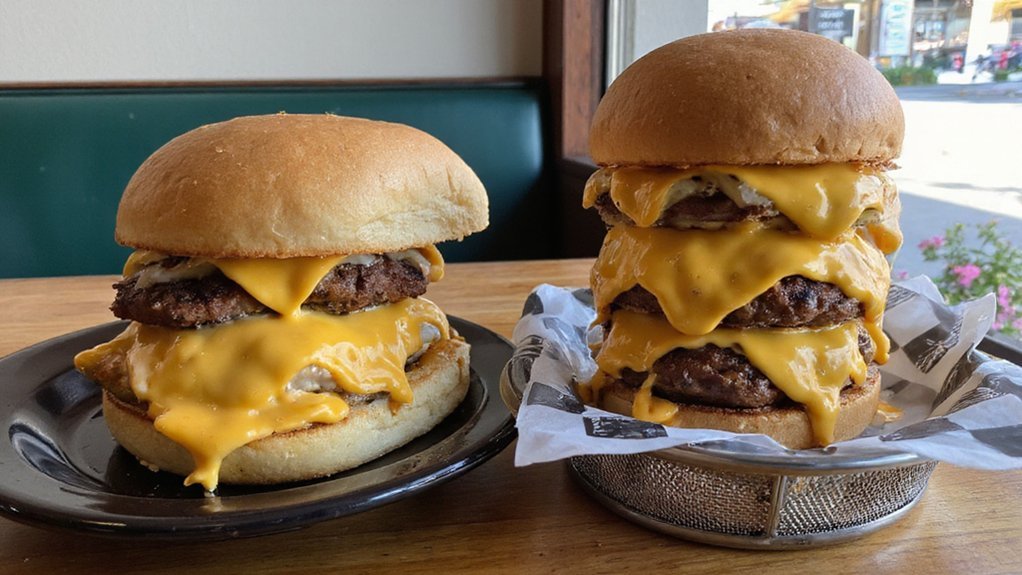
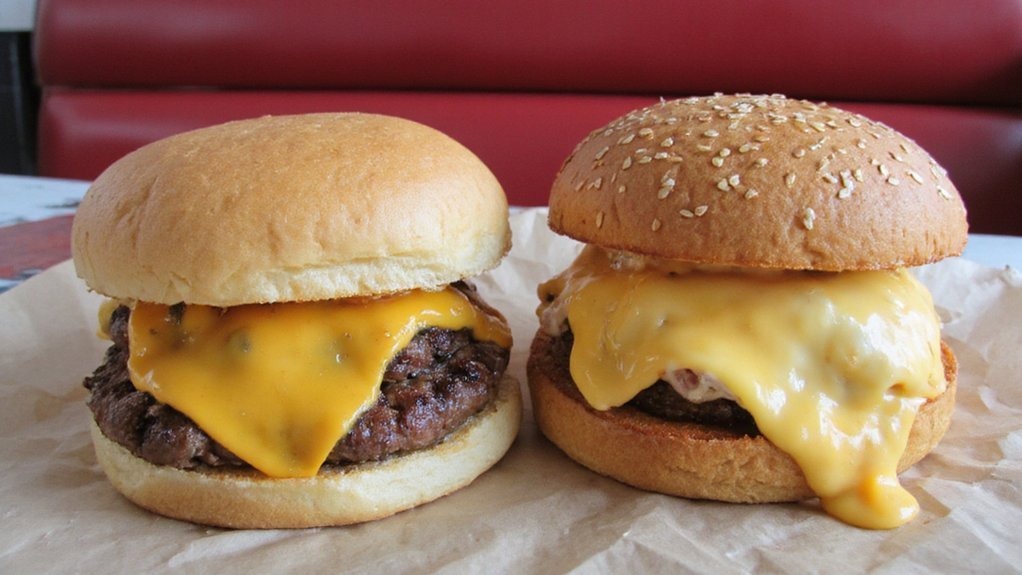
    You stand at a counter where buttered rolls and griddle-charred patties arrive with quiet confidence. You notice the thin, melted American cheese, the precise pickle placement, the ritual timing of orders. You map neighborhoods by who swears by Winstead’s or Town Topic, and that rivalry says as much about the city as the burgers, if you pay attention.

    Origins and Local Rivalry

    neighborhood counters spark rivalry

    When you trace the sliders’ history back through grease-streaked menus and neighborhood lore, a clear pattern emerges: simple, portable burgers became cultural touchstones for cities staking culinary claims.

    You notice how Founding Stories get mythologized — a counter by a young owner, a late-night invention — and how those origin myths anchor identity.

    You map how Neighborhood Loyalties form around counters, not cuisines, and how rivalries sharpen through ritual: order, share, debate.
    You weigh innovation against tradition, seeing how small tweaks provoke civic pride.
    You move between nostalgia and invention, recognizing that these modest sandwiches do more than feed: they stage local ambition, invite improvisation, and hold contested histories in a compact, edible form.

    You keep probing, imagining next moves without erasing the past.

    Signature Details and Where to Find Them

    slider neighborhood flavor map

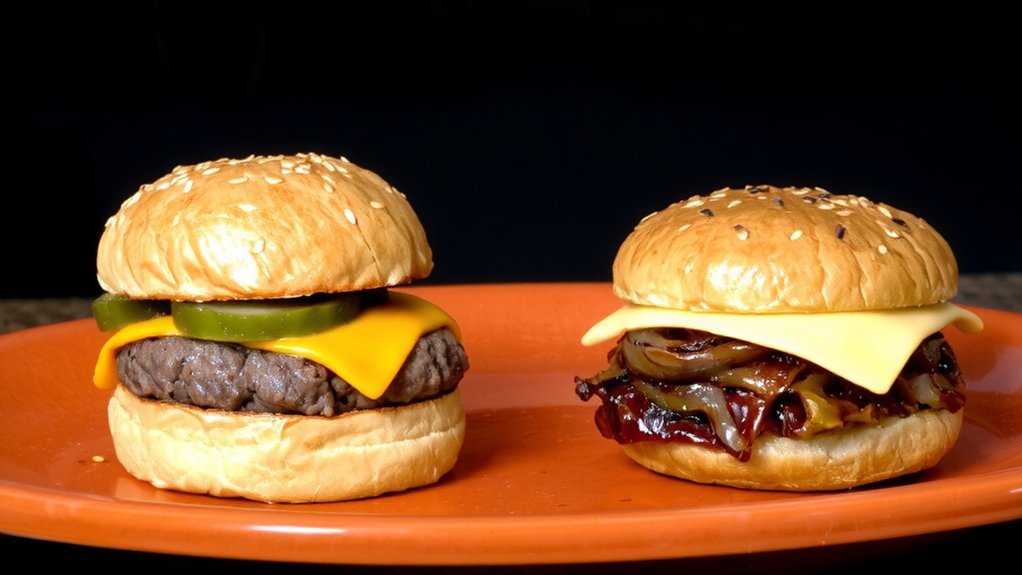
    How do you read a slider like a map of its neighborhood? You trace textures and choices: toasted bun, melted cheese, pickles placed with intent. You note signature toppings as coordinates — onion jam signaling late‑night creativity, mustard blends pointing to classic roots.

    You’ll find subtle variations that mark neighborhood spots: a diner’s buttered roll, a counter’s char, a roadside’s tangy relish. You listen to tempo — thin patties flipped fast versus thick, slow‑seared rounds — and infer kitchen ethos.

    When you taste, you’re parsing design decisions, supply lines, and culture. Use that analytical palate to seek innovation: compare pairings, recombine elements, and return to the spots that push boundaries while honoring lineage. Document discoveries, prototype your own riffs, and share them with curious fellow tinkerers locally.

    Conclusion

    You’ve tasted how Winstead’s and Town Topic distill Kansas City identity into buttered rolls and charred, paper-thin patties. You notice each melted slice of American cheese, each pickle, each counter conversation maps neighborhood lineage. You weigh nostalgia against small innovations, feeling civic pride and rivalry simmer in greasy heat. You carry away more than a portable bite—you carry contested memories, flavors that keep local stories alive, debated and savored at every late-night visit and remembered.