Blog

  • Barbecue Nachos — Q39, Joe’s KC, Char Bar

    Barbecue Nachos — Q39, Joe’s KC, Char Bar

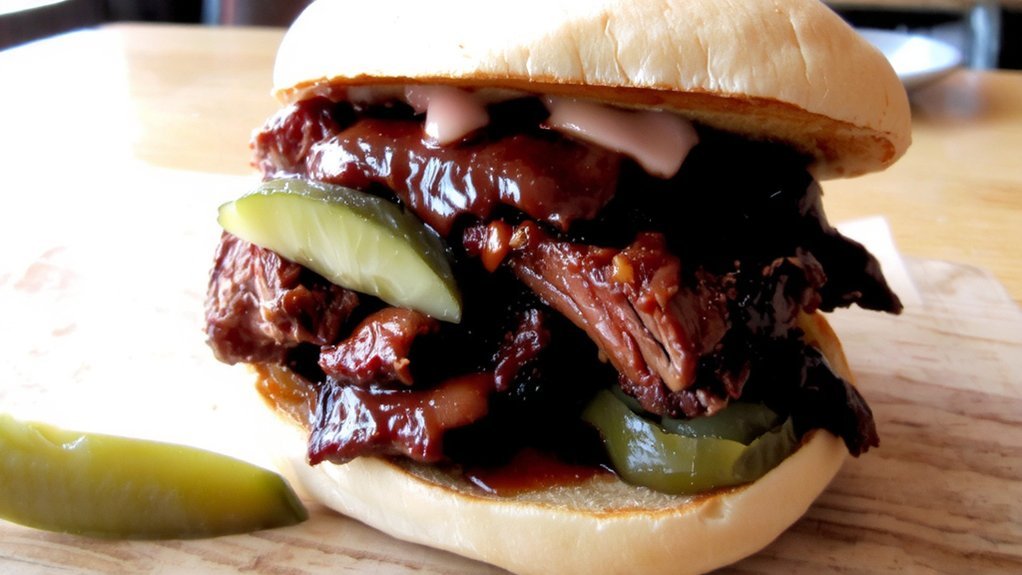
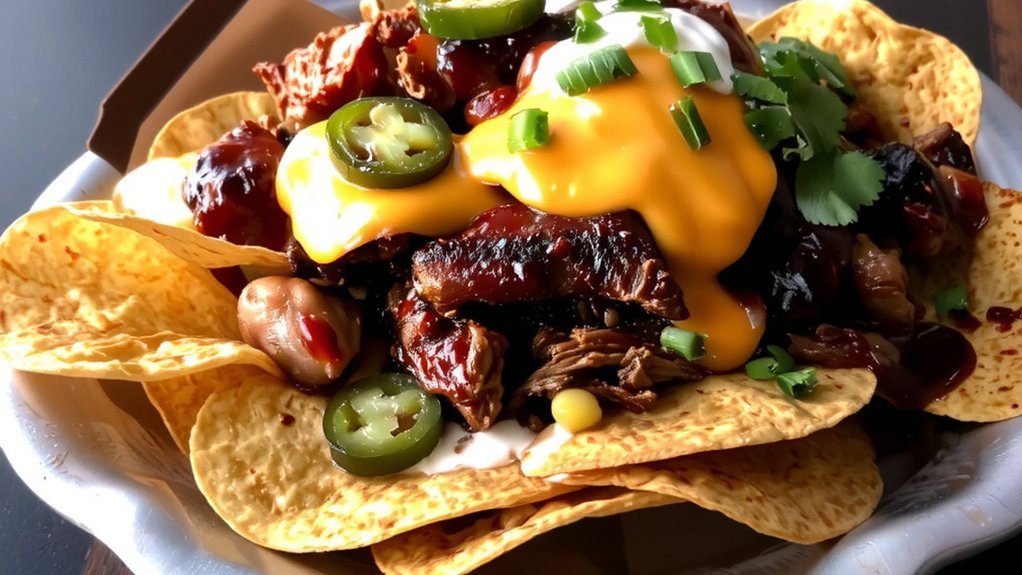
    You approach barbecued nachos from Q39, Joe’s KC, and Char Bar like a tasting, eyes on bark and smoke. You’ll find mahogany-bright brisket, molasses-glazed burnt ends, ribboned pulled pork over crisp chips; a crackling bark gives way to molten interior that perfumes the air with coffee and smoke. Tangy mustard and house pickles cut the fat, and you’ll want to know which house nails the balance.

    Q39: Tender Brisket and Bold Smoke
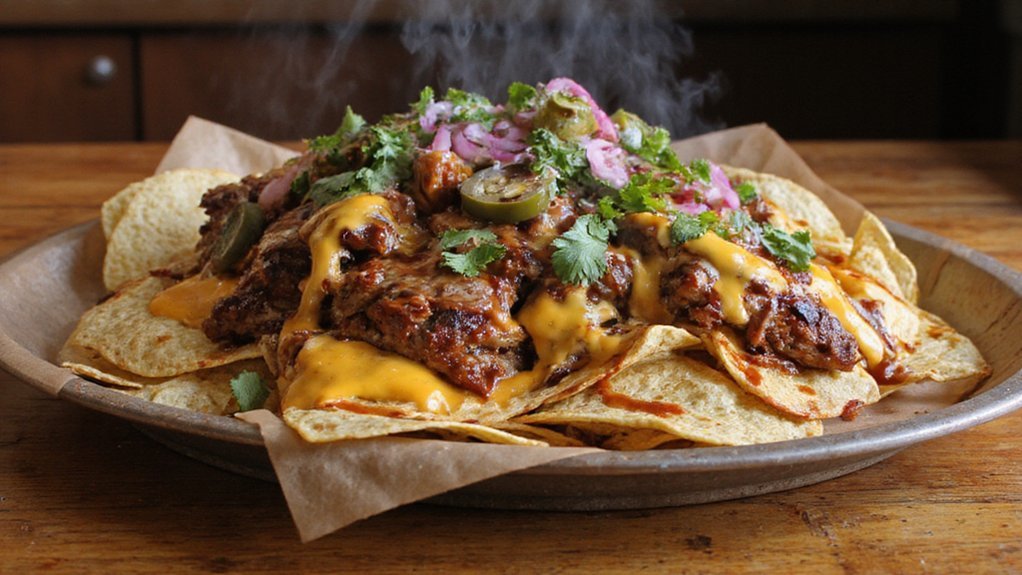
    smoky mahogany crusted tender brisket

    Slicing through the brisket reveals a mahogany crust and a steam of smoke that hits your nose first, promising depth before the first bite. You press the slices and feel how careful temperature control coaxed connective tissue into silk, each strand yielding without collapsing.

    The bark formation isn’t accidental; it’s deliberate caramelization and smoke adhesion that gives texture and whisper of bitterness to balance fat. You taste roasted coffee, molasses, and a fleeting cayenne lift, and you notice how innovation tweaks tradition — micro-smoking, wood blends, moisture blankets — to push nuance without losing soul.

    When you pile this brisket on nachos, every chip gets savory gravity, complexity, and a hint of smoke that stays with you. You’ll return, craving inventive smoke and balance.

    Joe’s KC: Classic Burnt Ends and Tangy Sauce
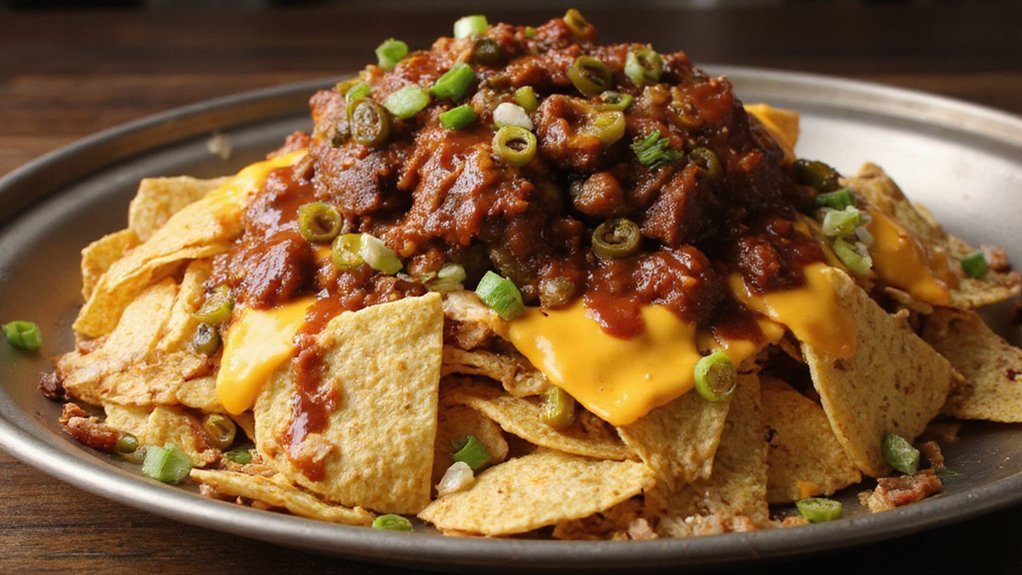
    smoky molasses glazed burnt ends

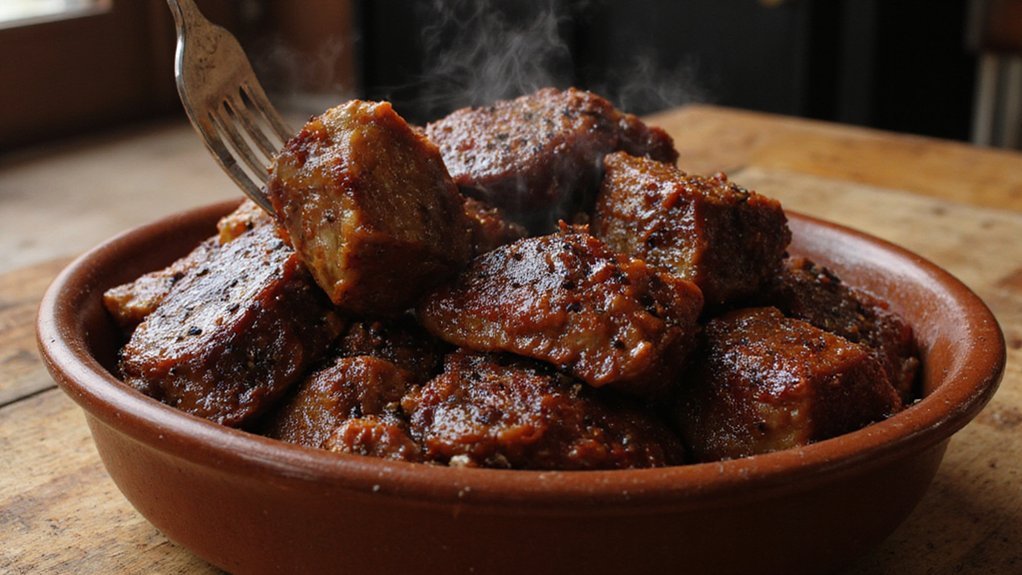
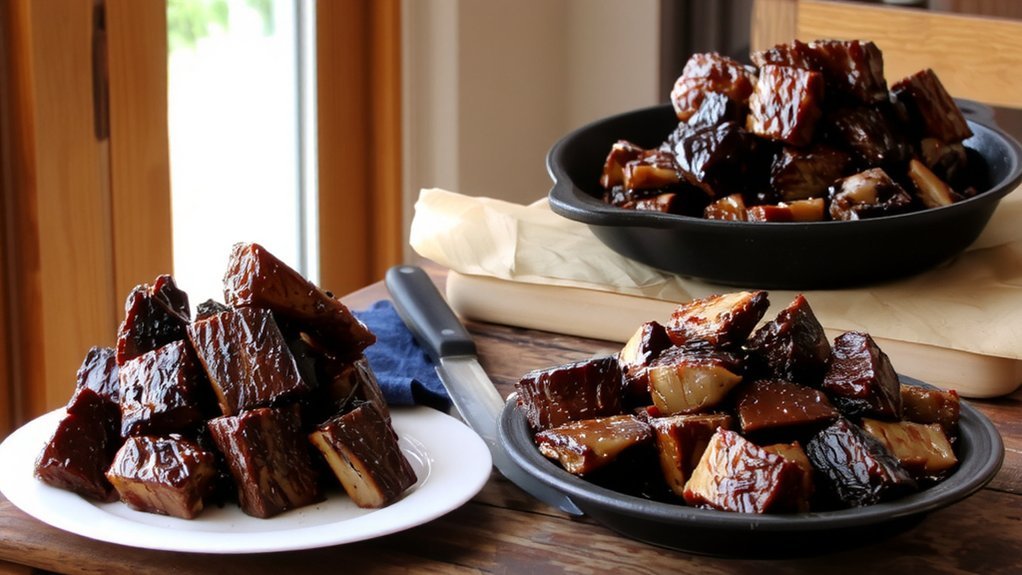
    Where the brisket’s long slices offered silk and restraint, Joe’s KC chops those same flavors into gloriously rogue bites: burnt ends with a mahogany crust that crackles, edges glassed in a molasses-bright glaze and smoke that lingers like a promise.

    Joe’s KC transforms brisket into molasses-glazed burnt ends—crackling mahogany, molten, smoky seduction.

    You dig in and the Caramelized Bark shatters, releasing a sweet-smoky perfume that coats your palate while the interior stays molten, tender, almost buttery.

    The tang of a Mustard Glaze cuts through richness, bright and vinegary, coaxing fat and smoke into harmony.

    Each cube is an idea — texture, fat, acid — calibrated for immediacy.

    If you crave innovation on a plate, these burnt ends teach you how contrast and restraint powerfully redefine familiar comfort.

    They invite you to rethink what barbecue can accomplish.

    Char Bar: Pulled Pork, Pickles, and Crunch
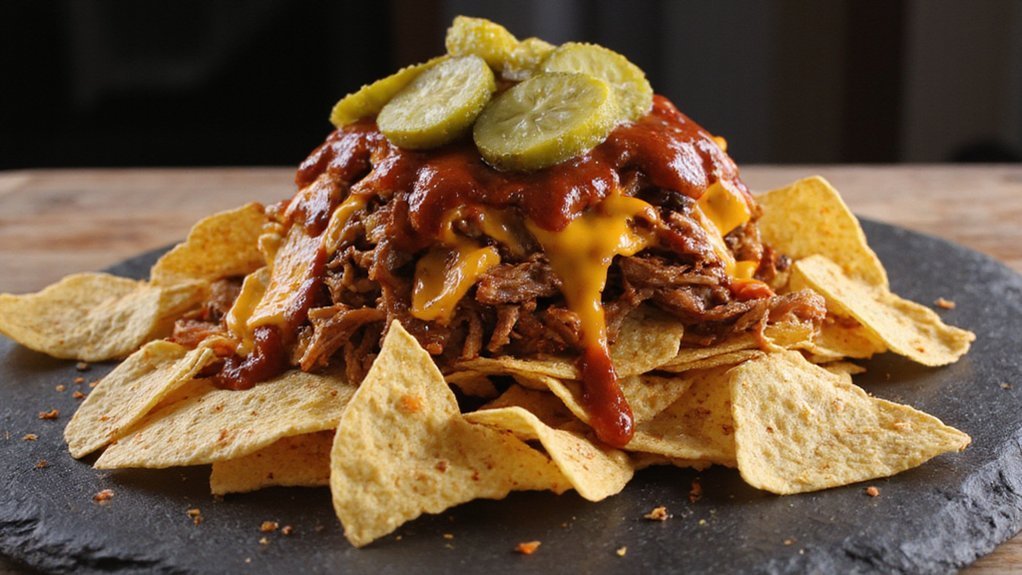
    smoky pork briny crispness

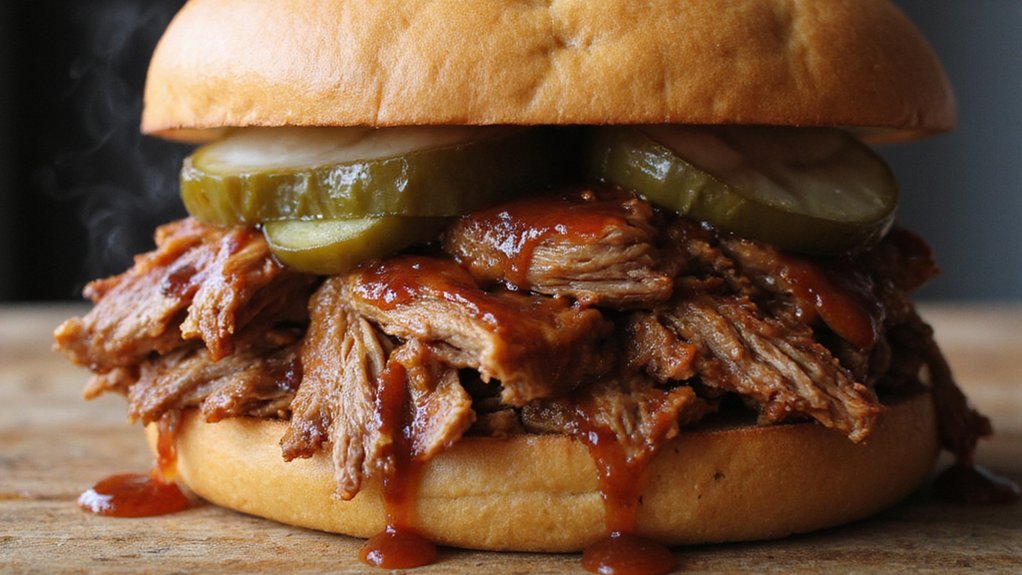
    When you bite into Char Bar’s pulled pork, fat and smoke fold into you like a secret—shredded strands glisten with rendered juices, each mouthful yielding a smoky, savory warmth that’s trimmed by a bright, briny snap of house pickles.

    You notice meticulous Pork Shredding, the meat teased into ribbons that carry char and collagen richness.

    A scatter of crisp tortilla chips adds deliberate crunch, catching savory shards and pickle shards alike.

    The Pickle Brine is taut and inventive, cutting through fat and calibrating sweetness with acid.

    You taste restraint and daring: restrained sauce, bold texture contrasts, a composition that reads modern rather than fussy.

    You’ll return for that layered complexity soon.

    Conclusion

    You’ll find each barbecue nacho composition sharp and persuasive: Q39’s mahogany brisket sings with coffee-and-smoke, Joe’s KC’s molasses-burnished burnt ends pop with sweet-char depth, and Char Bar’s ribboned pulled pork and house pickles cut through fat with vinegar snap. You’ll savor crackling bark, molten interiors, and restrained sauce marrying salt, smoke, and fleeting cayenne. Trust your palate — these layered bites reward attention with balanced heat, texture, and always lingering mustard brightness.
  • Fried Chicken — Stroud’s Restaurant & Bar, Corner Café, Denver Mattress Café

    Fried Chicken — Stroud’s Restaurant & Bar, Corner Café, Denver Mattress Café

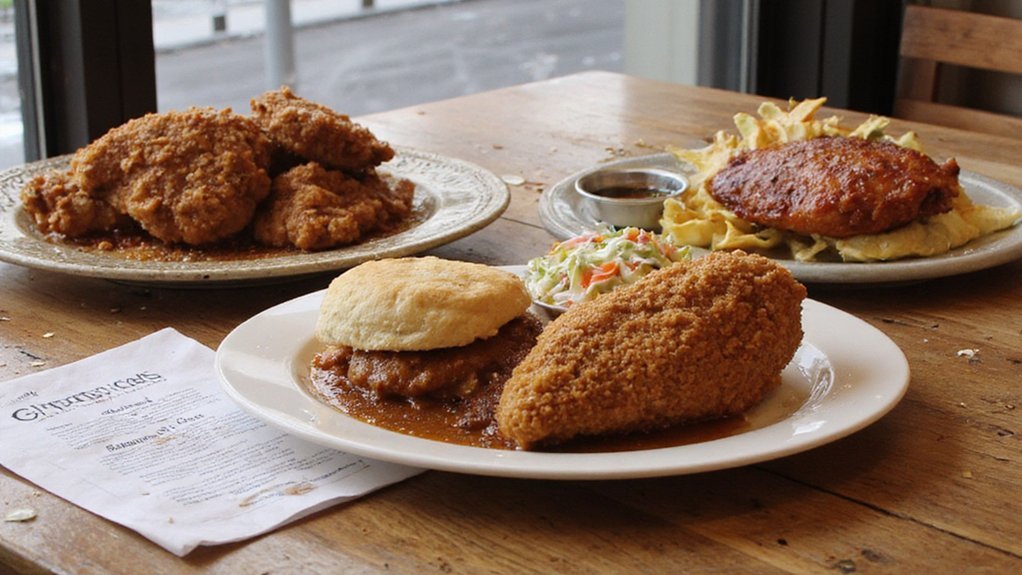
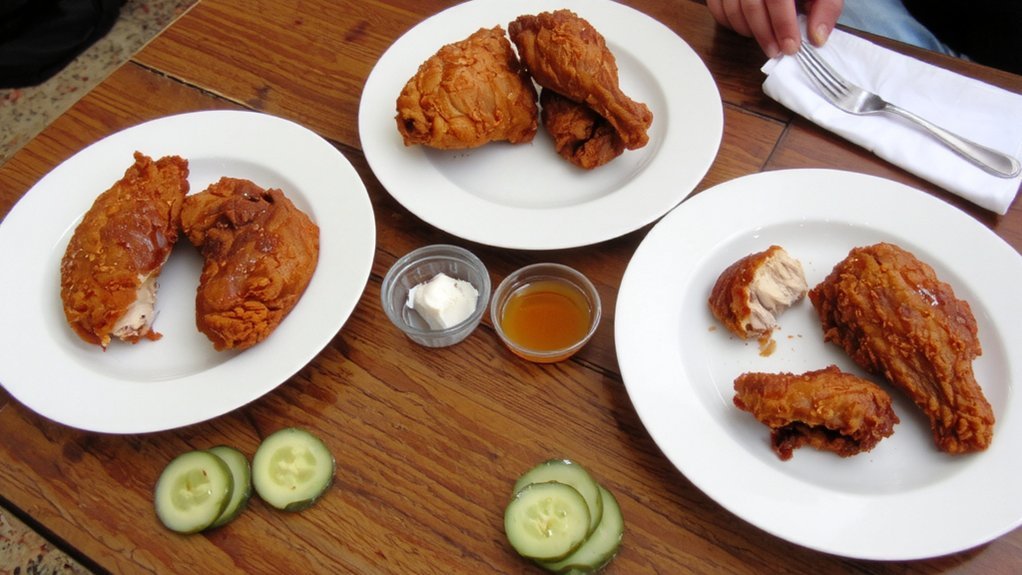
    When you seek fried chicken that favors restraint and craft, Stroud’s, Corner Café and Denver Mattress Café offer a clear thesis: brine-forward flesh, whisper-thin crusts that shatter into flakes, warm aromatic spices rather than heat. You’ll judge texture and balance more than novelty—and you’ll want to know which one nails it best.

    What Makes Their Fried Chicken Stand Out

    brined layered precisely cooked

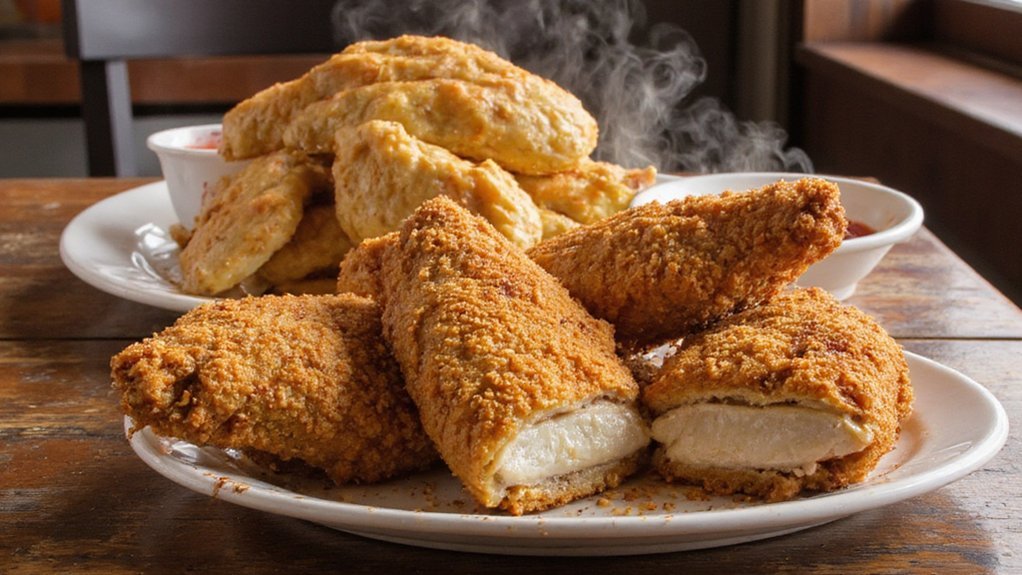
    What makes their fried chicken stand out is the way every element is balanced for maximum impact: a brine that seasons through to the bone, a batter that’s thin yet explosively crisp, and a spice blend that hits you with warmth rather than numbing heat.

    You notice immediately how their Breading Technique layers fine flour, a whisper of cornstarch and panko crumbs so the crust fragments instead of shattering. You’ll appreciate that they treat Cooking Temperature as a creative variable — higher heat for instant sear, then moderated to render fat without drying.

    That intentionality shows craftsmanship: textural surprises, clean seasoning and restrained heat. If you want innovation rather than gimmicks, this is fried chicken that teaches you restraint and precision can taste radical.

    Signature Dishes and What to Order

    brined chicken shattering crust

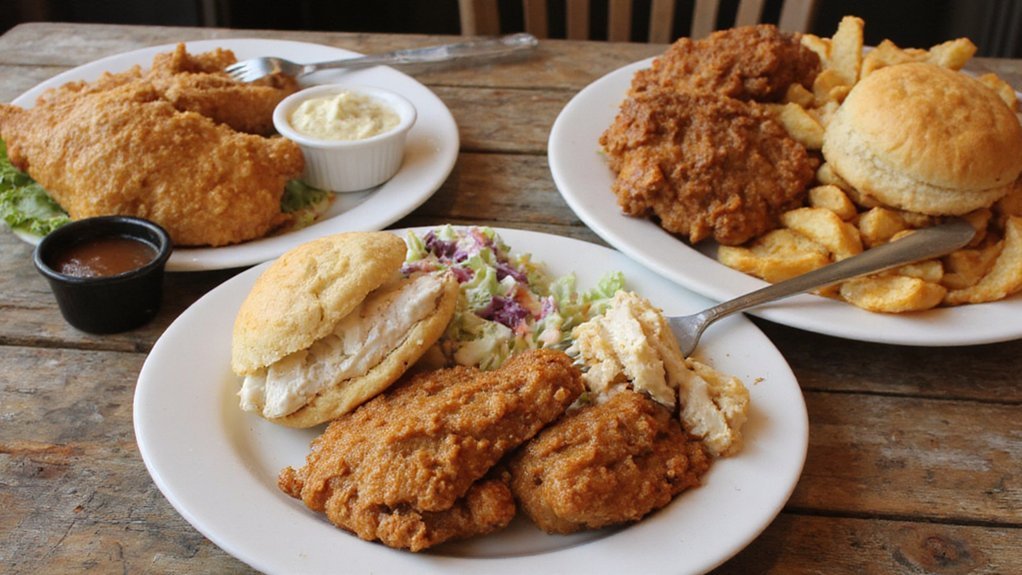
    When you want the clearest expression of their craft, start with the classic bone-in fried chicken — it shows off the brine, the thin, shattering crust and that warm, layered spice profile better than anything else.

    Begin with the classic bone-in fried chicken — brine-driven meat, thin shattering crust, and a warm, layered spice profile.

    Order it solo to judge technique; pairings reveal intent. You’ll notice confident portion sizes that respect appetite without excess, and creative sides pushing tradition.

    Don’t skip the spicy-sweet variant if you like edge. For finish, check dessert options that lean small, inventive, balanced—think citrus custard or a restrained cobbler.

    Below are signature picks that help you explore flavor, texture, innovation, boldly.

    1. Bone-in classic — pristine crust, brine-forward meat.
    2. Spicy-sweet glaze — caramelized heat, crisp retained.
    3. Herb-brined tenders — lean, precise seasoning, modern panache.
    4. Seasonal sideboard combo — rotating sides that test contrasts.

    Choosing the Right Spot for Your Fried Chicken Craving

    crisp texture honest seasoning

    How do you pick a place that’ll actually deliver on fried chicken cravings? Start by prioritizing texture and seasoning—crispy beyond expectation, brine that sings.

    Evaluate ambience factors: are seats communal and lively, or minimalist and experimental? You’ll want a kitchen that treats technique like design, innovating batter, oil rotation, and side pairings.

    Do a quick price comparison: high cost can mean premium sourcing, but smart value spots hit perfect crunch without premium pretension.

    Trustable spots show consistency in service and timing; flashy concepts should still respect comfort and portion honesty.

    Pick where creativity meets comfort, where each bite proves the concept, and you’ll leave convinced rather than merely satisfied.

    Lean toward kitchens that iterate boldly and disclose ingredients; your adventurous palate will reward transparency.

    Conclusion

    You’ll notice these kitchens favor brine-forward seasoning and a whisper-thin, explosively crisp crust that crunches without flaking into dust. You’ll want the plates that balance quick searing with moderated cooking—fat rendered, meat juicy, spices warm not numbing. Order what leans on restraint: thoughtful panko layers, a touch of cornstarch, subtle sweetness. If you care about texture and precision, you’ll find these spots exemplary—refined, deliberate, and quietly thrilling. They’re worth several more visits than you’ll expect.
  • Pork Tenderloin Sandwich — Town Topic, Winstead’s, Fritz’s Railroad Restaurant

    Pork Tenderloin Sandwich — Town Topic, Winstead’s, Fritz’s Railroad Restaurant

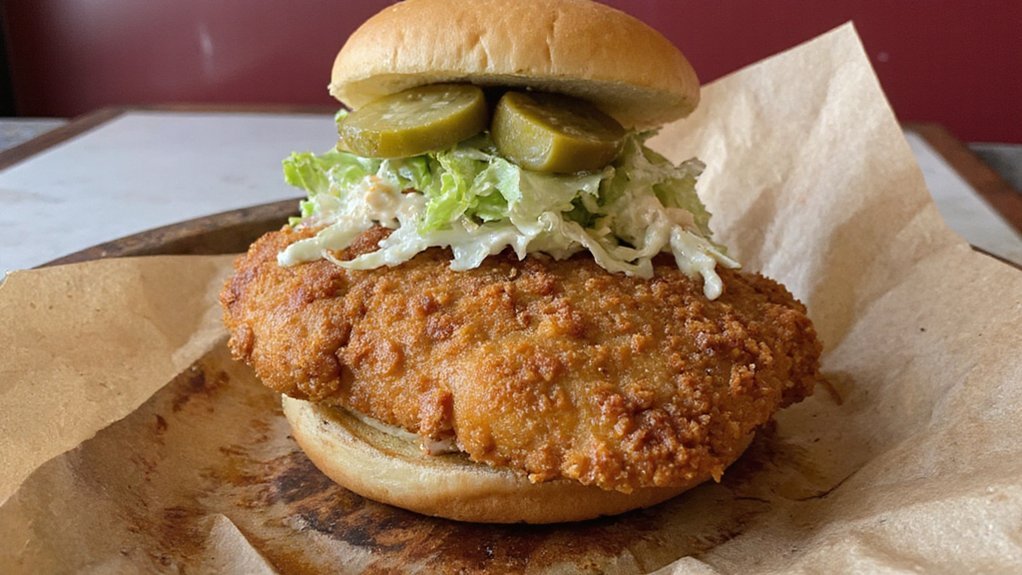
    You’ll notice the Town Topic’s paper‑thin, town‑sized cutlet first — bronzed, crackling, larger than the bun. Winstead’s keeps it restrained: even thickness, light seasoning, pillow bun, a bright citrus or pickle lift. Fritz’s turns it theatrical, snapping the cutlet onto a tiny train with tangy, smoky drizzles. You’ll evaluate texture, nostalgia and restraint, and then decide which one earns your next bite.

    Town Topic — Oversized, Perfectly Breaded Cutlet

    oversized double dipped crunchy cutlet

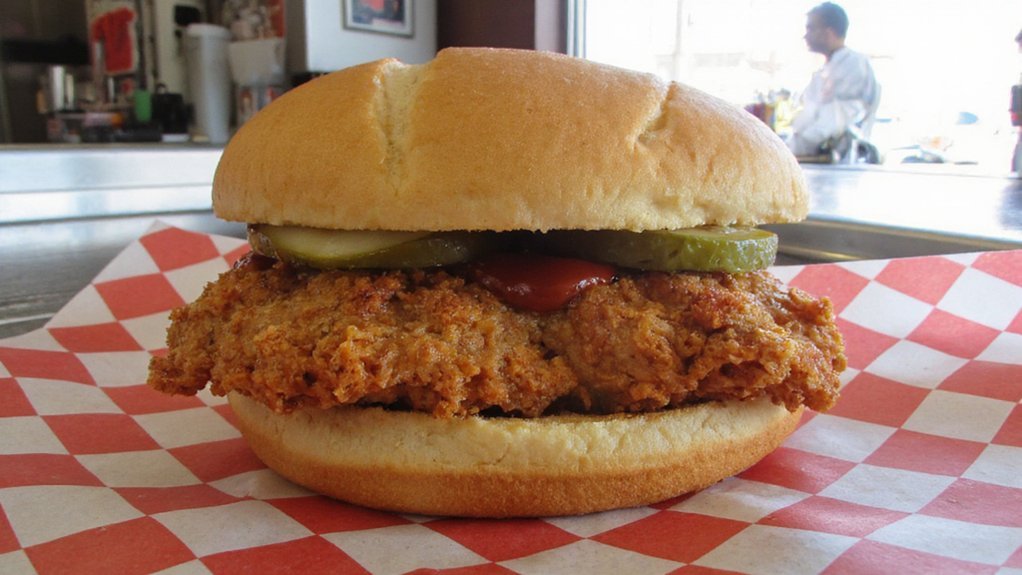
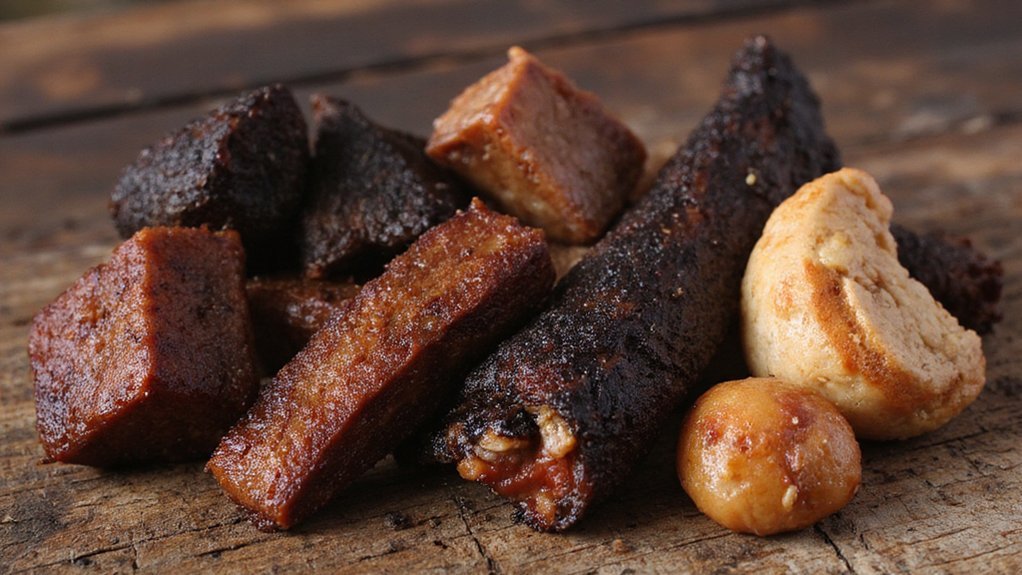
    Town-sized cutlets dominate the plate: a thin pork loin pounded until broad as a dinner plate, dredged in seasoned crumbs, and fried to a bronze, crackling finish.

    You lift a knife and feel the contrast: delicate interior yield against a disciplined exterior. The breading technique matters — a double-dip with chilled crumbs keeps crispness longer, and a whisper of spice modernizes classic crunch.

    A knife reveals tender yield against disciplined crust; double-dipped, chilled crumbs and a whisper of spice preserve crunch.

    Portion size isn’t just spectacle; it frames balance, forcing you to factor in bun ratio, pickles, and sauce restraint. You evaluate texture, seasoning, and ergonomics simultaneously, imagining ways to streamline assembly without losing impact.

    For innovators, it’s a template: amplify what’s essential, pare back what weighs it down, and let execution be the differentiator. You’ll tweak details until the result feels inevitable.

    Winstead’s — Nostalgic Diner-Style Tenderloin

    thin bronzed tenderloin sandwich

    Often you’ll spot it waiting on a vinyl booth table — a thin, pounded pork loin cloaked in an even, bronzed crust that snaps with each bite and slides neatly into a pillowy white bun.

    You’ll appreciate Winstead’s restrained execution: the tenderloin’s uniform thinness, light seasoned breading, and judicious fry create a balance that honors the diner ambience while hinting at deliberate refinement.

    You’ll notice economical toppings that let the meat speak, and an undercurrent of citrus or pickle that lifts each bite.

    Consider the recipe origin — a working-class innovation refined into a consistent signature.

    If you want nostalgia with purposeful tweaks, Winstead’s shows how modest ingredients, precise technique, and context-driven design make a classic feel newly intentional.

    It rewards repeat visits and experimentation too.

    Fritz’s Railroad Restaurant — Quirky Presentation and Flavor

    locomotive served tenderloin with flair

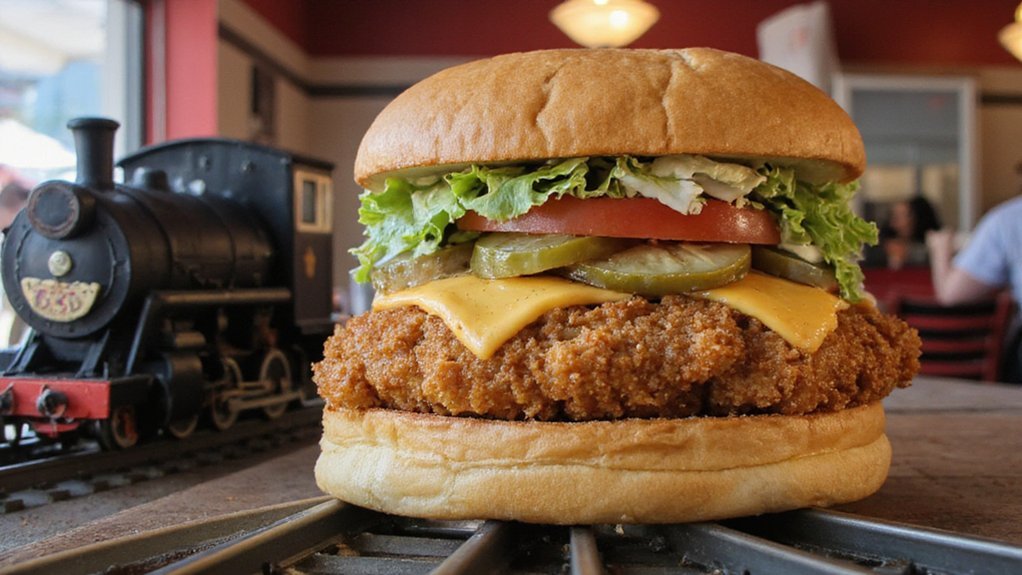
    When you sit down at Fritz’s and watch a tiny locomotive glide along the rails with your sandwich balanced on its flatcar, you know the meal will be as much about theater as flavor.

    You lean in, curious how Table theatrics reshapes expectation: the tenderloin’s crisp edge gleams, steam rising beside a mini caboose.

    House sauces arrive in droplets and drizzles, inventive—tang meets smoke.

    You appreciate the precision and playful risk; it’s a smart riff on comfort food.

    The experience reads like a design brief: bold textures, balanced acid, thoughtful presentation.

    Imagine:

    1. Golden crust glinting under diner lights.
    2. Train tracks guiding your gaze and hands.
    3. A smear of caramelized House sauces cutting richness into tune.

    You leave inspired to iterate boldly.

    Conclusion

    You’ve tasted three takes on the tenderloin — Town Topic’s cathedral-sized cutlet that crackles with bronzed crust and commanding presence; Winstead’s restrained, nostalgic slice that comforts with pillowy bun and bright citrus or pickle lift; and Fritz’s playful, theatrical plate that chugs in with smoky, tangy drizzles. Each honors texture, balance and regional pride differently, and you’ll walk away knowing how small shifts in breading, seasoning and presentation redefine a beloved classic in deliciously surprising ways.

  • Kansas City Steak — The Majestic Restaurant, 801 Chophouse, Stock Hill, Hereford House

    Kansas City Steak — The Majestic Restaurant, 801 Chophouse, Stock Hill, Hereford House

    You’ll find Kansas City steak here wears four distinct faces: The Majestic’s roaring glamour and steady technique, 801 Chophouse’s white‑glove restraint, Stock Hill’s disciplined dry‑aging and craft butchery, and Hereford House’s comforting, butter‑basted reliability. Each spot refines tradition rather than reinvents it, so you’ll judge them on subtle things—age, seasoning, service—and decide which balance matters most to you.

    The Majestic Restaurant — Old‑School Glamour and Timeless Steaks

    timeless steaks modern refinement

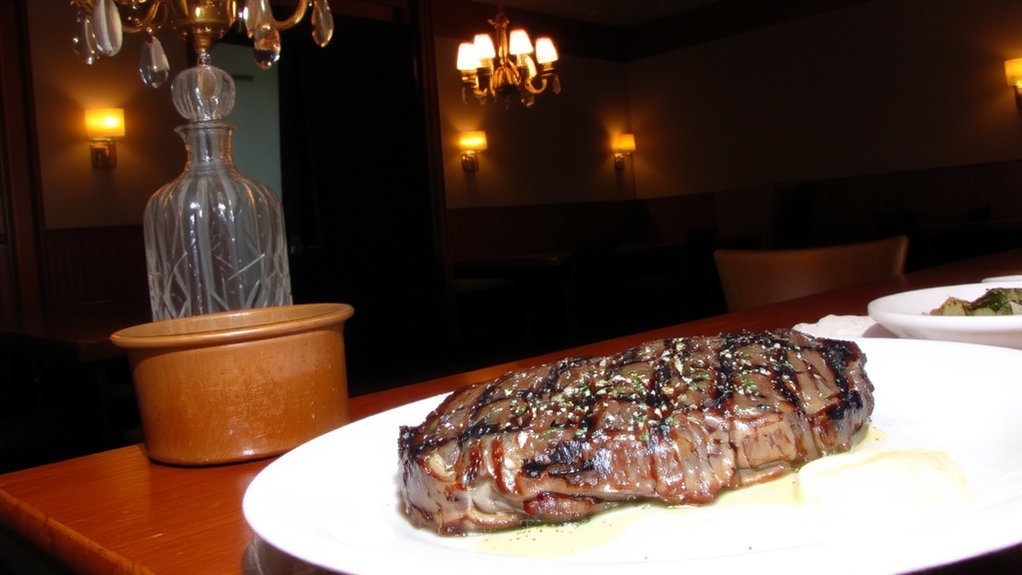
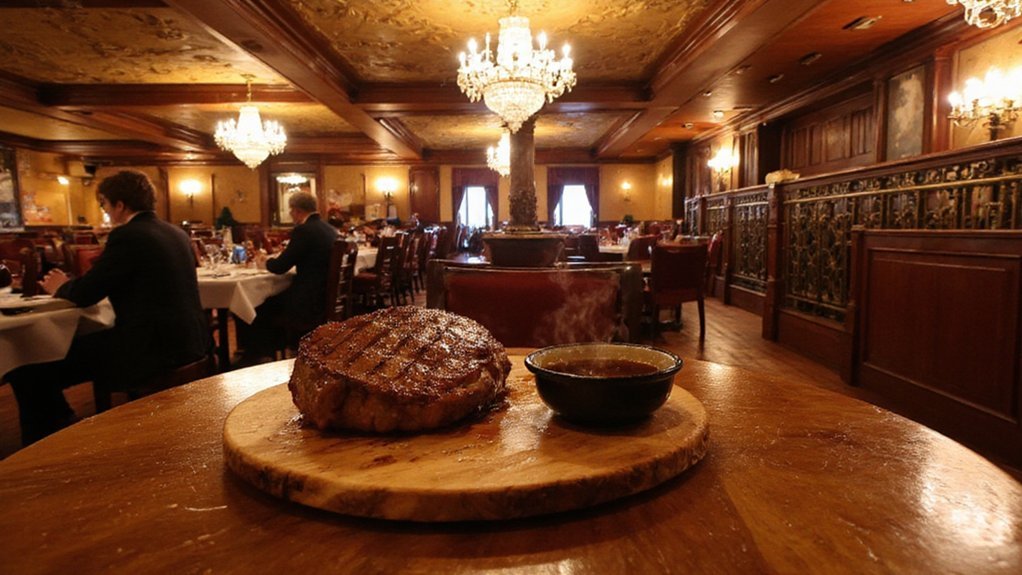
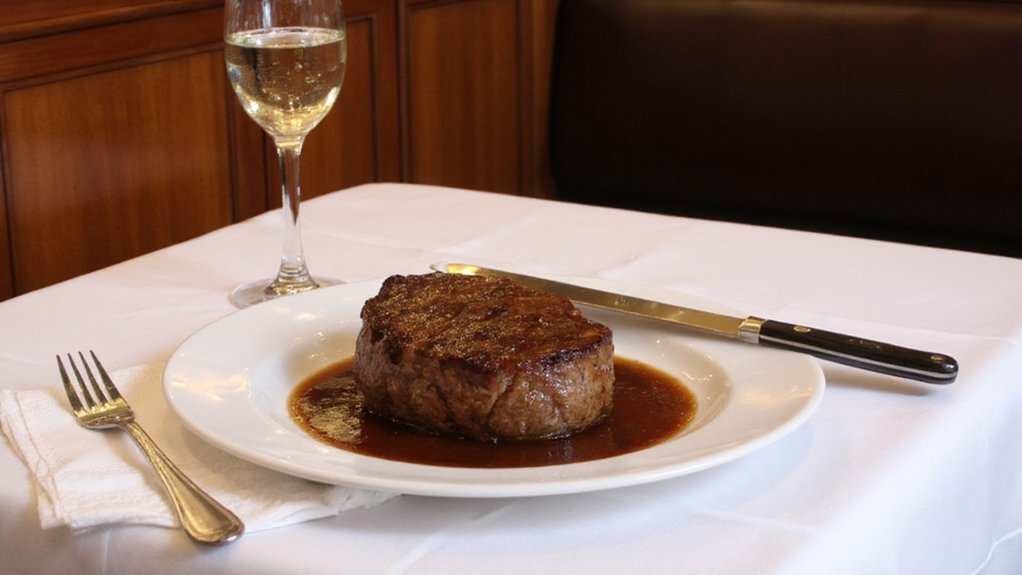
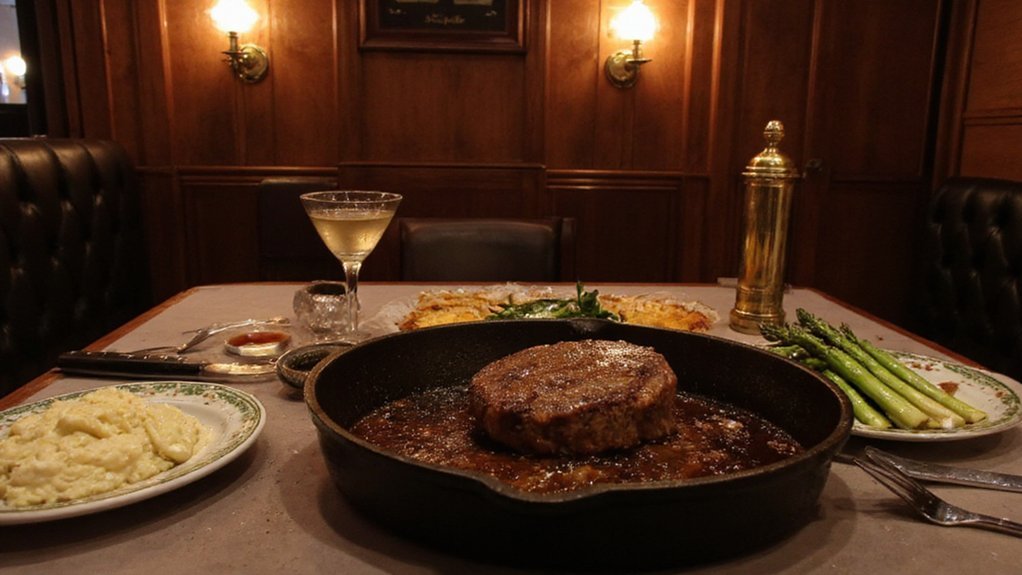
    Though it keeps one foot in Kansas City’s past, The Majestic Restaurant still serves steaks that justify its reputation. You step into a room where Roaring Ambience meets meticulous service; Period Interiors frame each table, and you immediately appraise tradition through a modern lens.

    You want innovation without erasing heritage, and The Majestic delivers selective updates—precision aging, clarified sauces, and plating that nods to technique. When you order a steak, you expect balance: char, fat, seasoning, resting time—each measured decision signals deliberate craft.

    You may critique the reliance on nostalgia, but you can’t deny the culinary rigor powering those classic steaks. For a diner seeking inventive refinement wrapped in history, it’s a compelling, stubbornly relevant choice. You’ll leave plotting how to replicate the experience.

    801 Chophouse — White‑Tablecloth Precision

    surgical precision inventive hospitality

    The Chophouse delivers white‑tablecloth precision the way a watchmaker delivers time: exact, deliberate, and quietly confident.

    You step into a service choreography that treats each cut like a hypothesis to test; servers move with measured intent, and the kitchen executes precision plating that reads like a blueprint.

    You’ll appreciate how texture, temperature, and char are calibrated against progressive expectations rather than tradition alone.

    The wine program is more than accompaniment; sommelier pairing feels experimental and precise, nudging you toward unexpected harmonies.

    You’re invited to evaluate technique and innovation simultaneously — a place where restraint replaces bravado and where modern diners expect surgical attention to detail.

    If you value craftsmanship framed by invention, Chophouse rewards scrutiny.

    Its economy of gesture signals bold, future‑thinking hospitality now.

    Stock Hill — Modern Craft and Dry‑Aged Excellence

    precision dry aged craft butchery

    Bridging modern craft and old‑world technique, Stock Hill lets you taste what disciplined dry‑aging can do when paired with contemporary execution.

    You notice immediately the focused menu: selective cuts, a transparent aging program, and service that explains provenance without pretense.

    The kitchen treats Dry Aging as a precision process, monitoring humidity and time to intensify flavor while avoiding gimmickry.

    As a diner who values innovation, you’ll appreciate how Craft Butchery informs texture and plate composition, turning trim and fat into strategic elements rather than waste.

    The result is leaner, more articulate steaks that reward attention.

    If you want progressive tradition, controlled experimentation rooted in technique, Stock Hill delivers with clarity and restraint.

    You leave convinced the program balances risk and reward with evident rigor.

    Hereford House — Classic Midwestern Comfort

    restrained classic steakhouse comfort

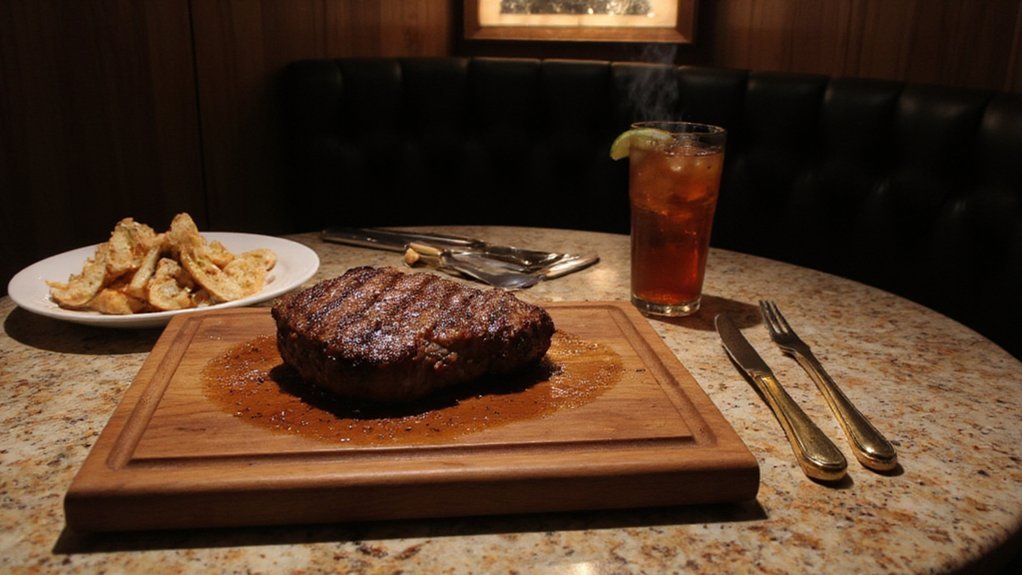
    Comfort and consistency define Hereford House, where classic Midwestern steakhouse rituals—charcoal-fired rooms, butter-basted New Yorks, and clubby booths—get executed without fuss.

    You’ll value the Casual Atmosphere that privileges ritual over reinvention; the kitchen refines rather than reinvents, and that restraint feels intentional.

    You can critique or celebrate the appetite for familiarity, but the plates deliver honest technique and predictable pleasure.

    Notice the House Sauces: conservative, balanced, useful as accents rather than bandages.

    If you want subtle innovation, you’ll find it in precise seasoning and timing more than conceptual overhaul.

    1. Dependable steaks that respect provenance.
    2. Service that anticipates without intruding.
    3. Drinks menu enhancing, not upstaging.
    4. A blueprint for comfortable excellence.

    You’ll leave convinced that restraint, when done well, feels like progressive design and future-facing details.

    Conclusion

    You’ll find four distinct Kansas City steak voices that, taken together, define a progressive‑tradition: The Majestic’s roaring glamour tempers technique with theatrical service, 801’s white‑tablecloth restraint enforces exactitude, Stock Hill’s dry‑aging and butchery flex craft rigor, and Hereford House comforts with butter‑basted dependability. You appreciate how selective innovation sharpens classic rituals rather than eclipsing them, and how thoughtful wine choices elevate each expression, making the city’s steak scene both reliably familiar and quietly ambitious today.

  • Burnt End Chili — Gates Bar‑B‑Q, Jack Stack, Slap’s BBQ

    Burnt End Chili — Gates Bar‑B‑Q, Jack Stack, Slap’s BBQ

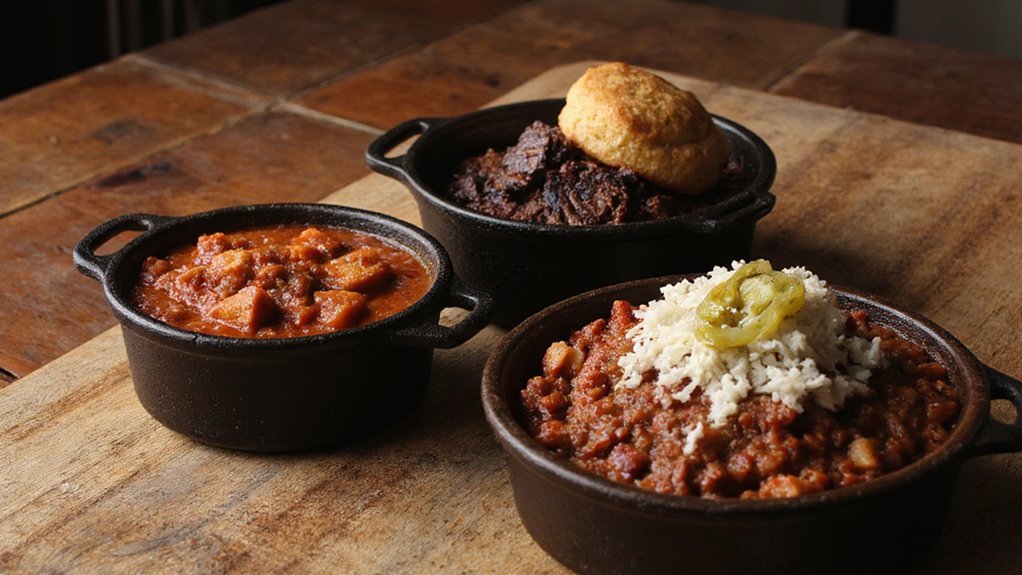
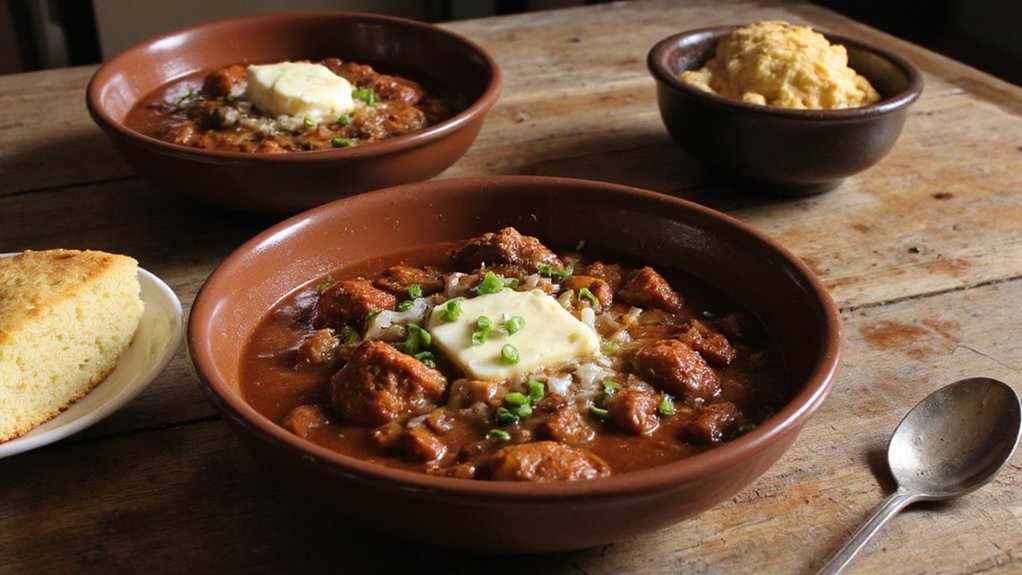
    You’ll recognize burnt end chili by its lacquered bark and gelatin‑rich interior, where Maillard sugars meet rendered smoke oil. In Kansas City, Gates leans sweet‑vinegary, Jack Stack nails low‑and‑slow collagen breakdown, and Slap’s layers smoke and saucing for intense bite. You’ll want to compare texture, glaze and spice — and then plan your next stop.

    What Makes Burnt End Chili So Irresistible

    smoky lacquered caramelized brisket

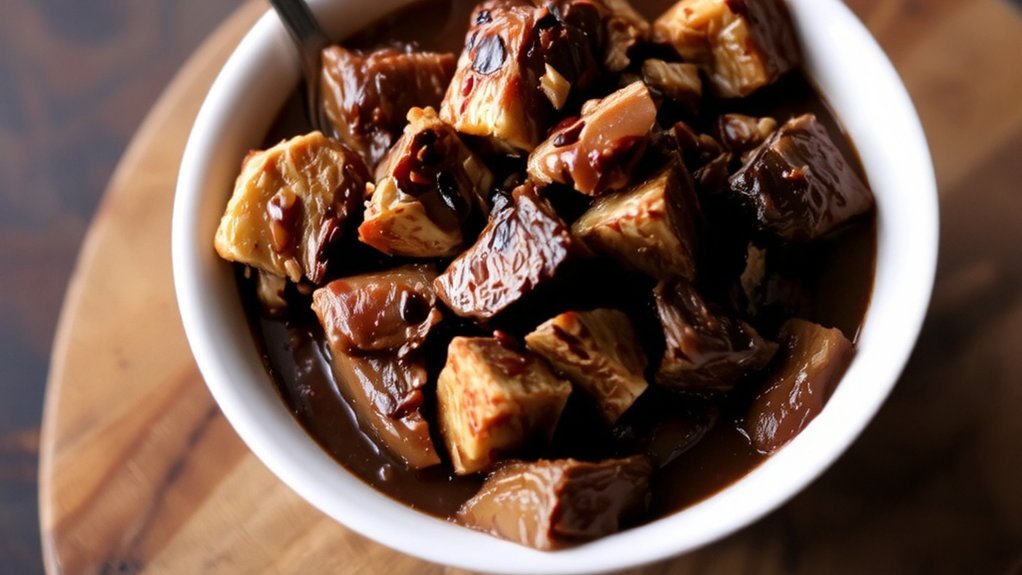
    Irresistibility starts with contrast: charred, caramelized bark gives you a smoky top note while tender, gelatin-rich brisket melts in your mouth.

    Irresistibility lives in contrast: charred, caramelized bark and gelatin-rich brisket that melts, smoky and unctuous.

    You calibrate heat and time to coax collagen into gelatin without drying the cube—low-and-slow smoke at 225–250°F for hours, then rest.

    The burnt ends’ smoky richness comes from Maillard reactions intensified by rendered fat and sweet vinegary mop.

    You aim for a lacquered exterior: a caramelized crust that cracks under bite, releasing concentrated seasoning and smoke oil.

    Regionally, Kansas City technique favors sugar and molasses balance; you adapt that profile, trimming precisely and choosing post-smoke sauce glazing.

    Every tweak—wood species, humidity, sauce viscosity—translates into measurable texture and flavor gains you can reproduce.

    You’ll experiment with blends and documentation to iterate consistently at scale.

    Comparing Gates Bar‑B‑Q, Jack Stack, and Slap’s BBQ

    direct low smoky variables

    If you follow the science of burnt ends—bark formation, gelatinized interior, glossy glaze—you’ll spot how three Kansas City stalwarts take different technical routes to the same goal.

    You’ll notice Gates favors brisk, direct-contact finishing and a sweeter glaze that amplifies Maillard crust; Jack Stack pursues precise low-and-slow control, rendering collagen into a silky mouthfeel with restrained sweetness; Slap’s BBQ pushes smoke intensity and repeated saucing for layered char and tang.

    In service comparison, Gates trades speed and theatricality, Jack Stack offers consistency and plated refinement, Slap’s emphasizes rustic pace and smoke-forward identity.

    For an innovator, these smoking techniques are instructive: they’re modular variables you can remix—heat profile, respite times, glaze chemistry—to evolve your own regional interpretation. Experiment deliberately, measure, and iterate for mastery.

    Where to Order and What to Try

    specify burnt end details

    Where do you start? You order from proven pits: Gates for charcoal-smoke clarity, Jack Stack for controlled pit-roast caramelization, Slap’s for wood-fired bark complexity.

    Specify burnt end weight, fat render level, and reheating method so chefs dial in texture. Ask about menu highlights — burnt end chili, brisket bites, lacquered ribs — and request sauce on side to preserve bark.

    Specify burnt end weight, fat render level, reheating method; request menu highlights and sauce on the side to preserve bark.

    For events, tap local catering teams who understand portion yield and hold times; demand staging racks and heat lamps. When you taste, note smoke ring penetration, collagen breakdown, and spice equilibrium; pair with regional sides like cheesy corn and potato salad.

    If you want innovation, request hybrid rubs or barrel-aged reductions. You’ll get precise feeding guides, pickup windows, and plating cues to replicate results at home.

    Conclusion

    You’ve tasted charred brisket cubes lacquered in saccharine‑vinegar glaze, and you know why burnt end chili hooks you: Maillard‑deep bark meets rendered collagen, smoke oil perfumes the broth, and balanced acidity cuts fat. Gates leans sweeter, Jack Stack nails low‑and‑slow collagen melt, Slap’s layers smoke and saucing for concentrated bark. When you order in Kansas City, you’re chasing that regional interplay of smoke, sugar and spice — precise, soulful, and utterly addictive, every single bite.

  • Barbecue Ribs — Jack Stack, Gates, LC’s Bar‑B‑Q, Joe’s KC

    Barbecue Ribs — Jack Stack, Gates, LC’s Bar‑B‑Q, Joe’s KC

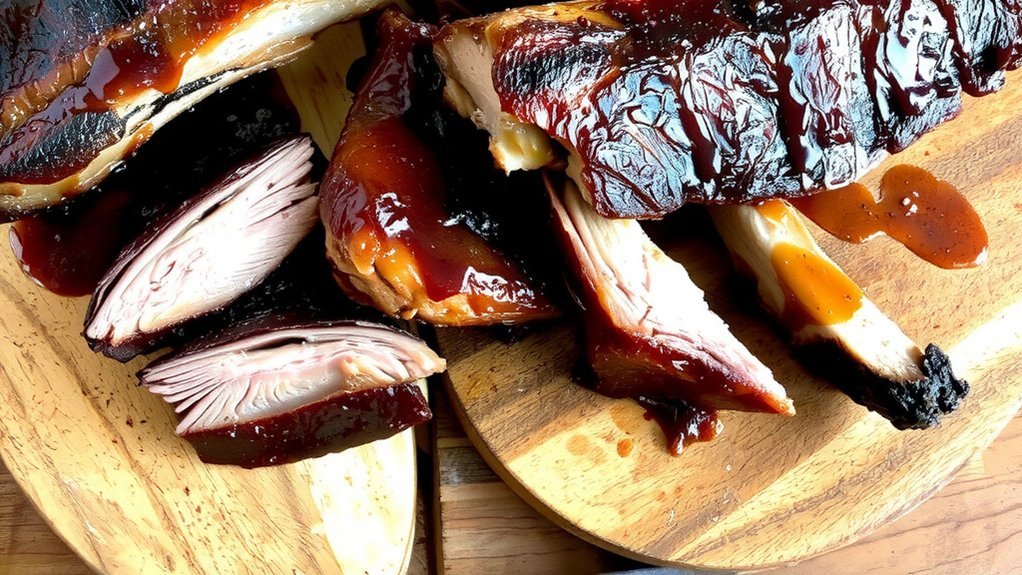
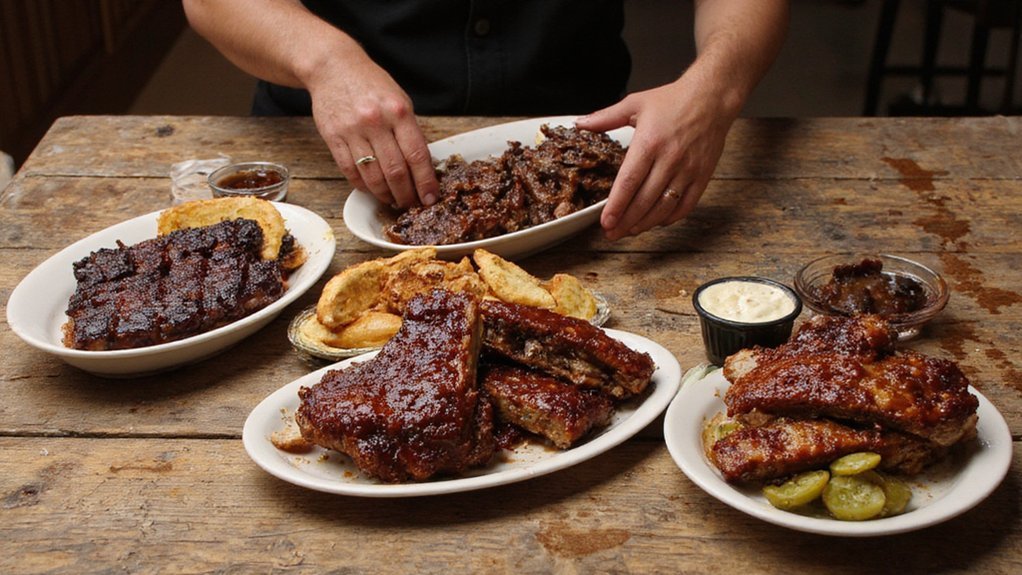
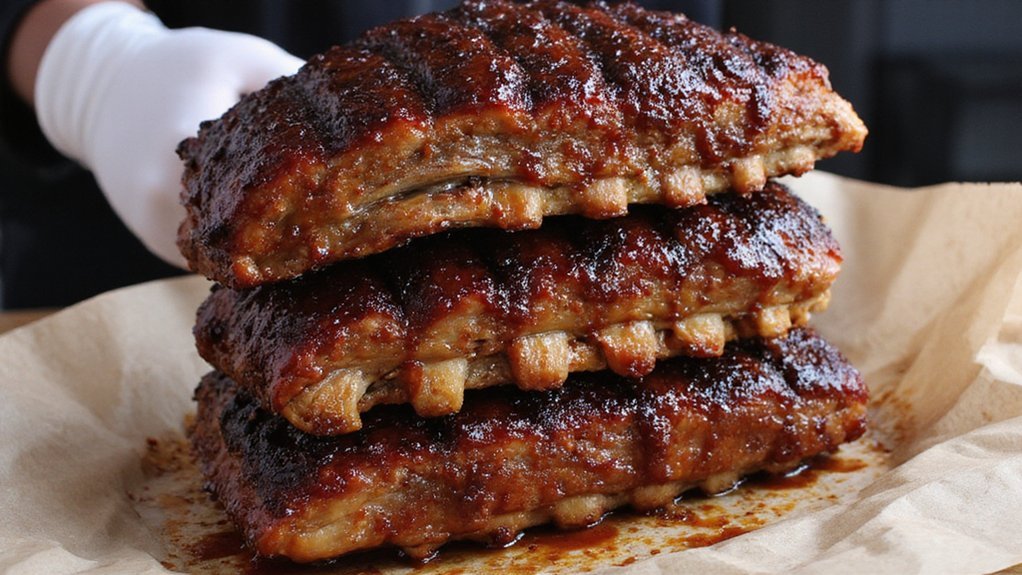
    You know Kansas City ribs, but these four make you rethink them. Jack Stack’s glossy, sweet glaze yields near-fall‑off tenderness. Gates hits with peppery, caramelized edges and brisk pace. LC’s mixes mustard-forward spice with deep smoke. Joe’s KC leans into robust oak and savory bark. Pick a mood and keep going—you’ll want to know which fits your appetite.
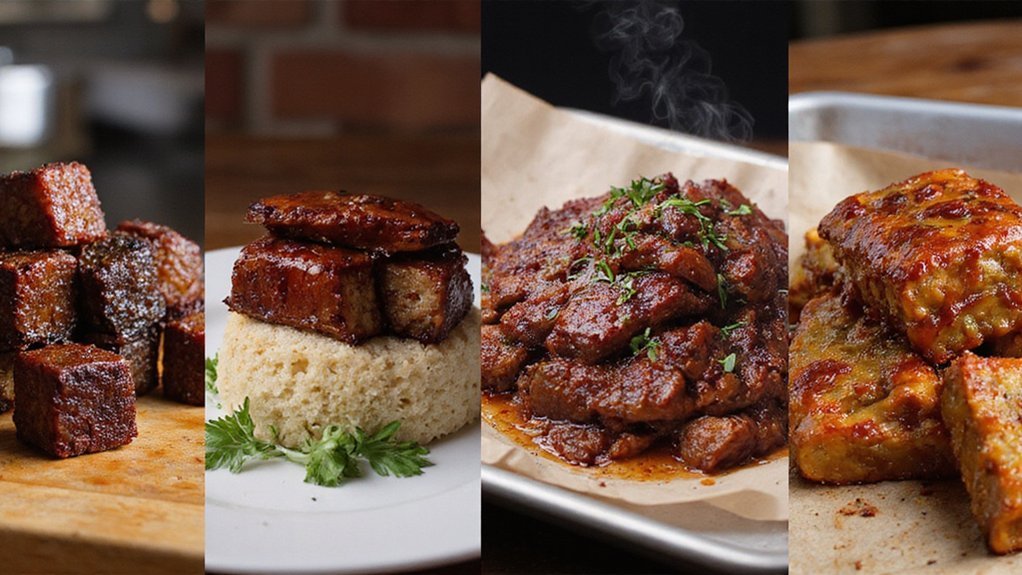
    Why Kansas City Ribs Matter

    smoky sweet cultural economic engine

    Why do Kansas City ribs still set the standard for BBQ lovers? You lean into smoky-sweet layers that tell a city’s story, where Cultural Identity blends with entrepreneurial grit.

    Kansas City ribs — smoky‑sweet layers that fuse cultural identity with entrepreneurial grit, setting the BBQ standard.

    You notice Jack Stack’s sheen, Gates’ crowd-pleasing fervor, LC’s Bar‑B‑Q’s neighborhood roots and Joe’s KC’s signature swagger—each offers a different promise of satisfaction.

    You’ll also see tangible Economic Impact: jobs, festivals and destination dining that fund experimentation and preserve craft.

    If you crave innovation tied to place, Kansas City ribs remain a benchmark you’ll study and redefine. They challenge competitors to amplify storytelling, menu design and supply-chain creativity, pushing grills, startups and urban planners to collaborate on tourism, ingredient sourcing and experiential dining — a living laboratory where you can test bold concepts, scale responsibly.

    Comparing Cooking Methods and Textures

    slow smoke fast sear

    While some cooks swear by a fast, high-heat sear, the real texture debate centers on how long and by what method you break down collagen and render fat.

    You’ll notice brisk low-and-slow smoking yields silkier bite and superior Moisture Retention, while a hotter, shorter roast gives chewier bark and quicker crust formation.

    Innovative chefs experiment to balance Smoke Penetration with mouthfeel, so you decide whether tender pull or bite-forward toothiness suits your plate.

    1. Low-and-slow smoking — maximum collagen breakdown, deep Smoke Penetration.
    2. Hot-and-fast — pronounced bark, less Moisture Retention but bold texture.
    3. Sous-vide then sear — surgical tenderness, controlled Moisture Retention, nuanced smoke.

    Choose based on desired texture and modern technique. You’ll refine outcomes by adjusting time, temperature, and airflow precisely.

    Sauces, Rubs and Signature Flavors

    contrast driven regional rib flavors

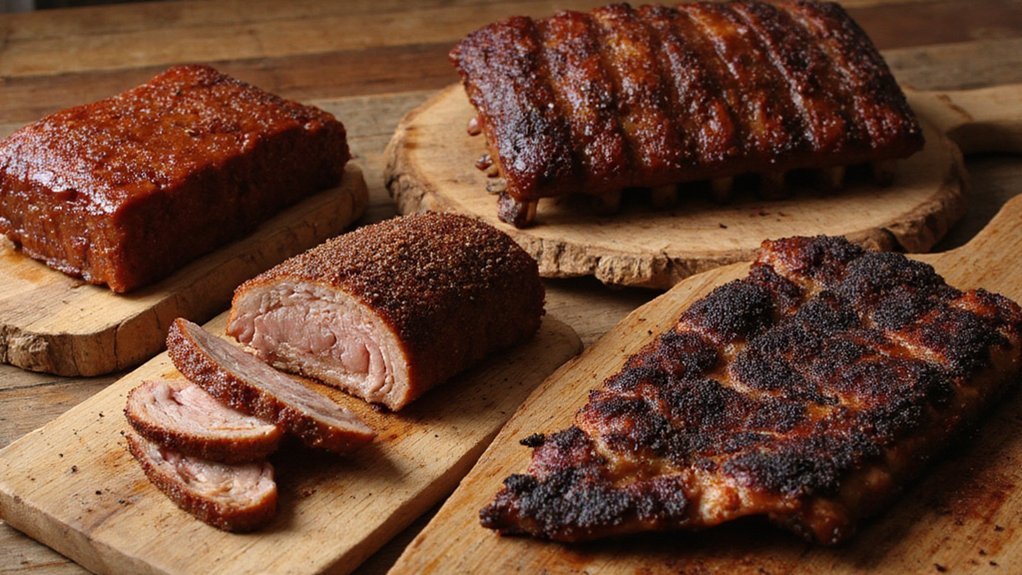
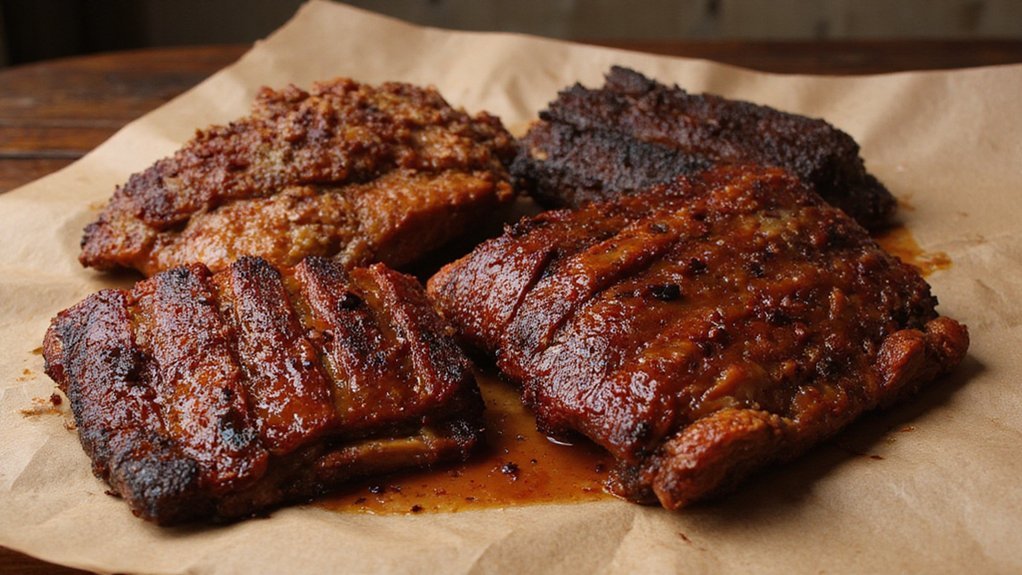
    How you dress your ribs tells the diner what to expect: you can pile on a sweet, molasses-forward sauce for nostalgic caramelized gloss, dust a dry rub heavy on paprika and brown sugar for crunchy, spice-forward bark, or go restrained with vinegar and chile to sharpen the smoke and cut the fat.

    You judge restaurants by their choices: Jack Stack leans sweet-umami, Gates balances peppery tang, LC’s experiments with mustard-forward blends and Joe’s KC tweaks oak smoke with savory depth.

    Study Ingredient Origins to innovate—map sugar, chile, and smoke back to terroir and technique.

    Think like a chef: refine Flavor Pairings so each lick amplifies the meat, not masks it; prefer contrast over clutter and intentionality over tradition. Then iterate boldly, record results daily.

    Atmosphere, Service and Where to Try Them

    ambience shapes barbecue memories

    Sauce and rub set the expectation, but the room and the servers shape the memory—what tastes sublime in a bustling beer hall can feel muddled in a quiet bistro, and vice versa.

    Sauce and rub set expectations, but atmosphere and service shape lasting memories.

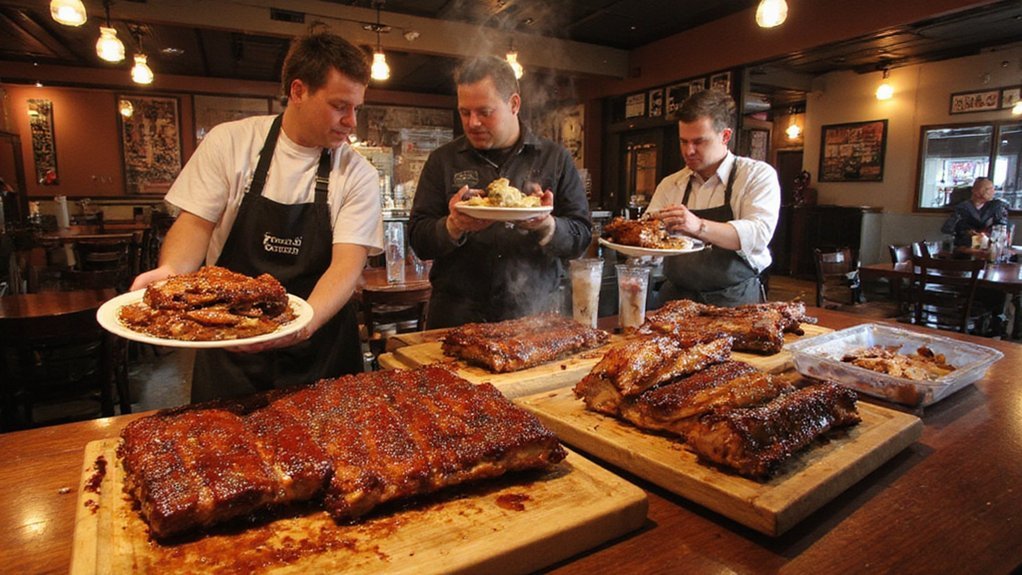
    You’ll judge ribs not just by bark and smoke but by Dining ambiance and Server friendliness: communal long tables amplify casual joy; dim booths concentrate flavor; patio breeze refreshes richness.
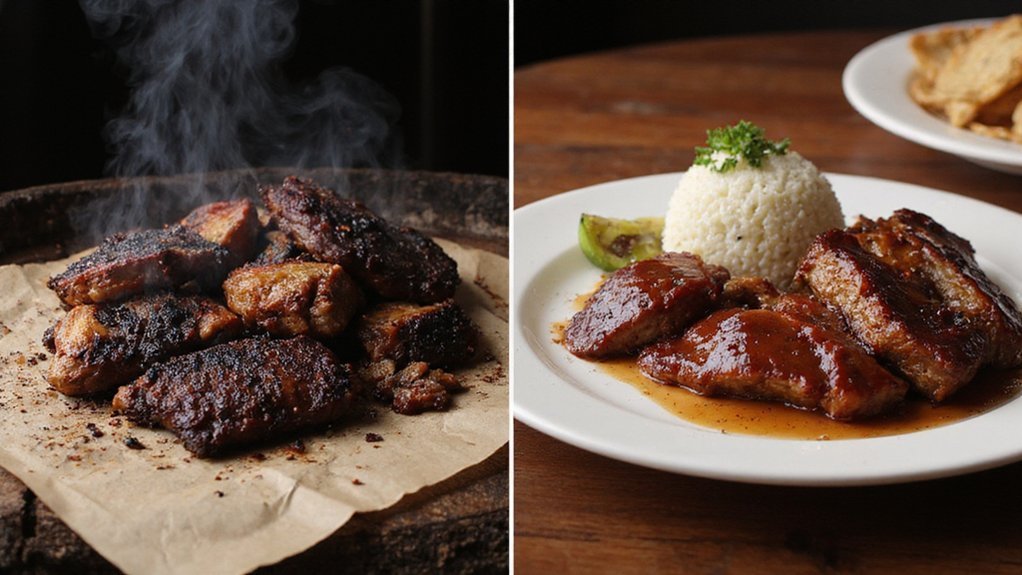
    Choose venues where staff know cuts and pour confidently.

    Prefer places experimenting with cross-cultural sides or tech-forward ordering for efficiency.

    Seek spots where innovation meets intuition; reservations matter and peak windows reveal best smoke.

    Bring hungry friends.

    1. Jack Stack — theatrical plating, lively Dining ambiance.
    2. Gates — classic counter speed, unmatched Server friendliness.
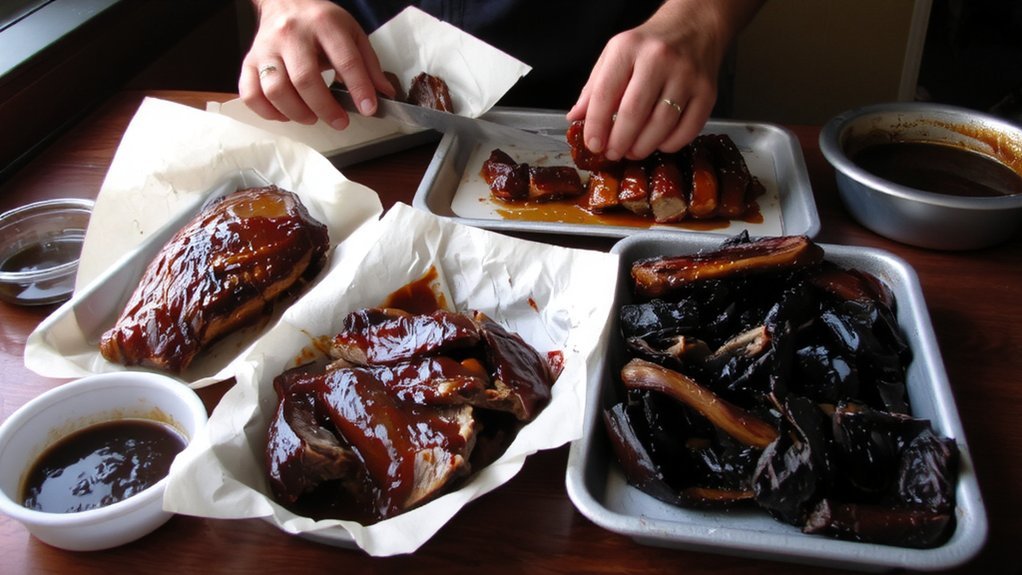
    3. Joe’s KC & LC’s — modern twists, contested seats; try chef’s selections.
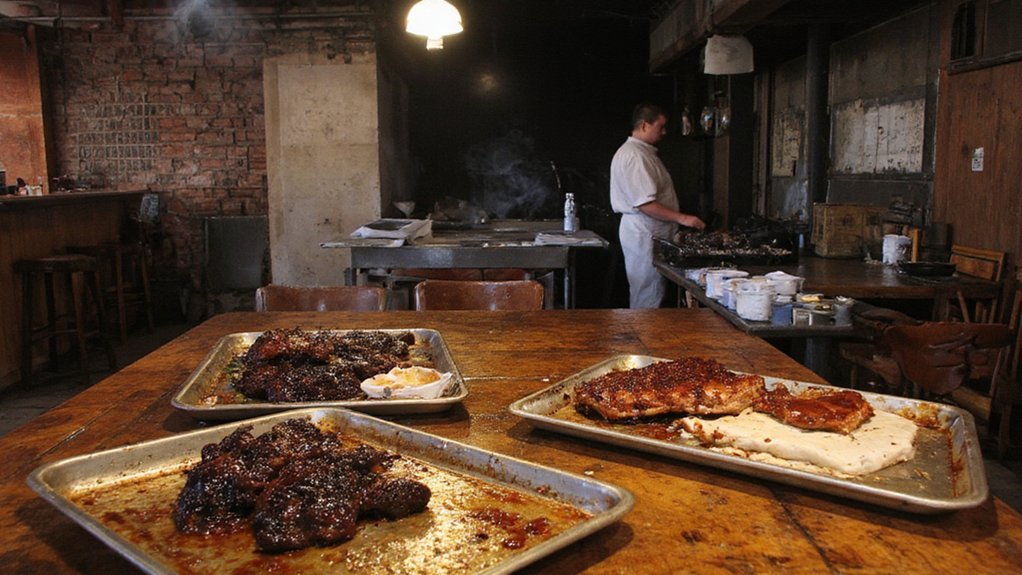
    Conclusion

    You’ll taste Kansas City’s ribs as a study in contrasts: Jack Stack’s glossy, sweet‑umami surrender feels theatrical and indulgent, while Gates hits you with peppery, caramelized snap that’s quick and addictive. LC’s fearless mustard‑and‑spice experiments tease curiosity; Joe’s KC delivers deep oak smoke and savory bark that feels honest and rooted. You’ll prefer one, but you’ll respect each for its texture, sauce personality, and the communal joy they bring to the table every single time.
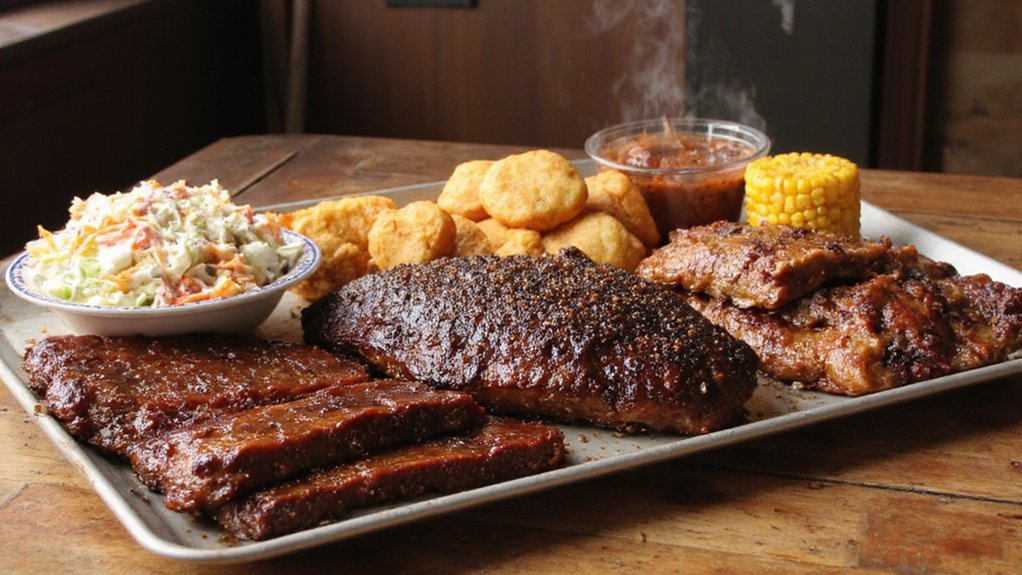
  • Brisket Sandwich — Arthur Bryant’s, Joe’s KC, Jack Stack, Q39 Midtown

    Brisket Sandwich — Arthur Bryant’s, Joe’s KC, Jack Stack, Q39 Midtown

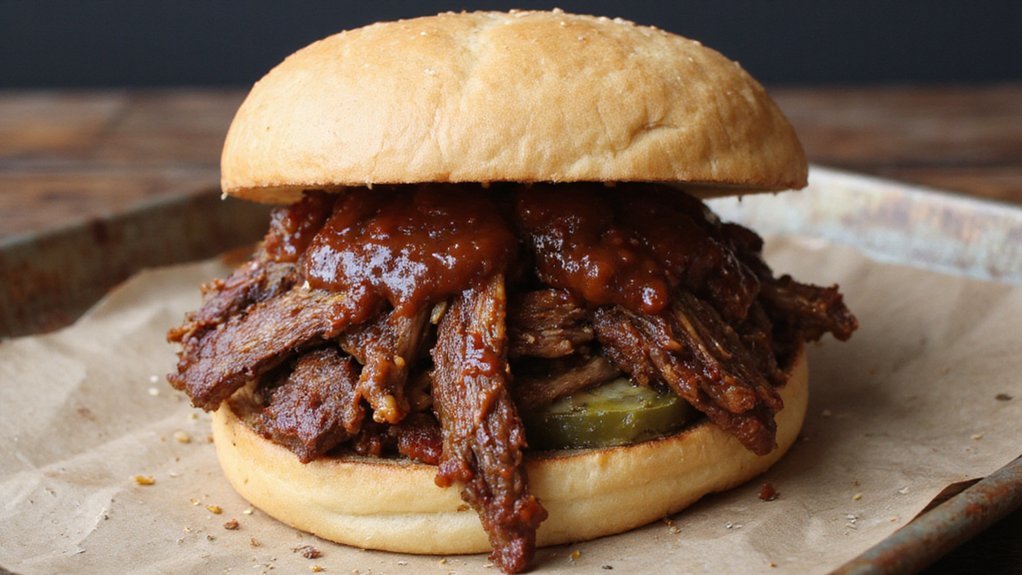
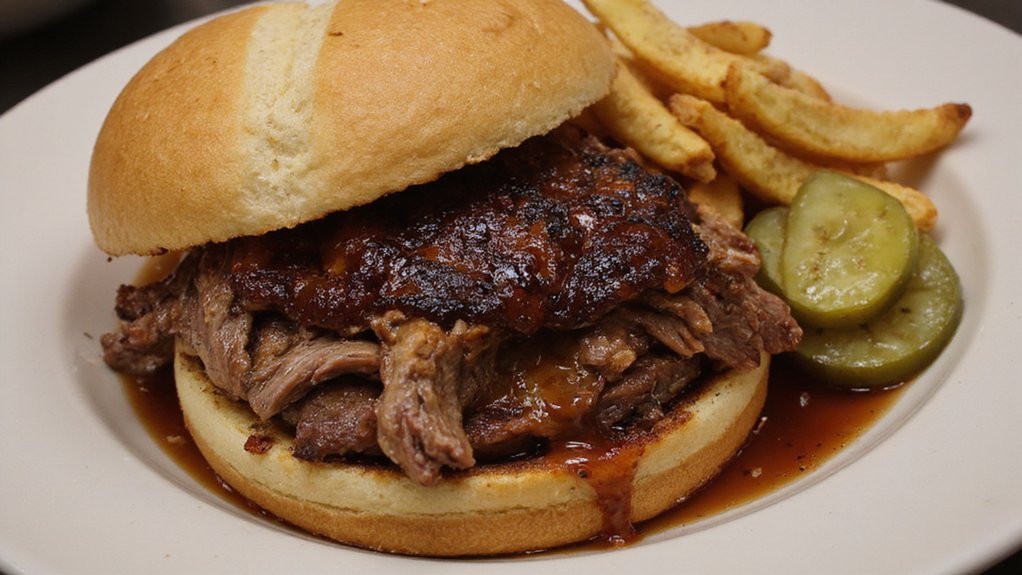
    You’ll notice how smoke, fat and seasoning get sorted differently across Kansas City’s brisket sandwiches. Arthur Bryant’s coats tender strands in molasses-tang sauce; Joe’s KC and Jack Stack serve thin, savory slices with clean bark; Q39 Midtown favors a snapping, spice-rubbed crust over evenly rendered meat. If you care about balance and bite, there’s more to unpack…

    History and Regional Roots of Kansas City Brisket Sandwiches

    czech rooted oak smoked brisket sandwiches

    When you sink your teeth into a Kansas City brisket sandwich, you’re tasting decades of regional craft: slow-smoking deep-chuck brisket over hardwoods until the bark forms a peppery crust and the fat renders into glossy succulence.

    You’ll notice how Czech influence shaped early meatpacking and communal smokehouses, bringing meticulous curing instincts that married local oak and hickory techniques.

    You judge cuts by bark, smoke ring, and rendered fat, valuing texture and clarity of smoke over theatrical saucing.

    Butcher traditions persist in precise trimming and point-flat handling, letting smoke and time define flavor.

    If you’re seeking innovation, you’ll appreciate subtle tweaks—wood blends, temp curves, injection brines—that push tradition without erasing the smoky benchmarks Kansas City built.

    You’ll return, recalibrating expectations toward measured, smoky progress daily.

    Arthur Bryant’s — The Sauce-Drenched, Old-School Classic

    sauce drenched smoky brisket tradition

    A lacquered slab of brisket at Arthur Bryant’s arrives slick with a reddish-brown sauce that announces itself before the smoke does. You lean in; the smoke is a dark, savory filament beneath a sweet-tangy gloss.

    Texture is partisan: a bark that resists, fat that yields, meat that pulls in long, glossy strands. Taste centers on sauce composition—molasses depth, tomato brightness, subtle vinegar lift—balanced to dominate without erasing smoke complexity.

    Service is brisk, no-nonsense counter service, which frames the experience as functional ritual rather than finesse. You’ll appreciate how tradition invites tinkering: imagine dialing back sugar, amplifying hickory, or introducing fermented heat to modernize that signature glaze while keeping the smoky backbone that defines Arthur Bryant’s.

    It rewards subtle adjustments that respect provenance and punch.

    Joe’s KC and Jack Stack — Tender Slices and House-Smoked Refinement

    house smoked restraint and tenderness

    You’ll notice Joe’s KC and Jack Stack steer the conversation away from sauce-first swagger toward a quieter, house-smoked refinement where smoke shapes the meat’s personality.

    You’ll find brisket sliced consistently—thin against the grain for tenderness, thicker for chew—demonstrating deliberate slicing techniques that control bite and reveal texture.

    Their smoke profiles are layered: sweet hickory undertones, restrained pit-char, and a clean, savory bark that never overpowers.

    You’ll evaluate balance—fat rendered but present, seasoning precise, smoke integrated as seasoning rather than spectacle.

    For innovators, these sandwiches model restraint: imagine refining smoke choice, timing, and blade angle to emphasize nuance.

    They teach you to prioritize mouthfeel and aromatic depth, proving subtlety can be as progressive as bold reinvention.

    You’ll leave thinking about smoke, cut, and restraint deliberately.

    Q39 Midtown — Modern Techniques and Bark-Forward Perfection

    sous vide precision bark forward perfection

    Because Q39 leans into precision smoking, they coax a lacquered, spice-forward bark that asserts itself immediately while the interior stays supple and evenly rendered.

    You notice their method: a disciplined Sous vide infusion before the pit, which stabilizes collagen and concentrates beef flavor without collapsing texture.

    You appreciate the deliberate smoke profile — alder and post oak layered thinly to highlight the rub.

    After low-and-slow immersion, they employ Reverse sear finishing to snap the crust and amplify Maillard complexity.

    On the sandwich, that bark commands attention, each bite balancing fat, smoke, and restrained seasoning.

    If you crave innovation grounded in technique, Q39’s approach feels rigorous and modern: exacting processes that translate directly into a focused, bark-forward eating experience.

    It’s restrained, bold, and precisely delicious indeed.

    Conclusion

    You’ll find Kansas City’s brisket riffs defined by smoke and technique: Arthur Bryant’s drenches tender strands in glossy, molasses-lit lacquer that sells comfort; Joe’s and Jack Stack slice refined, hickory-kissed meat with clean bark and balanced savor; Q39 Midtown forces you to notice a snapping, spice-crusted edge from sous-vide and reverse sear precision. You’ll judge each on smoke intensity, fat rendering and seasoning — and know which bite satisfies your craving with a smoky finish.

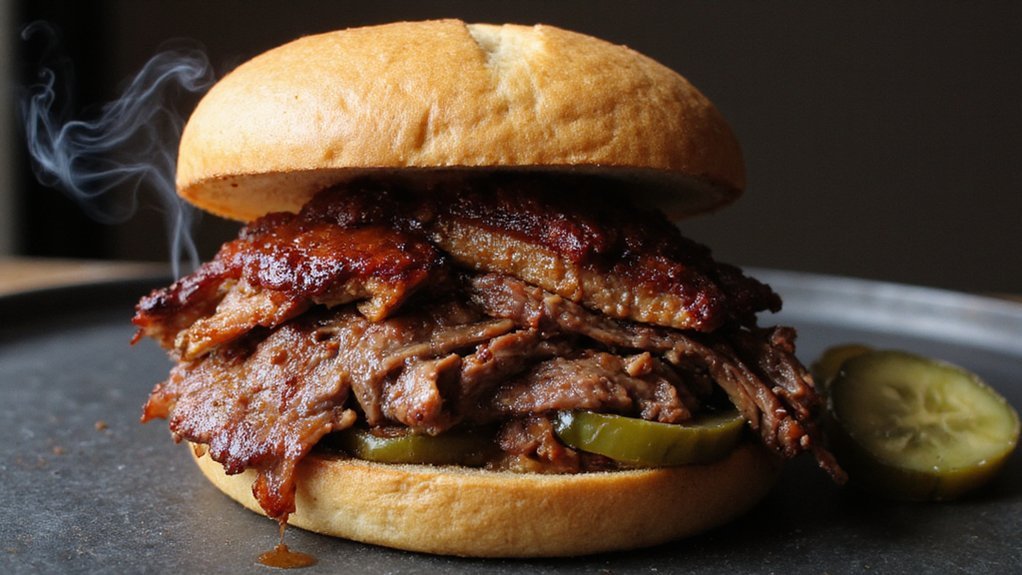
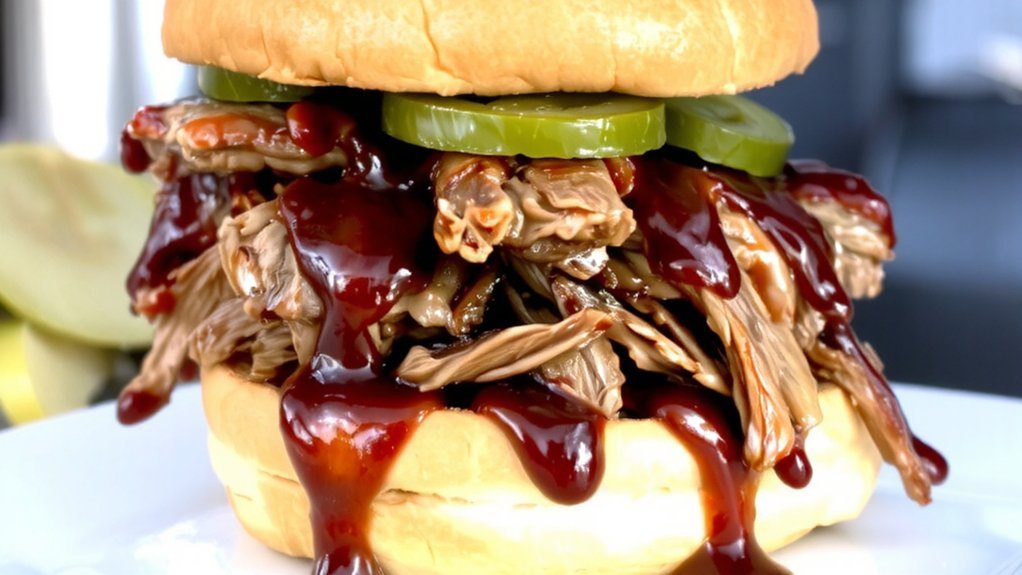
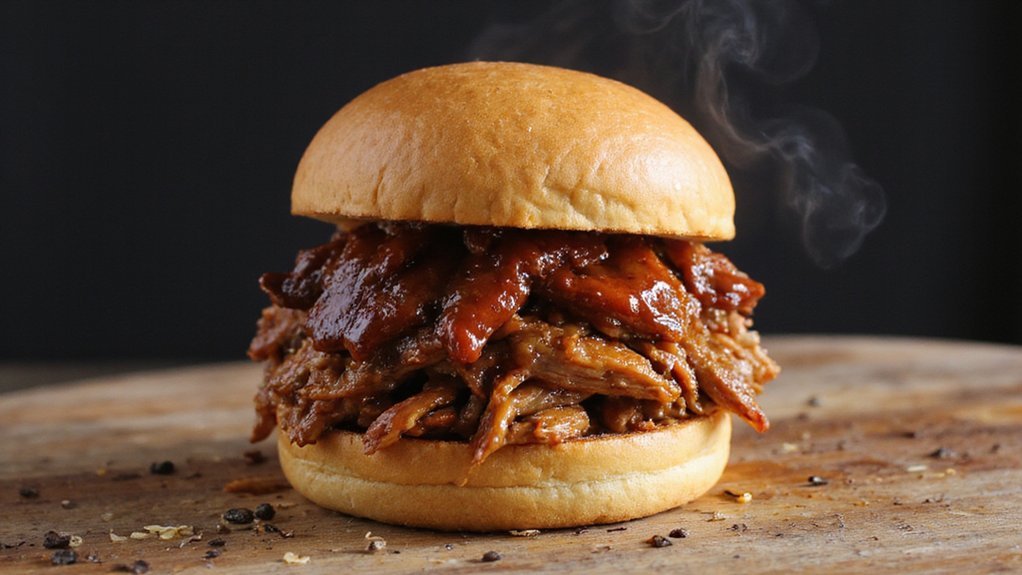
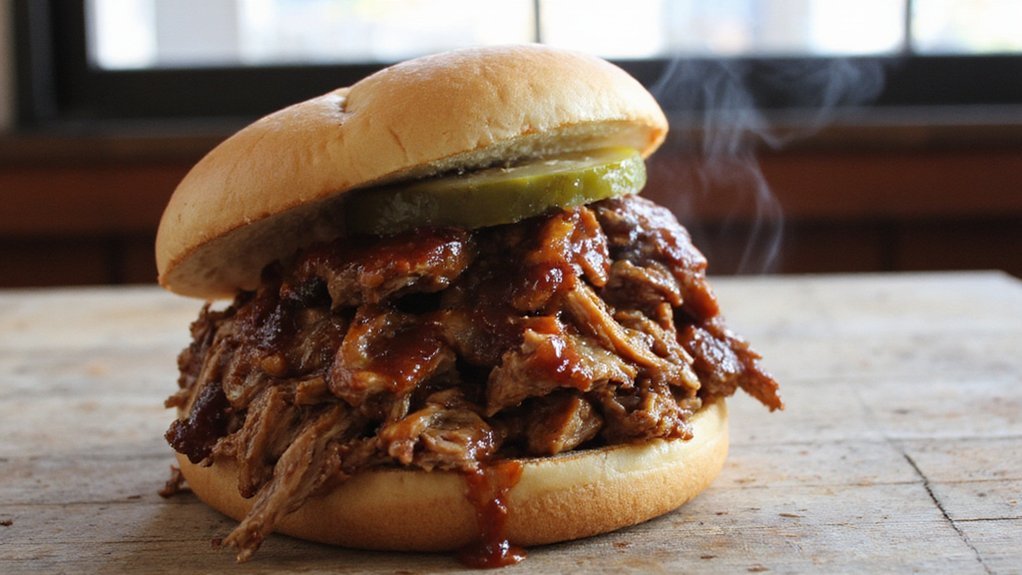
  • Pulled Pork Sandwich — Jack Stack Barbecue, Gates Bar‑B‑Q, Smokehouse BBQ

    Pulled Pork Sandwich — Jack Stack Barbecue, Gates Bar‑B‑Q, Smokehouse BBQ

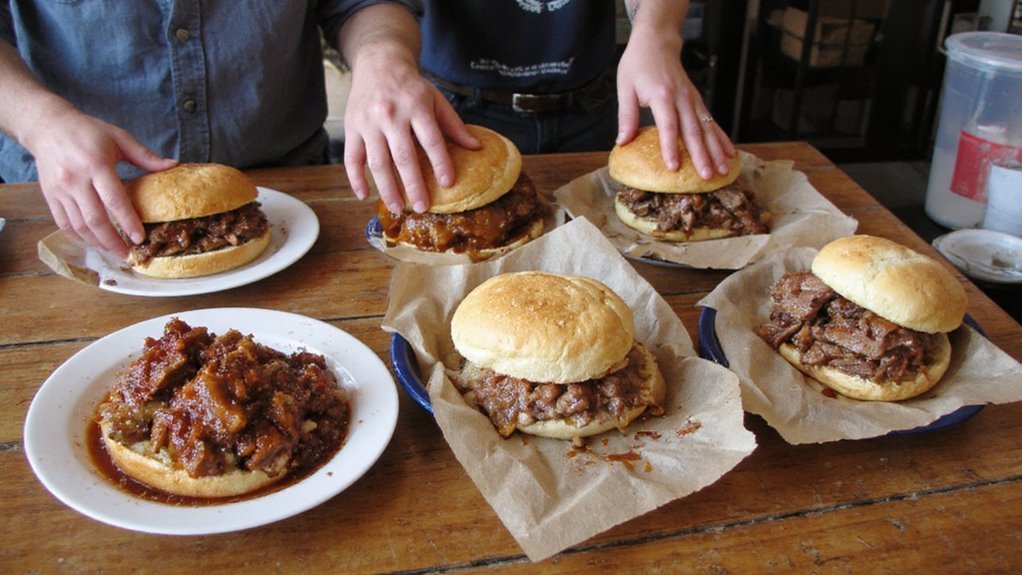
    You’ll notice Jack Stack’s lacquered pork pulls into satin strands, molasses-sweet and sticky; Gates favors a vinegar-bright, leaner pull that snaps between bites; Smokehouse builds deep mahogany bark and prolonged smoke into gelatinous, fall-apart strands. You’ll pick apart texture, glaze, and smoke density to decide which approach actually wins—so keep going to see the finer distinctions.

    Jack Stack Barbecue — Sweet, Glazed Pulled Pork

    lacquered honey molasses pulled pork

    A lacquered slab of pork shoulder glistens as you shred it: Jack Stack’s sweet, glazed pulled pork balances a sticky, caramelized exterior with a tender, collagen-soft interior by marrying a high-sugar glaze (molasses and brown sugar) to low-and-slow smoking and precise internal-temperature control (about 195–203°F for ideal collagen breakdown).

    You’ll notice a glossy Honey Glaze that cuts through smoke with floral sweetness while a restrained Molasses Finish adds depth and controlled bitterness; you compare texture to confit, but the fibers remain structured, not falling into mush.

    You calibrate rub composition, smoke density, and glazing schedule like a systems engineer, iterating for sheen, bite, and carry. The result is innovative, tactile, and repeatable. You plate it simply, letting glaze, smoke, and texture speak for themselves.

    Gates Bar‑B‑Q — Tangy, No‑Nonsense Pulled Pork

    vinegar forward lean efficient execution

    The pit’s bright tang hits first: Gates Bar‑B‑Q pulls pork with a vinegar‑forward sauce that slices through fat and smoke instead of smothering them.

    You notice a leaner bark, brisk salt balance, and a quick acidity curve that resets your palate between bites. Vinegar Sauce here is calibrated — ratio of apple cider to cane, pinch of chili to signal, not to dominate.

    Texture reads intentional: shreds with tensile resistance, moist pockets, minimal syrupy cling.

    Compared to sweeter rivals, Gates opts clarity over coating; flavors resolve fast, no sticky residue.

    At Counter Service, orders land hot and immediate, a lab-like loop from pit to bun. If you pursue innovation, you’ll appreciate efficient execution and a modular flavor template you can iterate and repeat regularly.

    Smokehouse BBQ — Slow‑Smoked, Fall‑Apart Pork

    slow smoked pull apart pork

    Slow-smoking at low heat gives Smokehouse BBQ pork a silk-fine pull that dissolves on your tongue: after 10–14 hours at 225–250°F, collagen converts to gelatin, fat renders into moist pockets, and a dense, mahogany bark forms from Maillard-driven sugars and prolonged smoke exposure.

    You’ll calibrate wood selection—hickory for assertive sweetness, apple for bright fruit—while controlling airflow and pit temp to favor enzymatic breakdown without drying.

    As you probe, meat yields with translucent strands; juices bead, aromatic smoke layers the palate, and a tactile bark development contrasts satin interior with crisp exterior.

    Compared to faster methods, this is deliberate engineering: you’ll tune rub chemistry, smoke density, and resting time to innovate texture and amplify savory complexity.

    You refine processes, quantifying variables for repeatable excellence consistently.

    Conclusion

    You’ll taste three distinct philosophies: Jack Stack’s lacquered pork coats your fingers with satin‑sticky molasses and honey, amplifying caramelized Maillard notes; Gates wakes your palate with vinegar‑bright acid and brisk salinity, leaving a lean, nonsticky finish; Smokehouse delivers prolonged phenolic smoke and mahogany bark, yielding gelatinous pull and layered umami. Compare density of smoke, glaze viscosity, and salt–acid balance, and you’ll pick the sandwich that best satisfies your technical appetite every service‑ready bite without fail.

  • Burnt Ends — Joe’s KC, Q39, Slap’s BBQ, LC’s Bar‑B‑Q

    Burnt Ends — Joe’s KC, Q39, Slap’s BBQ, LC’s Bar‑B‑Q

    You’ll notice how Joe’s KC gilds cubes in sticky, custardy fat; Q39 walks a glossy, citrus‑anise line with delicate smoke; Slap’s hits you with crackling char and velvet fat; LC’s layers tangy vinegar and sweet tomato over rendered richness. You’ll argue which is truest to tradition, and you’ll want to taste them side‑by‑side to settle it…

    What Makes Burnt Ends Special

    crackling char molten beef

    A bite of burnt ends hits you with a crackling char that smells like mesquite and late-afternoon embers, then melts into pockets of rich, beefy fat and sticky, caramelized sauce — it’s texture and smoke that set them apart.

    You notice the contrast immediately: a caramelized bark that snaps, yielding to a custardy interior that feels almost molten. You expect aggressive smoke, but it’s balanced; the fat carries flavor, the sauce amplifies, and the meat’s grain breaks with buttery ease.

    Innovative pitmasters play with sugar, acid and time to coax complexity without cloying sweetness. You judge bites by restraint and precision — bold, refined, and modern — where each charred edge and glossy glaze signals purposeful technique. They reinvent tradition while honoring slow, exacting smoke rituals.

    Joe’s KC — The Traditional Standard

    lacquered burnt ends tradition

    At Joe’s Kansas City, burnt ends set the benchmark you measure others against. You bite into cubes of brisket that sizzle with lacquered bark, sweet molasses, and a whisper of char; smoke slides across your palate like a claim staked in the Midwest. The menu honors a founding history rooted in gas‑station counter service and unapologetic technique, yet you’ll sense continual refinement in texture and sauce restraint.

    You notice the attentive char, the balance of fat and chew, and you want innovation without gimmicks — subtle tweaks that respect the cut. The place’s community impact hums beneath every platter: regulars swap stories, pitmasters mentor apprentices, and the meal feels like civic craft. For you, Joe’s is the traditional standard that still surprises and endures.

    Q39 — An Upscale, Chef‑Driven Interpretation

    lacquered brisket sculpted smoke

    When a chef reimagines burnt ends for a white-tablecloth dining room, you notice the shift in rituals as much as in taste: cubes of brisket arrive lacquered with a glossy gastrique, edges caramelized to brittle sweetness, each morsel threaded with a faint, sculpted smoke rather than raw campfire bite. You lean in to register citrus brightness, a whisper of star anise, and a varnish of rendered fat that clings like velvet.

    Presentation Aesthetics matter here: tiny spoons, microgreens, a smear of black garlic make each bite an argument.

    You’ll appreciate Modern Pairings—braised kale, pickled pear, a tannic pinot—that broaden context without masking smoke.

    It’s inventive, precise, and sometimes you’ll prefer its restraint to rustic abandon. It elevates barbecue into a deliberate culinary statement, unapologetically.

    Slap’s BBQ and LC’s Bar‑B‑Q — Two Local Approaches

    crusty bark versus tangy sweet

    If you want honest, uncomplicated smoke, Slap’s hits you first: its brisket sears with a crusty bark that crackles under your fork and delivers a deep, charred sweetness threaded with oak and a whisper of molasses.

    Honest smoke: brisket with crusty bark, deep charred sweetness threaded with oak and a whisper of molasses.

    You’ll taste restraint — minimal sauce, salt that sings, fat rendered to velvet.

    Across town LC’s teases you differently: tangy vinegar and sweet tomato interplay, a brighter Sauce Profiles play that nudges smoke into new territories.

    Both innovate: Slap’s refines Pit Techniques to coax pure beef flavor; LC’s experiments with layering spices and glaze.

    You’ll prefer one depending on mood — pure muscle and smoke or playful acid-sweet contrast — but you owe it to your palate to try both.

    Bring friends; compare bites, debate nuances, and push your expectations every single visit.

    Conclusion

    You’ll taste lineage and invention in every cube: Joe’s KC gives you lacquered, custardy fat and a whisper of mesquite that feels comfortingly orthodox; Q39 plates glossy gastrique, citrus-anise lift and restrained smoke that reads modern and meticulous; Slap’s slaps you with charred, crackling bark and molten velvet fat that’s unapologetically primal; LC’s layers tangy vinegar and sweet tomato glazes over rendered richness, proving regional pride still sings louder than trend. You’ll argue—and happily so.

  • Kansas City‑Style Barbecue — Joe’s Kansas City Bar‑B‑Que, Gates Bar‑B‑Q, Arthur Bryant’s, Q39

    Kansas City‑Style Barbecue — Joe’s Kansas City Bar‑B‑Que, Gates Bar‑B‑Q, Arthur Bryant’s, Q39

    You walk into Kansas City barbecue and you’ll notice how smoke clings to shirts, sweet molasses glosses ribs, and peppery bark flakes under your fork. You’ll find Joe’s crisp, flakey bites, Gates’ balanced vinegary‑sweet pull, Arthur Bryant’s dense, blackened chew, and Q39’s modern, spice‑polished cuts. Each tells a different story of wood, sauce, and timing — and you’ll want to know why.

    History and Roots of Kansas City Barbecue

    smoke molasses immigrant pitmasters

    In the late 19th century, Kansas City’s barbecue scene coalesced where smoke, salt, and molasses met immigrant grills and Black pitmasters, and you can still taste that layered history in every bite.

    In late 19th-century Kansas City, smoke, salt, and molasses met immigrant grills and Black pitmasters—history you taste

    You trace African influences in rhythm of wood tending, in spice layering that echoes West African markets, and you imagine smoke curling like river mist over stockyards.

    You compare early backyard pits to streamlined smokehouses and see Smokehouse evolution as practical innovation: wider pits, hotter coals, calibrated airflow.

    You feel grease-slick ropes of meat, smell sweet and sour molasses tang against hickory, and notice how cooks adapted techniques from diverse communities.

    You want forward-thinking twists rooted in tradition, so you prioritize technique over nostalgia and experiment with respectful reinvention and sustainable sourcing sustainably.

    Signature Flavors and Must‑Try Dishes

    sweet smoky molasses crust

    How do Kansas City flavors announce themselves?

    You smell sweet smoke first, then taste a molasses-thick sweetness cut by tang and smoke; Burnt Ends deliver caramelized crust and tender interior, a textural crescendo.

    You’ll explore Sauce Varieties from thin tangs to syrupy, spicy blends, each altering the same cut into new terrain.

    1. Burnt Ends: smoky, sticky, crisped edges—meat transformed into candy and ash.
    2. Brisket: long-smoked, moist center contrasted with peppery bark.
    3. Ribs: glaze-balanced, chew that yields to layered smoke.
    4. Sampling Sauces: compare vinegar-bright, tomato-forward, and experimental spice riffs.

    You’re invited to taste contrasts, remix traditions, and imagine future riffs on classic profiles. Push boundaries by pairing unexpected aromatics, citrus acids, and smoke levels to reframe what barbecue can become today.

    Deep Dives: Joe’s, Gates, Arthur Bryant’s, and Q39

    molasses smoke peppery textures

    You’ll find those molasses-sweet smoke and peppery barks take on distinct personalities at Joe’s, Gates, Arthur Bryant’s, and Q39. You can taste Joe’s crisp, sauced exterior and charcoal whisper; Gates hits brighter, vinegary-sweet and instantly nostalgic; Arthur Bryant’s offers dense, blackened bark and anise notes; Q39 layers smoke with modern spice blends and glossy reductions.

    Molasses-sweet smoke and peppery barks—Joe’s, Gates, Bryant’s, Q39, each with distinct savory signatures.

    Compare textures—Joe’s flake, Gates’ peel-back bark, Bryant’s chew, Q39’s lacquered bite. Read Chef Profiles to see how leadership shapes technique and menu evolution.

    Inspect Ingredient Sourcing: locally cured pork, heirloom spices, and wood choices reveal intent. You’ll appreciate how tradition and innovation converse in each bite, and how subtle adjustments—temperature, rub ratio, finishing syrup—define their signatures.

    Study plating, smoke timing, and sauce viscosity for actionable inspiration and creative technique.

    Planning Your Kansas City Barbecue Crawl

    sequence textures reset palates

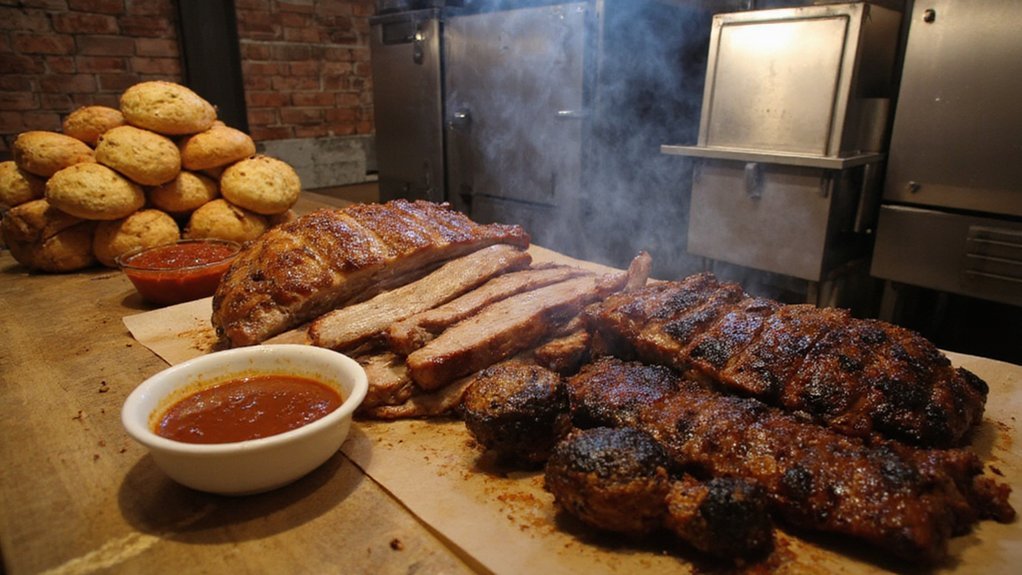
    When you map your route across Kansas City’s barbecue landmarks, balance flavor contrasts and practical pacing so each stop lands distinct: Joe’s crisp, charcoal-whispered exterior will read light after Gates’ bright, vinegary-sweet slices, while Arthur Bryant’s dense, blackened bark begs slower chewing and Q39’s glossy, spice-layered cuts demand palate resets.

    Use route planning that sequences textures and temperatures, and build a timing strategy around peak smoke windows and rest times.

    Sample in small portions, rinse palate with sparkling water or dry crackers, and note how sauce viscosity shifts perception.

    Prioritize sensory contrast over quantity, iterate adventurous pairings, and keep notes for future refinements.

    1. Start early to catch fresh smoke
    2. Alternate heavy and light plates
    3. Schedule palate resets between stops, intentionally
    4. Record temps, sauces, textures notes

    Conclusion

    You’ve tasted molasses‑licked smoke at Joe’s, felt Gates’ vinegary tang peel from tender ribs, wrestled Arthur Bryant’s dense, blackened chew, and savored Q39’s glossy, spice‑layered reductions. You can hear wood crackle, smell peppered bark, and watch sauces bead and run. Move between them to map textures and sweetness, compare smoke depth, and let each pit’s rhythm rewrite what Kansas City barbecue means to you. You’ll leave comparing residues, savor memories, and craving smoky, saucy bite.