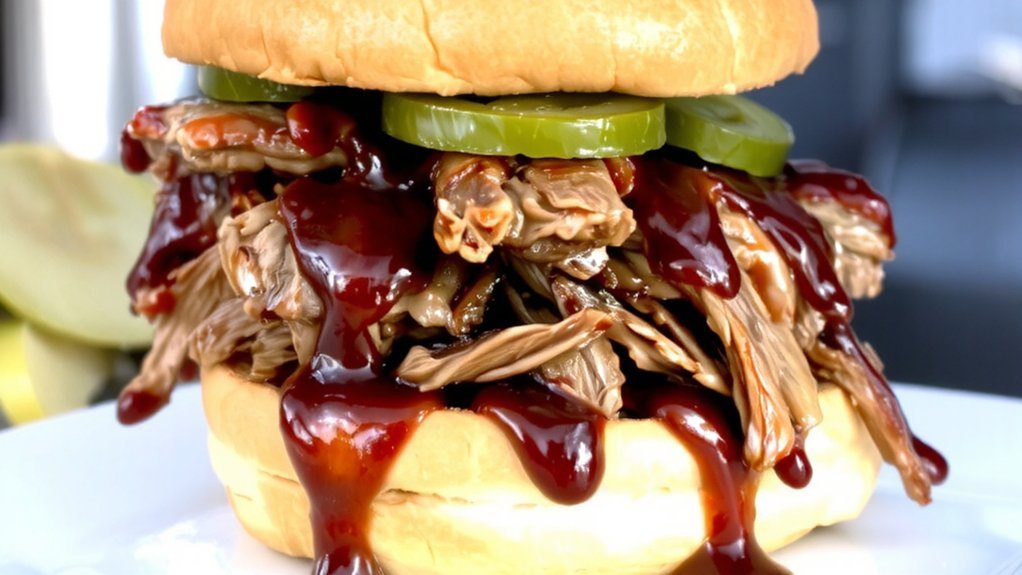
You’ll notice Jack Stack’s lacquered pork pulls into satin strands, molasses-sweet and sticky; Gates favors a vinegar-bright, leaner pull that snaps between bites; Smokehouse builds deep mahogany bark and prolonged smoke into gelatinous, fall-apart strands. You’ll pick apart texture, glaze, and smoke density to decide which approach actually wins—so keep going to see the finer distinctions.
Jack Stack Barbecue — Sweet, Glazed Pulled Pork
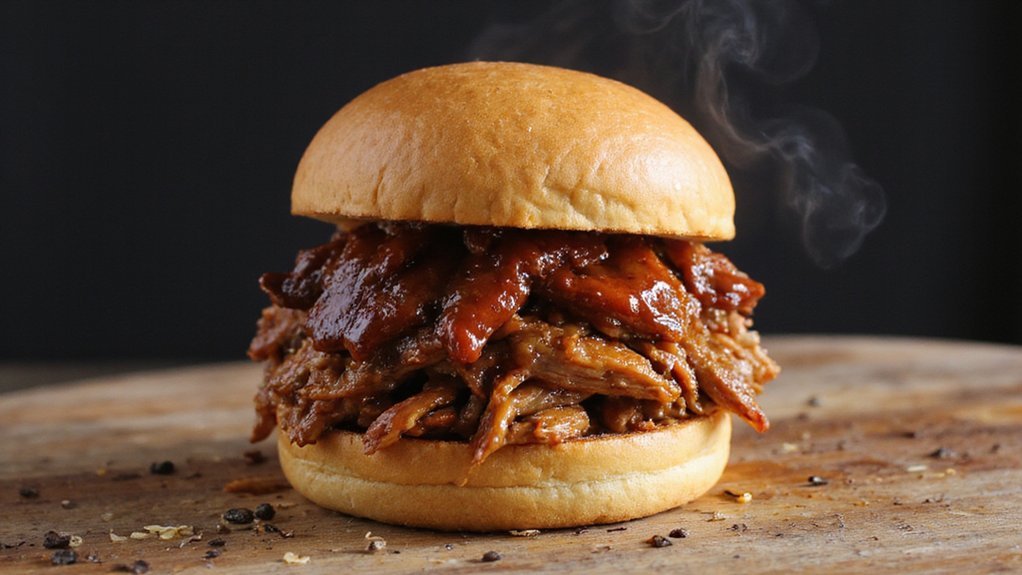
A lacquered slab of pork shoulder glistens as you shred it: Jack Stack’s sweet, glazed pulled pork balances a sticky, caramelized exterior with a tender, collagen-soft interior by marrying a high-sugar glaze (molasses and brown sugar) to low-and-slow smoking and precise internal-temperature control (about 195–203°F for ideal collagen breakdown).
You’ll notice a glossy Honey Glaze that cuts through smoke with floral sweetness while a restrained Molasses Finish adds depth and controlled bitterness; you compare texture to confit, but the fibers remain structured, not falling into mush.
You calibrate rub composition, smoke density, and glazing schedule like a systems engineer, iterating for sheen, bite, and carry. The result is innovative, tactile, and repeatable. You plate it simply, letting glaze, smoke, and texture speak for themselves.
Gates Bar‑B‑Q — Tangy, No‑Nonsense Pulled Pork
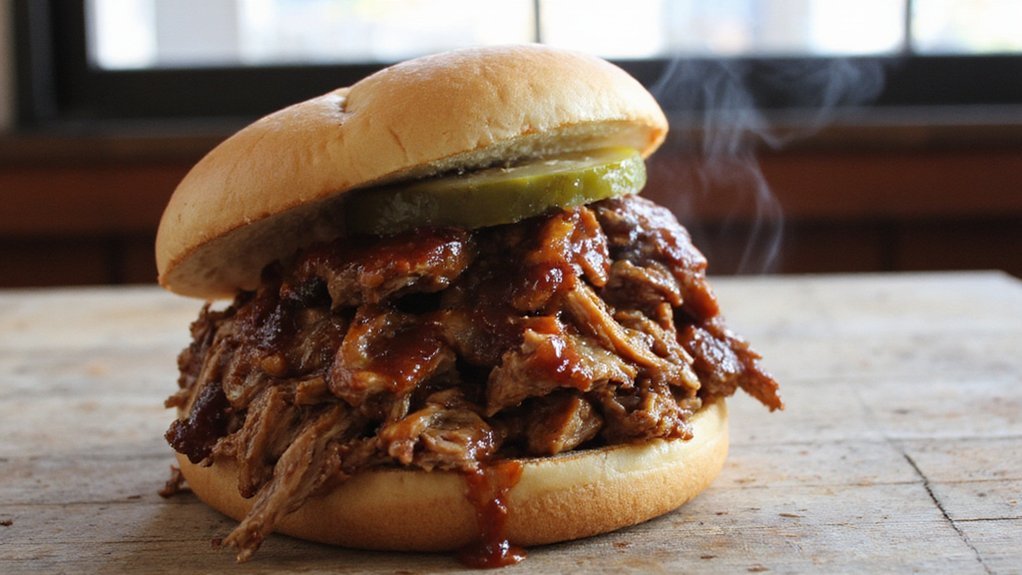
The pit’s bright tang hits first: Gates Bar‑B‑Q pulls pork with a vinegar‑forward sauce that slices through fat and smoke instead of smothering them.
You notice a leaner bark, brisk salt balance, and a quick acidity curve that resets your palate between bites. Vinegar Sauce here is calibrated — ratio of apple cider to cane, pinch of chili to signal, not to dominate.
Texture reads intentional: shreds with tensile resistance, moist pockets, minimal syrupy cling.
Compared to sweeter rivals, Gates opts clarity over coating; flavors resolve fast, no sticky residue.
At Counter Service, orders land hot and immediate, a lab-like loop from pit to bun. If you pursue innovation, you’ll appreciate efficient execution and a modular flavor template you can iterate and repeat regularly.
Smokehouse BBQ — Slow‑Smoked, Fall‑Apart Pork
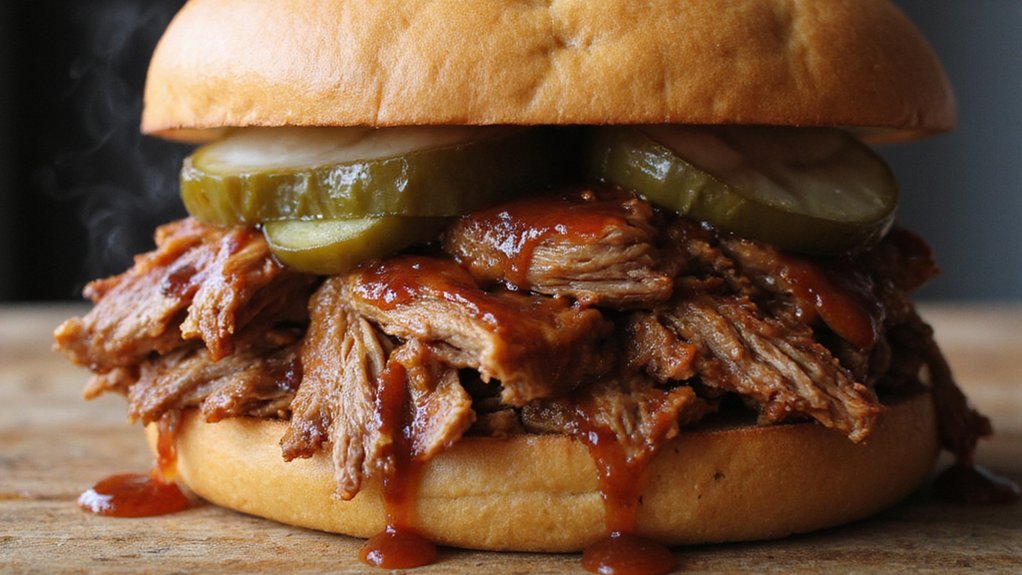
Slow-smoking at low heat gives Smokehouse BBQ pork a silk-fine pull that dissolves on your tongue: after 10–14 hours at 225–250°F, collagen converts to gelatin, fat renders into moist pockets, and a dense, mahogany bark forms from Maillard-driven sugars and prolonged smoke exposure.
You’ll calibrate wood selection—hickory for assertive sweetness, apple for bright fruit—while controlling airflow and pit temp to favor enzymatic breakdown without drying.
As you probe, meat yields with translucent strands; juices bead, aromatic smoke layers the palate, and a tactile bark development contrasts satin interior with crisp exterior.
Compared to faster methods, this is deliberate engineering: you’ll tune rub chemistry, smoke density, and resting time to innovate texture and amplify savory complexity.
You refine processes, quantifying variables for repeatable excellence consistently.
Conclusion
You’ll taste three distinct philosophies: Jack Stack’s lacquered pork coats your fingers with satin‑sticky molasses and honey, amplifying caramelized Maillard notes; Gates wakes your palate with vinegar‑bright acid and brisk salinity, leaving a lean, nonsticky finish; Smokehouse delivers prolonged phenolic smoke and mahogany bark, yielding gelatinous pull and layered umami. Compare density of smoke, glaze viscosity, and salt–acid balance, and you’ll pick the sandwich that best satisfies your technical appetite every service‑ready bite without fail.
Leave a Reply