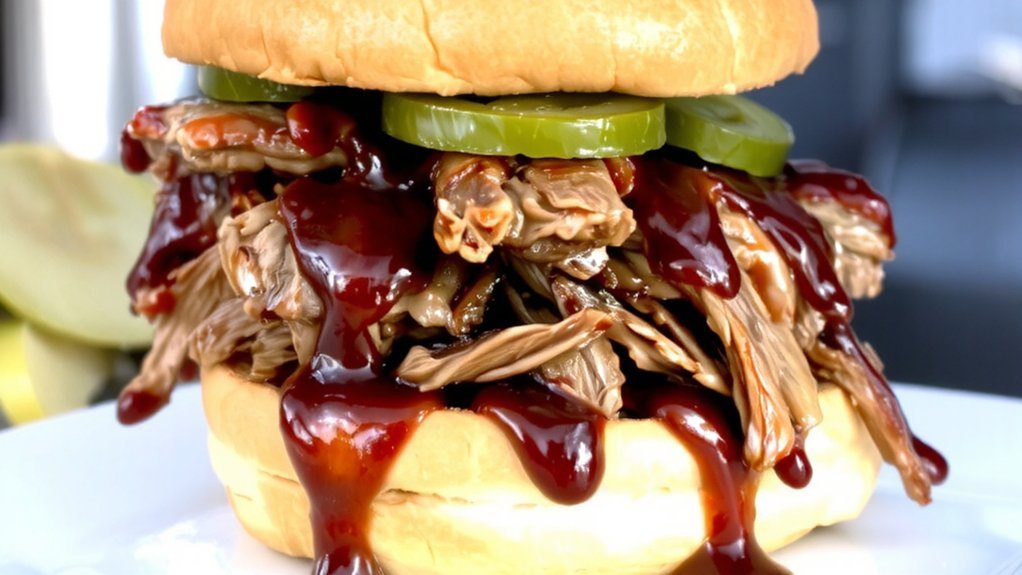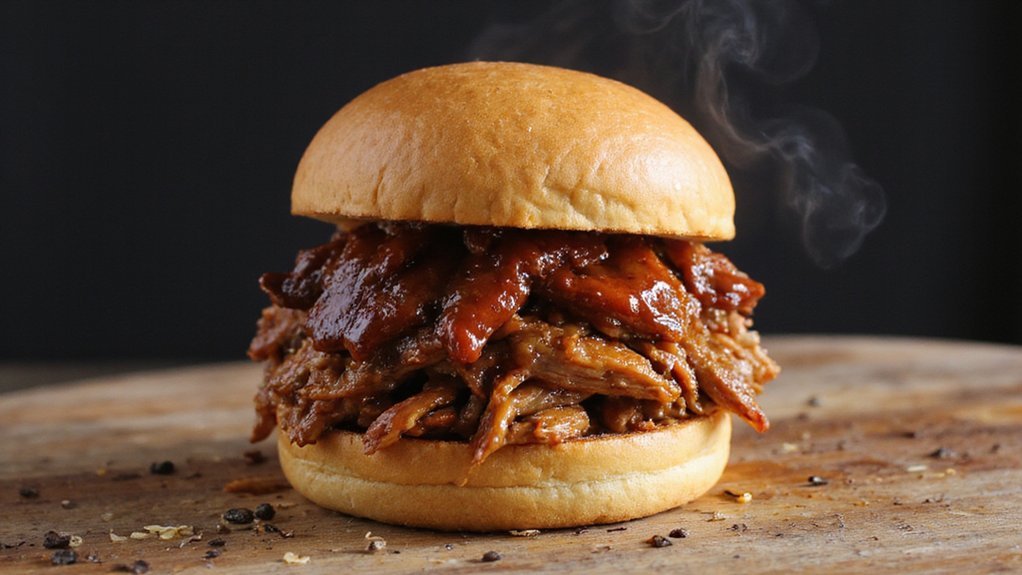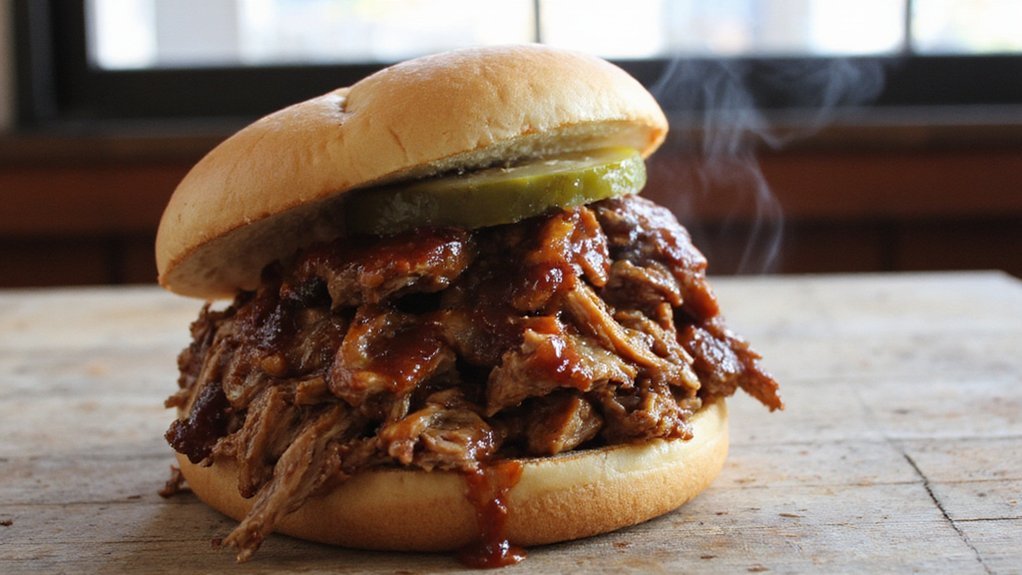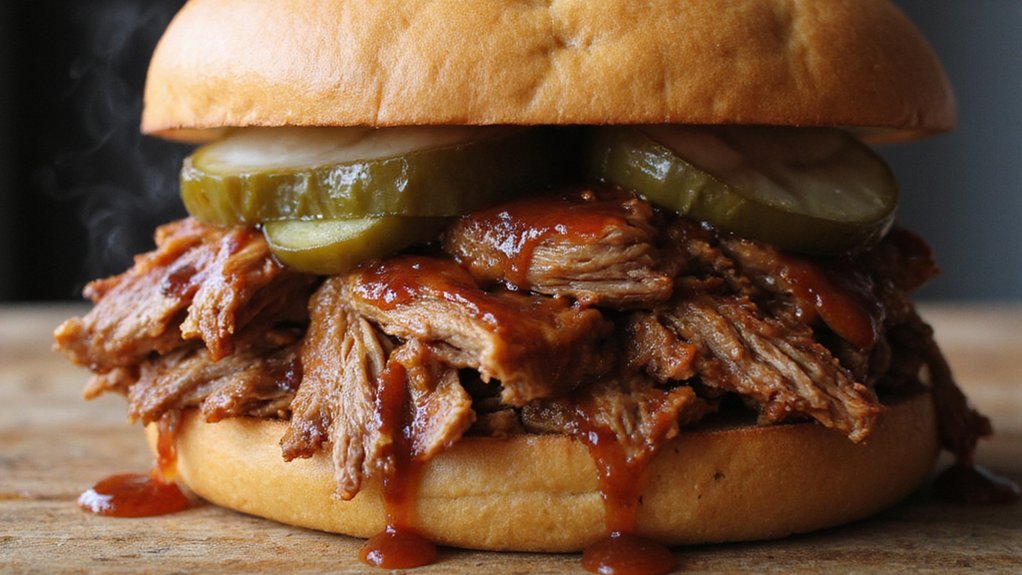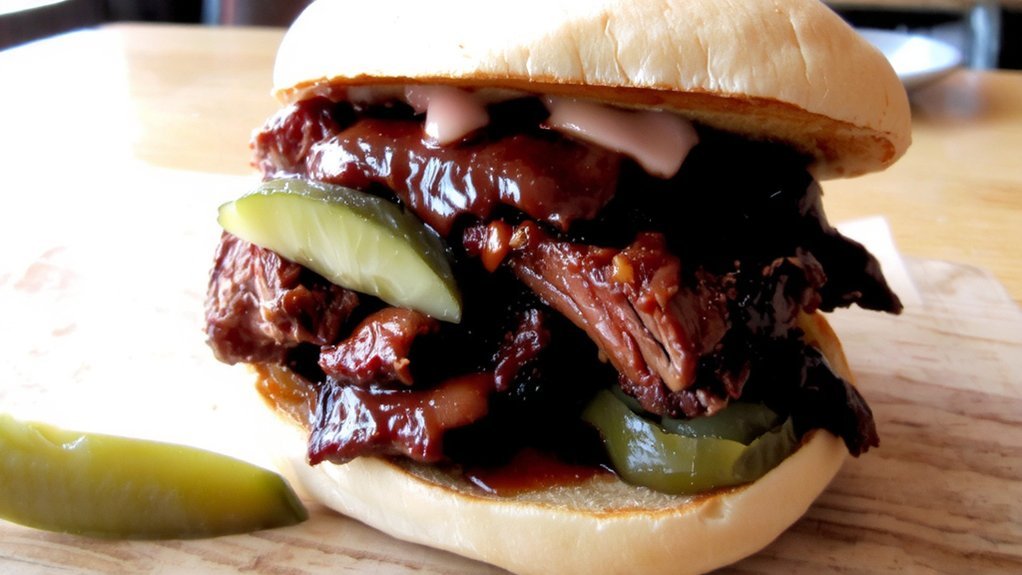
You’ll notice how smoke, fat and seasoning get sorted differently across Kansas City’s brisket sandwiches. Arthur Bryant’s coats tender strands in molasses-tang sauce; Joe’s KC and Jack Stack serve thin, savory slices with clean bark; Q39 Midtown favors a snapping, spice-rubbed crust over evenly rendered meat. If you care about balance and bite, there’s more to unpack…
History and Regional Roots of Kansas City Brisket Sandwiches
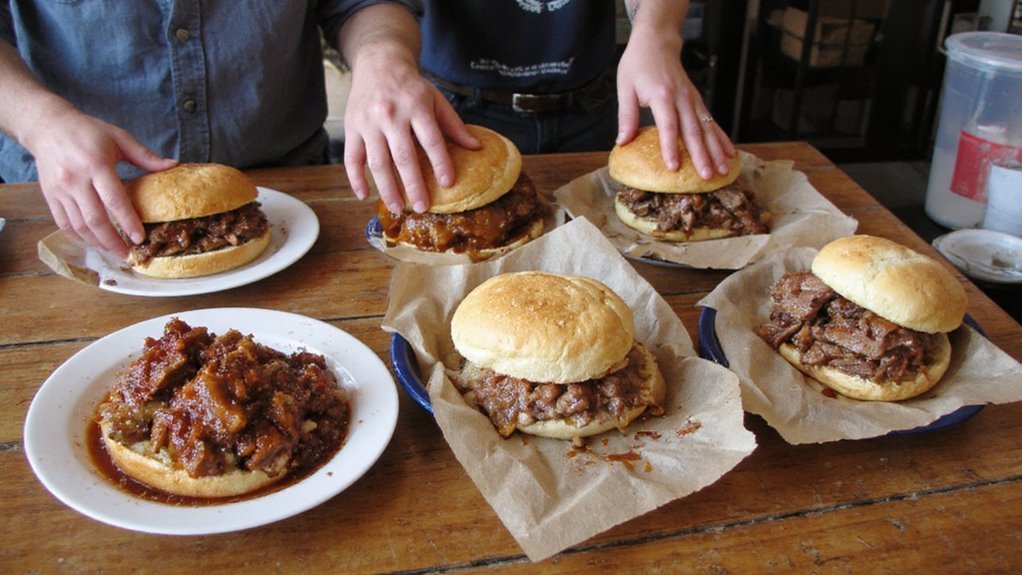
When you sink your teeth into a Kansas City brisket sandwich, you’re tasting decades of regional craft: slow-smoking deep-chuck brisket over hardwoods until the bark forms a peppery crust and the fat renders into glossy succulence.
You’ll notice how Czech influence shaped early meatpacking and communal smokehouses, bringing meticulous curing instincts that married local oak and hickory techniques.
You judge cuts by bark, smoke ring, and rendered fat, valuing texture and clarity of smoke over theatrical saucing.
Butcher traditions persist in precise trimming and point-flat handling, letting smoke and time define flavor.
If you’re seeking innovation, you’ll appreciate subtle tweaks—wood blends, temp curves, injection brines—that push tradition without erasing the smoky benchmarks Kansas City built.
You’ll return, recalibrating expectations toward measured, smoky progress daily.
Arthur Bryant’s — The Sauce-Drenched, Old-School Classic
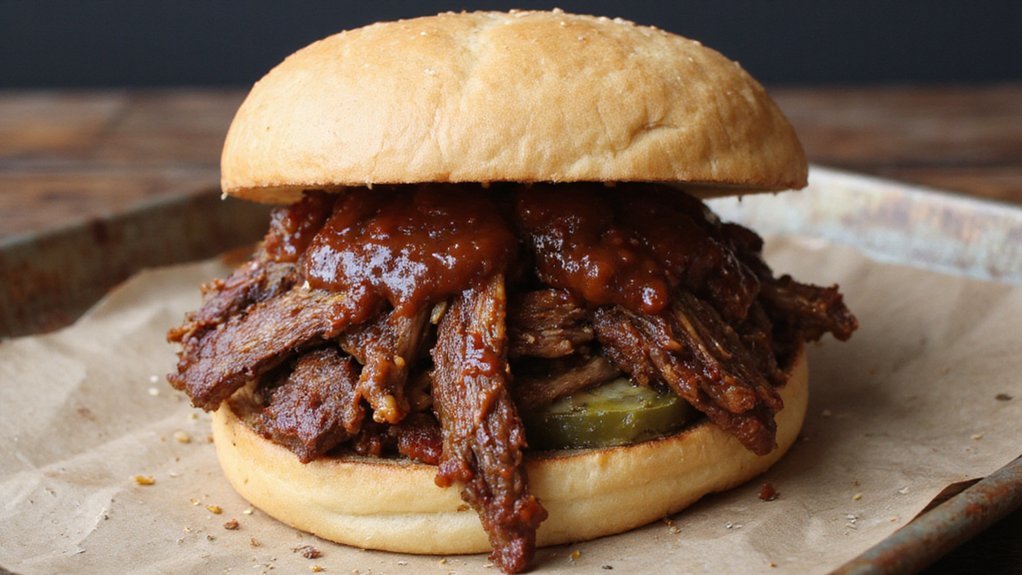
A lacquered slab of brisket at Arthur Bryant’s arrives slick with a reddish-brown sauce that announces itself before the smoke does. You lean in; the smoke is a dark, savory filament beneath a sweet-tangy gloss.
Texture is partisan: a bark that resists, fat that yields, meat that pulls in long, glossy strands. Taste centers on sauce composition—molasses depth, tomato brightness, subtle vinegar lift—balanced to dominate without erasing smoke complexity.
Service is brisk, no-nonsense counter service, which frames the experience as functional ritual rather than finesse. You’ll appreciate how tradition invites tinkering: imagine dialing back sugar, amplifying hickory, or introducing fermented heat to modernize that signature glaze while keeping the smoky backbone that defines Arthur Bryant’s.
It rewards subtle adjustments that respect provenance and punch.
Joe’s KC and Jack Stack — Tender Slices and House-Smoked Refinement
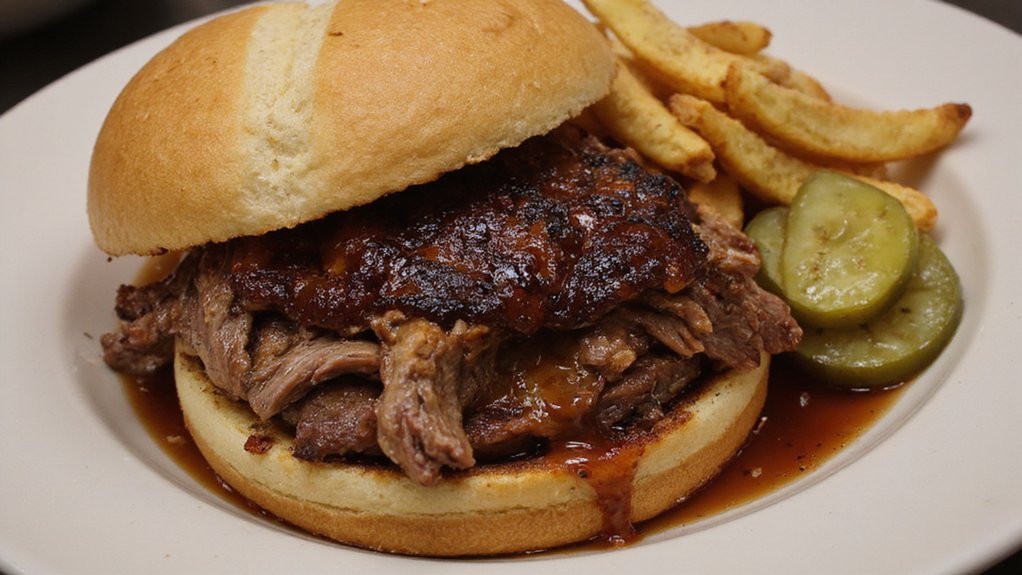
You’ll notice Joe’s KC and Jack Stack steer the conversation away from sauce-first swagger toward a quieter, house-smoked refinement where smoke shapes the meat’s personality.
You’ll find brisket sliced consistently—thin against the grain for tenderness, thicker for chew—demonstrating deliberate slicing techniques that control bite and reveal texture.
Their smoke profiles are layered: sweet hickory undertones, restrained pit-char, and a clean, savory bark that never overpowers.
You’ll evaluate balance—fat rendered but present, seasoning precise, smoke integrated as seasoning rather than spectacle.
For innovators, these sandwiches model restraint: imagine refining smoke choice, timing, and blade angle to emphasize nuance.
They teach you to prioritize mouthfeel and aromatic depth, proving subtlety can be as progressive as bold reinvention.
You’ll leave thinking about smoke, cut, and restraint deliberately.
Q39 Midtown — Modern Techniques and Bark-Forward Perfection
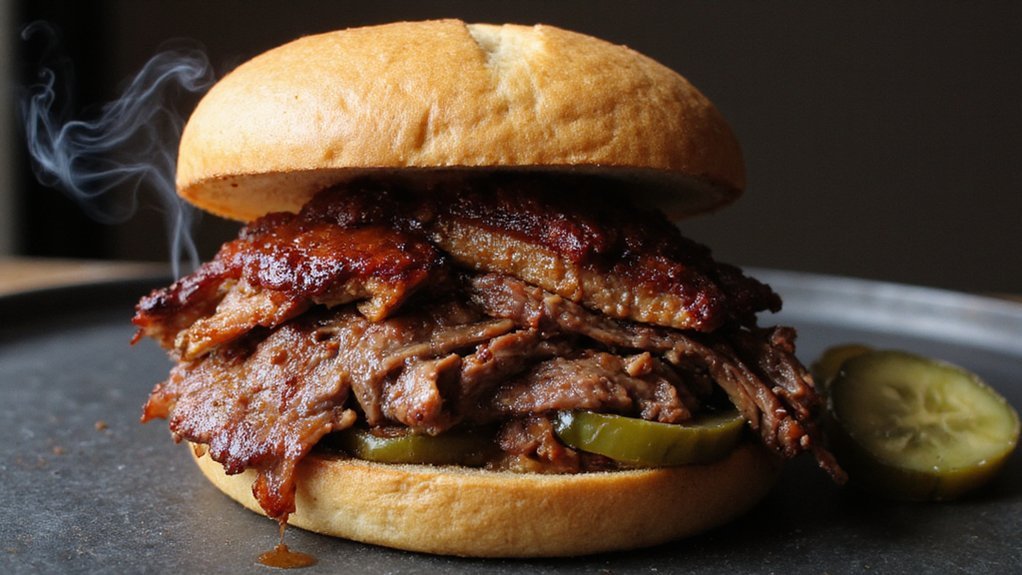
Because Q39 leans into precision smoking, they coax a lacquered, spice-forward bark that asserts itself immediately while the interior stays supple and evenly rendered.
You notice their method: a disciplined Sous vide infusion before the pit, which stabilizes collagen and concentrates beef flavor without collapsing texture.
You appreciate the deliberate smoke profile — alder and post oak layered thinly to highlight the rub.
After low-and-slow immersion, they employ Reverse sear finishing to snap the crust and amplify Maillard complexity.
On the sandwich, that bark commands attention, each bite balancing fat, smoke, and restrained seasoning.
If you crave innovation grounded in technique, Q39’s approach feels rigorous and modern: exacting processes that translate directly into a focused, bark-forward eating experience.
It’s restrained, bold, and precisely delicious indeed.
Conclusion
You’ll find Kansas City’s brisket riffs defined by smoke and technique: Arthur Bryant’s drenches tender strands in glossy, molasses-lit lacquer that sells comfort; Joe’s and Jack Stack slice refined, hickory-kissed meat with clean bark and balanced savor; Q39 Midtown forces you to notice a snapping, spice-crusted edge from sous-vide and reverse sear precision. You’ll judge each on smoke intensity, fat rendering and seasoning — and know which bite satisfies your craving with a smoky finish.