
You’ll notice how green rice at Mi Ranchito, Port Fonda and Ponak’s balances bright cilantro‑poblano herbiness with a whisper of charred jalapeño and lime. You can taste the toasted aromatics and the way the grains stay distinct yet lightly coated. It feels both rustic and calibrated, and you’ll want to uncover the small techniques that make each version sing.
Origins and Tex‑Mex Influence
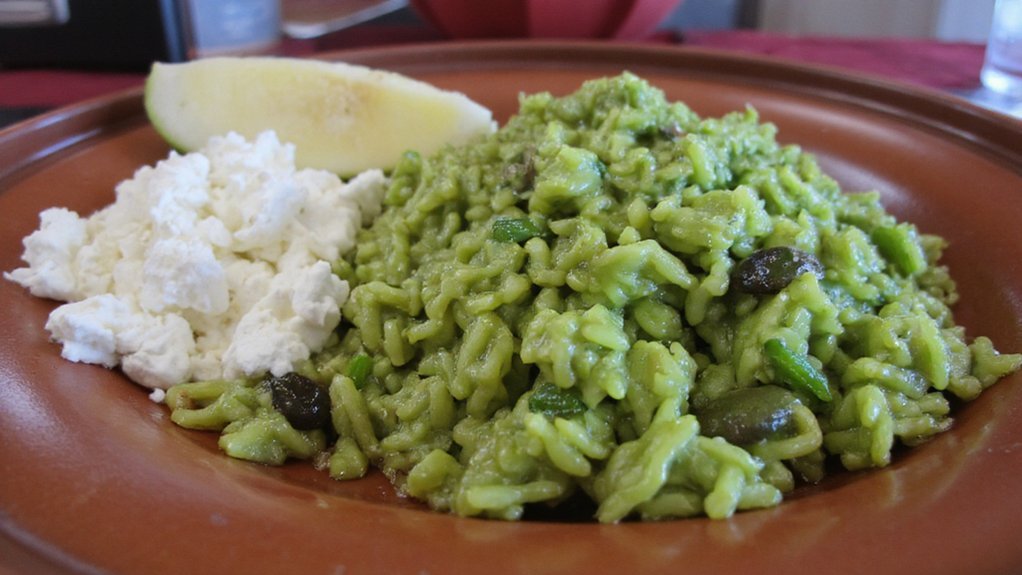
Although it grew from Mexican arroz verde, Tex‑Mex green rice took root when Texas cooks adapted ingredients to local tastes and supplies.
You trace Regional Origins to border kitchens where practicality met imagination; you see tortillas, smoked meats, and market greens reinterpreted into a vibrant side.
Cultural Fusion appears as a deliberate negotiation: familiar techniques reframed by new produce, heat, and service styles. You notice how textures shift for hearty plates and how plating reflects brisk, convivial dining.
As an innovator, you’ll appreciate the pragmatic creativity—repurposing leftovers, scaling for ranch meals, adjusting cook times—so the dish thrives in restaurants like Mi Ranchito, Port Fonda, Ponak’s Mexican Kitchen while staying rooted yet forward-looking.
You can imagine small refinements turning tradition into signature house elements today.
Herb and Spice Profiles
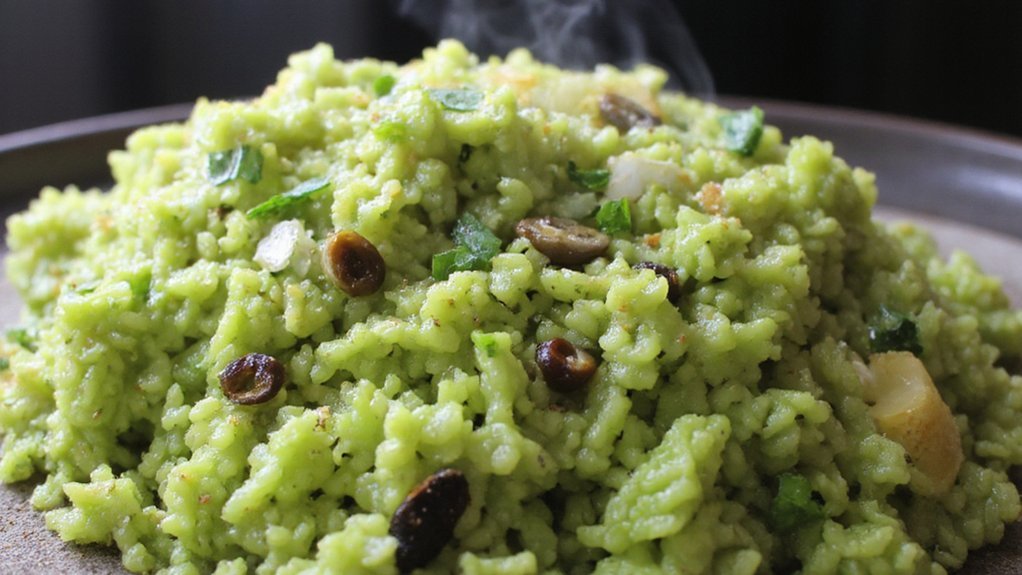
You notice cilantro cuts through the richness with bright, citrusy green notes that define Tex‑Mex green rice.
Earthy cumin and floral coriander ground the dish, their balance steering it from smoky to sweet.
You’ll see how fresh herbs versus toasted seeds change aroma and mouthfeel, altering the rice’s character.
Cilantro’s Flavor Role
When chopped fresh, cilantro brings a burst of citrusy, green brightness that lifts the rice and cuts through its buttery or oily richness. You’ll notice its enzymatic brightness acting as a palate cleanser between bites, revitalizing the dish and revealing subtle herbaceous layers.
Use stems and leaves differently: finely chopped leaves scatter immediate top-note aroma, while tender stems release a deeper, slightly aniseed texture when sautéed briefly.
You can calibrate quantity to steer the rice toward vivid freshness or restrained support; small additions amplify aroma without overpowering.
Think of cilantro as a directional tool—brightening, balancing, and creating contrast. Experiment with timing and cut to innovate texture and scent while keeping the dish cohesive and modern. You’ll refine signature profiles through small, deliberate variations regularly.
Cumin and Coriander
The pairing of cumin and coriander anchors the rice with a complementary contrast: cumin lends a dry, smoky-earth warmth while coriander seed offers bright lemony-citrus and a faint floral sweetness.
You tune proportions to steer texture and aroma—more cumin for grounding depth, more coriander to lift the profile into citrus clarity.
Think like an experimentalist: map how each gram shifts perception and pairing possibilities across proteins and salsas.
Note practicalities too; storage methods affect potency, so rotate stock and monitor humidity to preserve volatile oils. Watch marketplace trends for heirloom seeds and single-origin cumin that can recalibrate familiar dishes.
Apply these insights and you’ll turn a simple Tex‑Mex side into a signature, forward-thinking taste statement. Experiment subtly; small shifts yield surprising culinary advances today.
Fresh Vs Toasted
Moving from the compressed interplay of cumin and coriander, think about how fresh and toasted forms rewrite those same flavor equations.
You’ll notice fresh coriander and cumin seeds give bright, green, citrusy edges that lift salsa verde and rice, while toasting seduces oils out, yielding smoky, nutty depth.
Choose fresh when you want lift and volatile top notes; choose toasted when you seek backbone and caramelized complexity.
Consider Aroma impact: fresh spikes fragrance immediately; toasted prolongs presence and adds roasted nuance.
Also weigh Shelf life—ground fresh herbs lose volatility fast, whole seeds or toasted spices stay potent longer.
In practice, you can blend: bright, raw herbs for finish; a whisper of toasted powder for structure and persistence.
Experiment continuously to refine your signature rice.
Broth, Texture, and Rice Choices
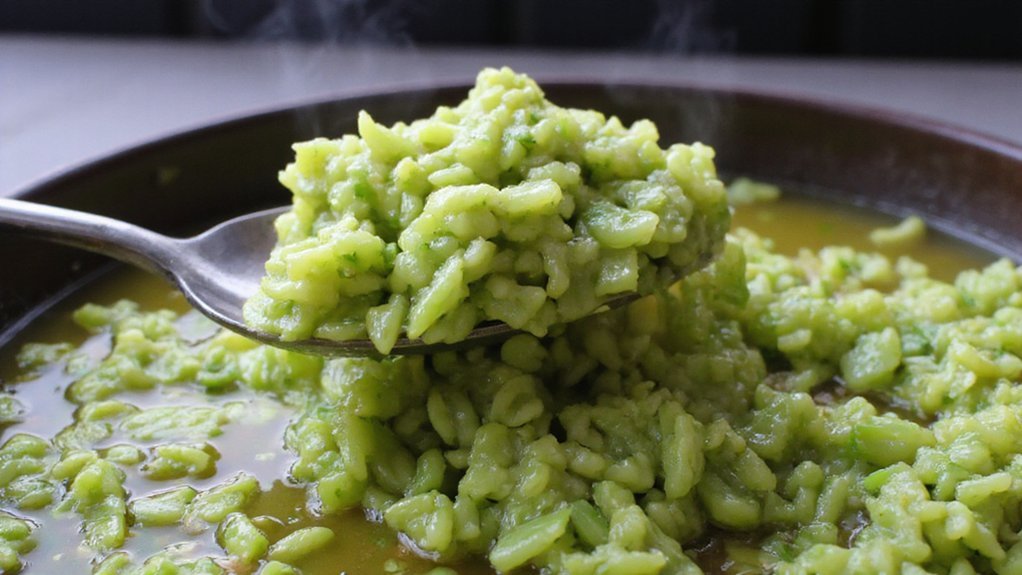
Listen to the broth—its body and seasoning will be the backbone of your green rice, lifting herbal brightness or flattening it if it’s thin.
Choose a rice with the right bite: long-grain for separate, fluffy kernels; medium or short-grain for creamier, clinging results.
Match stock richness to grain behavior so each spoonful carries layered savory depth and the texture you want.
Broth Flavor and Depth
Layering broth flavor gives a green rice its soul: start with a rich chicken or vegetable stock and build depth with roasted aromatics, a hit of citrus or vinegar for brightness, and careful seasoning so you don’t overpower the herbs.
You’ll coax complexity by adding controlled umami sources—anchovy, mushroom, toasted soy, or aged cheese rind—while using clarifying techniques like skimming and gentle straining to keep the broth lucid and vibrant.
Think about mouthfeel: a silky, slightly viscous liquid clings to grains, carrying herbal oils and green purées.
You’ll calibrate salt and acid late, tasting as you go, and experiment with concentrated reductions to intensify flavor without masking the fresh cilantro, parsley, or tomatillo notes.
Record each tweak to hone the ultimate balance.
Grain Type and Texture
Many cooks prefer long-grain white rice for Tex‑Mex green rice because it yields distinct, fluffy grains that show off herb purées, but you’ll choose differently if you want creaminess: medium- or short-grain varieties and parboiled rice hold more starch and give a silkier bite.
You’ll assess texture by tasting temperature and bite: al dente grains should separate but still bloom with sauce, while creamier rice embraces the broth, releasing herb oils.
Think about milling impact — more polished rice loses bran oils and some flavor, while less milled kernels add chew and nuttiness.
Aging effects matter too; older rice hydrates predictably and firms up, younger rice can clump. For innovators, mixing grain types or brief risotto technique expands the green rice palette and creative contrasts.
Mi Ranchito’s Version: Key Features
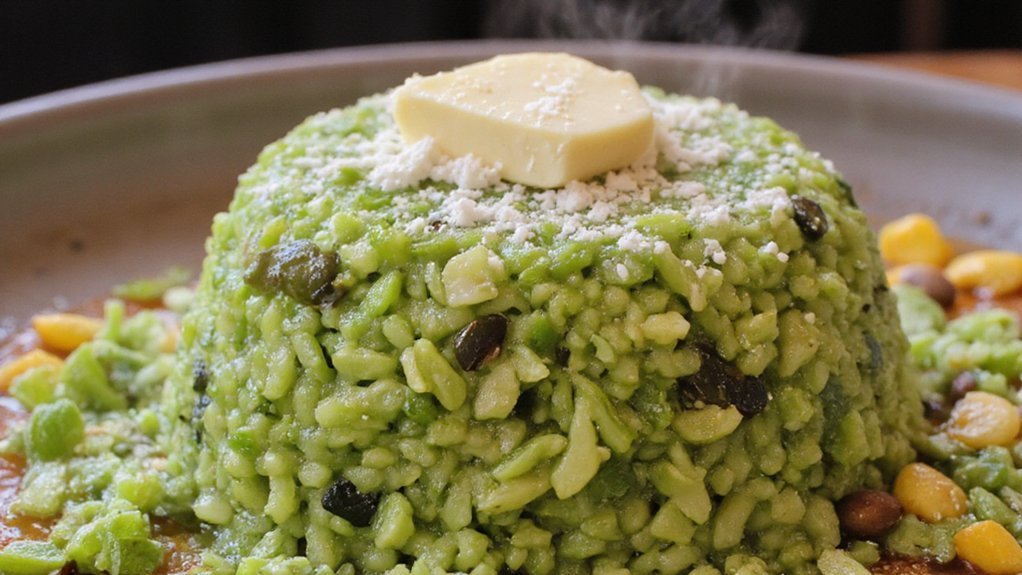
Notice how Mi Ranchito’s green rice hits you with an immediate, vivid color — a deep, herbaceous green that signals cilantro and poblano or jalapeño at the core. You’ll find crisp aromatics and a subtle char balanced by citrus brightness; the cooks coax layered heat without overwhelming the rice’s delicate body.
Texture stays slightly loose, each grain coated but distinct, so you taste herb, pepper, and a faint toasty base. The plate reflects purposeful portion sizing and smart menu placement, presenting the rice as an active component, not filler.
Ingredients feel considered and slightly experimental — toasted pumpkin seeds, a whisper of crema — so you encounter familiar tradition nudged toward modern, confident refinement. It’s a poised, inventive side that invites repeat exploration.
Port Fonda’s Version: Key Features
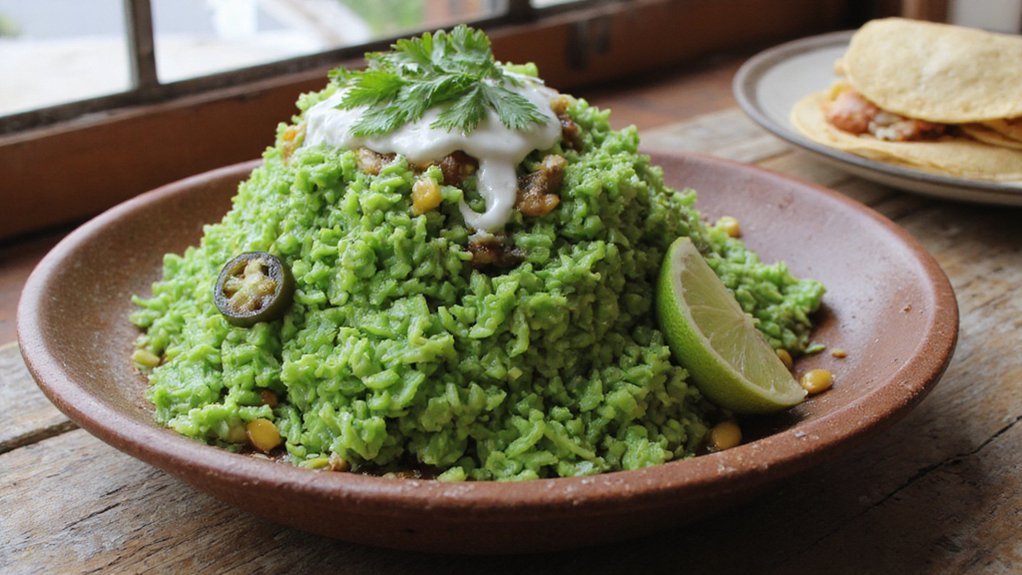
How does Port Fonda’s green rice distinguish itself on the plate? You notice immediately a vibrant herbaceous hue and a restrained texture—rice grains separate, glossed but not mushy.
You’ll appreciate how bright acidity balances fat, and how toasted aromatics underpin each bite.
The kitchen treats garnish placement as design, tucking microcilantro and lime zest along one edge to invite interaction rather than obscure flavor.
Portions are modern, meant to complement rather than dominate mains.
Plateware choice amplifies contrast: shallow bowls with matte glazes set the verdant rice against warm ceramics, sharpening visual impact and signaling contemporary intent.
You leave thinking about technique—precise toasting, measured stock reduction—and how small choices elevate a familiar side into something inventive.
You’re prompted to recreate it in your kitchen.
Ponak’s Mexican Kitchen: Key Features
After savoring Port Fonda’s precise, herb-forward rice, Ponak’s Mexican Kitchen announces itself with a warmer, more textural approach: flavors hit with unapologetic depth and a home-kitchen immediacy that still respects technique.
You’ll notice rice studded with charred corn and rendered bits that create mouthfeel; bright herbs are tempered by toasty aromatics, so each bite balances comfort and craft.
You’ll also register a menu that invites pairing—signature cocktails lean earthy, lime-driven, and sometimes smoky, nudging the palate toward savory rice notes.
Presentation aesthetics favor rustic geometry: bowls stack height and color, garnishes feel deliberate, not ornamental.
If you seek innovation, Ponak’s gives you tactile, layered rice that reads modern without abandoning soulful familiarity. Service cadence and ingredient sourcing underscore thoughtful, quietly disruptive culinary choices here.
Tips for Recreating at Home
When you set out to make this Tex‑Mex green rice at home, remember that balance—between toasty depth and bright herbaceousness—matters as much as ingredients. You’ll toast rice until edges shimmer, then deglaze with stock so the fond lifts and flavors marry.
Use a blender technique to emulsify cilantro, tomatillo, jalapeño and lime; pulse rather than puree for texture and color.
Mind salt early and adjust late; acidity sharpens without overpowering. Cook low and steady, fluffing to preserve separated grains.
For efficiency, use batch freezing for portions you won’t eat immediately—flash cool on trays before bagging to avoid mush. Experiment with charred aromatics and citrus oil to push boundaries while keeping proportion and restraint.
Taste at each stage; small tweaks transform the finished dish consistently.
Conclusion
You’ll notice green rice isn’t just a side but a balancing act: herbaceous cilantro and roasted poblano dance with charred jalapeño, toasted aromatics and a squeeze of lime. You’ll taste restrained crema or pumpkin‑seed crunch and a texture where grains stay distinct yet lightly coated. Reading each house version teaches you how technique—broth concentration, toasting, and char—shapes brightness and mouthfeel, and how this rustic, modern dish cuts richness and lifts smoky cocktails and invites pairing.