Plan a quick trip to waters that suit your time and skill. This guide points you to easy bank spots, small ponds, and larger lakes near town. You’ll see where spring panfish and walleye shine, where summer favors bass and catfish, and where winter trout get stocked for urban anglers.
Getting started is simple: a pre-rigged combo and worms will do most jobs. Free fishing days in early June make it even easier to try a new spot without a license.
We highlight top lakes and reservoirs, plus river access where heavy line helps land big catfish. Expect clear tips on gear, local bait shops, and quick season-by-season advice so you can pick the right lake and head out with confidence.
Key Takeaways
- Choose a spot based on season: panfish in spring, bass in summer, trout in winter.
- Pack a basic rig or use free/loaner options on special weekends.
- Look for bank access, docks, or marinas to match your style.
- Heavy line is smart for river catfish; light gear works for panfish.
- Local bait shops and apps simplify licenses and conditions.
Why Fishing Kansas City Is Better Than You Think
Local anglers report that excellent catches wait just minutes from downtown, not hours in the Ozarks. The metro area packs strong fishing into short drives, so you can get on the water after work or on a quick morning break.
Nearby lakes like Shawnee Mission, Wyandotte County, Jacomo, Blue Springs, Longview, and James A. Reed produce real results. Anglers land 5–7 lb bass, big hybrids at Blue Springs, and regular 18-inch bass at Shawnee Mission Park Lake.
You don’t need a boat to catch quality fish. Many spots are designed for shore anglers, and small- to mid-size lakes fish “big” due to smart stocking and plenty of structure. That creates steady opportunities year-round.
- Short trips yield solid action for bass, catfish, and panfish.
- Close waters let you learn patterns fast and try new tactics.
- When one bite slows, another nearby water often picks up.
| Water | Highlight | Best time |
|---|---|---|
| Shawnee Mission Park Lake | Consistent keeper bass | Spring–Summer |
| Blue Springs Lake | Large hybrids, summer action | Summer |
| Lake Jacomo | Tournament bass, crappie on docks | Spring–Fall |
| James A. Reed Memorial | Bank-friendly trout and bass | Fall–Winter |
Quick-Start Planning for the present: Licenses, Apps, and Local Rules
A quick licensing check and a reliable app save time and keep you legal on the water.
Licenses are required on public waters and can be purchased online or at bait-and-tackle shops. Missouri’s official app, MO Fishing, and Kansas’ Go Outdoors KS let you buy and store permits digitally.
Non-residents must carry the permit for the state where they fish. Both states usually offer a license-free weekend on the first full weekend in June—an ideal day to introduce friends and family.
Where to buy
- Download MO Fishing and Go Outdoors KS to save time and confirm rules before you arrive.
- Buy online through each state portal, or use Kansas’ vendor info page for in-person purchases.
- Keep a digital copy on your phone, but bring a charger—digital access must be available if asked.
Resident vs. non-resident rules
Check special regulations by water, including creel and length limits. Kansas sometimes requires a permit even on private waters, so verify before you fish to avoid fines.
| Item | Where | Quick Note |
|---|---|---|
| License | MO Fishing / Go Outdoors KS | Digital or print |
| Free day | First full weekend in June | Both states usually |
| Vendor help | Local shops | Kansas lists vendors online |
fishing kansas city: Top Lakes & Ponds Around the Metro
A small set of nearby waters gives shore anglers dependable action and quick access.
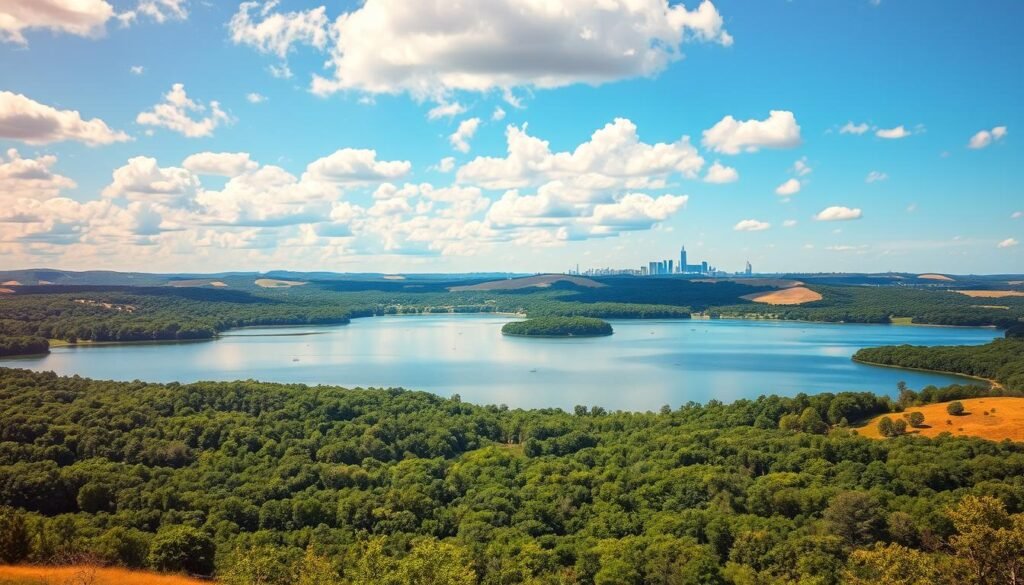
James A. Reed Memorial Wildlife Area (Lee’s Summit)
252 acres of water designed for bank anglers. Brush, rocks, and logs sit within casting range. Select ponds are stocked with trout during cold months, making winter trips productive.
Shawnee Mission Park Lake (Shawnee)
This 120-acre lake holds keeper bass and stocked channel catfish. Anglers report bass over 18 inches and occasional heavy hitters near docks and fallen timber.
Wyandotte County Lake (KCK)
A larger 400-acre water that adds smallmouth and largemouth to the mix. Trout are trucked in early March; a local permit is required before you wet a line here.
Kill Creek Lake (Olathe)
At roughly 30 acres, Kill Creek is known for strong channel catfish and solid bass structure. It also produced the state-record rainbow trout (15.72 lbs) in 2014.
Lake Henry at Clinton
A quiet, scenic winter-trout pond tucked above the marina. Shore access is easy, which makes it a good choice for family outings and short sessions.
- Use small jigs or live bait around brush and rock for multi-species bites.
- Walk-and-cast patterns work well—mobility helps you sample multiple ponds.
- Carry a tape: regulations and length limits vary by water and species.
| Water | Acres | Top Species | Notes |
|---|---|---|---|
| James A. Reed Memorial Wildlife Area | 252 acres | trout, bass | Bank-friendly cover; winter trout stocking |
| Shawnee Mission Park Lake | 120 acres | largemouth bass, channel catfish | Keeper bass and occasional trophies |
| Wyandotte County Lake | 400 acres | smallmouth, trout | Early March trout; local permit required |
| Kill Creek Lake | ~30 acres | channel catfish, bass | Small but productive; state-record rainbow trout |
| Lake Henry (Clinton) | — | winter trout | Scenic, easy shore access |
Big-Water Options: Reservoirs & Missouri River Access
If you like wide water and varied structure, the metro’s reservoirs and the Missouri River deliver big fish and boat access.
Lake Jacomo — docks, crappie, and classic bass
970 acres of shoreline and brushed slips reward precise dock work. Drop tiny jigs on 2 lb test into brushed slips for steady crappie across seasons.
Jacomo also holds quality bass, bluegill, and channel catfish around docks and timber. Use ultralight setups for tight presentations and switch to heavier gear when structure gets heavy.
Blue Springs Lake — hybrids, largemouth, and boating
This 720-acre lake sees heavy boat traffic but strong bites for stocked hybrids and improving largemouth. Focus on windblown points and current seams where active fish hold.
Plan for wakes: fish early or late, and run deeper cranks or heavier heads when boats churn the surface.
Longview Lake — walleye program plus crappie
Longview’s regular stockings have strengthened its walleye reputation. Troll or jig breaks and flats near deeper water, and keep crappie gear ready for brush piles.
Missouri River — trophy catfish stretches
From LaBenite Park to Kaw Point, the Missouri River offers true trophy potential. Target deep channel edges and eddies with heavy line—40 lb test or more—and abrasion-resistant leaders.
Use public access at the park ramps and plan boat launches around flows and ramp status before towing a boat. Keep hooks sharp and leaders stout when you work river structure.
Season-by-Season Action: Bass, Catfish, Crappie, Walleye, and Trout
Each season brings clear shifts in where fish hold and what lures work best.
Spring
Spring is prime for crappie and bluegill on light tackle. Use tiny jigs or live minnows on an ultralight rod for quick hookups.
Walleye stage on rocky points and windblown banks. Carry a medium rod for jig-and-minnow presentations or shallow crankbaits.
Summer
When water warms, bass move tight to brush, docks, and offshore humps. Try reaction baits on windy days and finesse plastics on calm mornings.
Channel edges and current seams hold catfish; switch to heavier line and baited rigs when you target river runs or deep channels.
Fall–Winter
In fall, baitfish push shallow and crappie school on mid-depth structure. Largemouth bass will chase aggressively during short warm spells.
Through winter, urban trout stocking at Shawnee Mission, Wyandotte County, James A. Reed, and Lake Henry provides steady action. Use small spinners, dough baits, and short sessions when the sun peaks.
- Tip: Pack a versatile box: tiny jigs for panfish, medium jigs/cranks for walleye, and stout rigs for river catfish.
- Match rod power to target species to save time and land more fish.
- Keep a short log of spots, weather, and lures—patterns repeat and speed up learning by the day.
Access and Amenities: Docks, Shorelines, and Boat Considerations
How you arrive—on foot, from a dock, or by boat—shapes the day as much as the lure choice.
James A. Reed Memorial Wildlife Area is built for bank anglers. Purpose-placed brush, rock, and timber sit within casting range, so shore anglers find good bites without a boat. Select ponds are stocked with winter trout for steady cold-season action.
Marina docks and Jacomo access
Lake Jacomo’s marina docks and slips hold lots of submerged brush, which produces crappie year-round. Jacomo spans about 970 acres and offers multiple access points and marina services. Work slips slowly with small jigs to target suspended crappie and bass near cover.
Blue Springs boating crowds
Blue Springs can see heavy boat traffic on weekends, and wakes matter. Fish wind-protected coves, designated docks, or shift to off-peak hours to avoid churn. If you launch, check ramp status, decontamination rules, and local no-wake zones before you go.
- Use park maps and signage to find ADA piers and bank trails.
- Wear shore-friendly footwear for riprapped banks and uneven shoreline.
- Keep a light shore kit so you can move quickly between access points.
Gear on a Budget: From Simple Worm Rigs to Ultralight Jigs
Start simple: a pre-spooled rod and a carton of worms get more bites than you might expect.
Many shops sell freshwater combos for about $30–$40, with kids’ versions at $15–$20. That leaves room to buy a small tackle kit without overspending.
Pack the essentials: a compact box with hooks, split shot, bobbers, and a few 1/32–1/16 oz jigs covers panfish, crappie, trout, and opportunistic bass.
- Start with a pre-spooled combo and worms—easy setup, fast results.
- Carry a multitool and a small tape for quick hook removal and length checks.
- Match line to the catch: 2–4 lb for ultralight panfish/trout, 8–12 lb for general lake duty.
- Pre-tie a couple of rigs to avoid downtime when the bite is on.
Keep sunscreen, water, and a hat to extend your best times on the bank. Always bring your license—digitally via official apps or a printed copy—so you can focus on finding more opportunities and landing more fish.
Local Bait & Tackle: Where Kansas City Anglers Get Set Up
A quick visit to a neighborhood bait-and-tackle store can cut guesswork and get you on fish faster.
Rogers Sporting Goods in Liberty has served anglers since 1980. Stop there before big trips for live bait and proven lure picks.
Forty Woods in Blue Springs sits close to Jackson County lakes. It stocks classic bait shop fare and current colors for crappie and bass.
K&K Flyfishers in Overland Park runs classes on knots, leaders, and trout tactics. They also stock fly gear for warmwater and winter-stocked lakes.
Minnesota Bait & Fly in Kansas City, KS, is a generalist shop with combos, hooks, and quick advice for nearby spots.
Typical freshwater rod-and-reel combos run about $30–$40. Kids’ combos are often $15–$20. Call ahead for live bait.
- Use the Fishbrain app to cross-check shop tips with recent catches.
- Ask staff for bank-access tips if you don’t have a boat.
- Bring a short list—target species, lake, and preferred approach—so staff can help fast.
| Shop | Location | Specialty | Typical Purchase |
|---|---|---|---|
| Rogers Sporting Goods | Liberty | Live bait, rigs | Live bait, jigs, combos |
| Forty Woods | Blue Springs | Bait shop staples | Hooks, plastics, local lures |
| K&K Flyfishers | Overland Park | Fly gear & classes | Flies, leaders, instruction |
| Minnesota Bait & Fly | Kansas City, KS | General tackle | Combos, bait, terminal tackle |
Free and Loaner Gear: Libraries, MDC areas, and Group Outings
Community programs and park biologists make borrowable gear easy to find for a stress-free day on the water.
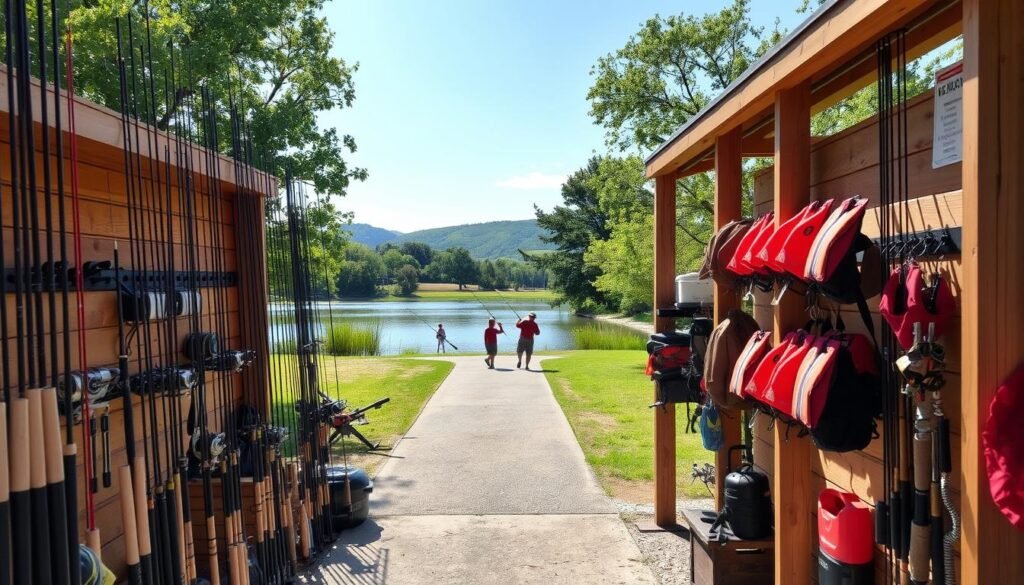
Mid-Continent Library branches loan rods and basic tackle boxes. Patrons can usually keep gear for up to two weeks. Call ahead to confirm which branch has kits available.
Many Missouri Department of Conservation areas also lend tackle at no charge. Contact specific sites to confirm hours and pickup points so you can match your plan to the lake or bank you’ll visit.
Group support and volunteer training
In Kansas, state park fisheries biologists loan dozens of spincast setups to schools, scouts, and churches. Reserve equipment early for group outings.
The Certified Angler Instruction Program trains volunteers to lead community events and to use loaner gear. That expands local access and helps new anglers learn rules and safe handling.
- Call library branches in the kansas city metro to reserve loaner rods and tackle.
- Confirm MDC loan hours and pickup spots before you head to the area.
- Bring extra hooks and bobbers; kits often include pliers and basic terminal tackle.
| Program | Who to contact | Typical loan | Best use |
|---|---|---|---|
| Mid-Continent Library | Local branch circulation desk | Rod + tackle box (up to 2 weeks) | Try gear before purchase |
| Missouri Dept. of Conservation | Site office / ranger | Loaner rods at select areas | Quick bank trips |
| Kansas state parks | Fisheries biologist | Multiple spincast setups for groups | School or scout outings |
Pro Tips for More Bites Around Kansas City Waters
Good anglers map the underwater highways—logs, slips, and rock piles—to shorten search time and raise catch rates.
Match structure: brush piles, slips, rocks, and fallen timber
Read structure first. Brush piles, docks, rocks, and timber concentrate bait and predators. Map a milk run of high-percentage spots before you cast.
At Lake Jacomo, dock experts use tiny jigs on 2 lb line over brushed slips to catch crappie consistently. Blue Springs Lake still produces active bass and hybrids despite boat traffic.
Line choices: ultralight for crappie; heavy test for river catfish
Match line to the job: 2–4 lb for dock crappie and finesse trout, 8–12 lb for reservoir bass, and 40 lb+ for Missouri River trophy catfish around abrasive cover.
- Fish slow and precise in slips; tiny jigs above brush outscore hurried casts.
- In wind or chop, use reaction baits that deflect off rock without snagging.
- At Kill Creek, target channel catfish with worms, cut bait, or stink baits near evening ambush points.
- Keep hooks razor sharp and approach docks quietly for short, accurate pitches.
- Rotate species when activity dips and log depths and angles to repeat success at the same spot.
“Dial one or two patterns per season; repetition builds confidence and catches.”
Conclusion
Close-to-home waters reward short sessions when you focus on structure, tackle, and timing. Pick one of the proven lakes around kansas city and practice a simple plan that matches the species you want to catch.
Start small: James Reed, Wyandotte County, Kill Creek, and Shawnee Mission give easy access and steady action. For bigger water, try Jacomo, Longview, or Blue Springs to chase bass, crappie, and stocked walleye.
Gear up with a basic combo, a few jigs, and live bait. If you want a giant, use heavy line and head to the Missouri River between LaBenite and Kaw Point for trophy catfish potential.
Use license apps, watch for early-June free days, and lean on local shops to maximize limited time on the water.
FAQ
What are the best pocket lakes and ponds near Kansas City for catching bass and panfish?
Look for public lakes with docks and shoreline access such as James A. Reed Memorial Wildlife Area, Shawnee Mission Park Lake, and Wyandotte County Lake. These spots offer bank-friendly access, structure like brush piles and docks, and species variety including largemouth bass, crappie, and bluegill. Use a light spinning rod with ultralight jigs or small soft plastics around structure at low light.
Do I need a fishing license and where can I buy one?
Yes. Purchase licenses through the Missouri Department of Conservation (MO Fishing app) or Kansas vendors like Go Outdoors KS depending on where you’ll fish. Resident and non-resident rules differ, and some free fishing days allow angling without a license. Check local regulations for private-water rules and limits before you go.
When is the best time to target channel catfish and walleye in the metro area?
Channel catfish bite best in late spring through summer, especially near river channels and current breaks on the Missouri River or at Kill Creek Lake. Walleye often show in spring and early summer; Longview Lake and certain reservoirs are known for stocked walleye and spring transitions near drop-offs.
Where are the best urban trout stockings and winter trout opportunities?
James A. Reed Memorial Wildlife Area and Shawnee Mission Park Lake receive winter trout stockings in certain years. City and state rollouts make shore fishing productive—use small spinners, powerbait, or live bait near access points and docks for consistent bites during cold months.
What boat and launch considerations should I know for Lake Jacomo and Blue Springs Lake?
Both lakes have marinas and busy boat ramps. Arrive early on weekends to beat crowds, use slip and dock structure to locate crappie and bass, and be prepared for no-wake zones near shorelines. Carry a map or app to find submerged structure and respect posted speed limits.
Which bait and tackle shops are recommended around the metro for live bait and local intel?
Trusted local shops include Rogers Sporting Goods, Forty Woods, K&K Flyfishers, and Minnesota Bait & Fly. They stock live bait, terminal tackle, and regional lures, and staff can share recent reports on crappie docks, largemouth patterns, and catfish hotspots.
Are there free or loaner gear programs for beginners and youth?
Yes. Check Mid-Continent Library branches and Missouri Department of Conservation (MDC) programs for rod-and-reel loans and community outreach. State park biologists and certified angler instruction events often provide tackle and guidance for first-time anglers.
What seasonal tactics work best for bass from spring through fall?
In spring, target bass on shallow flats and spawning areas with crankbaits and spinnerbaits. Summer patterns move to shaded structure, docks, and deeper breaks—use heavier line and topwater early or jigs near brush. In fall, switch to medium-diving crankbaits and soft plastics as fish feed aggressively for winter.
How do I approach river catfish fishing on the Missouri River near Kaw Point and LaBenite Park?
Fish current seams, holes, and main-channel cuts with heavy test line and strong terminal rigs. Use stink baits, cut bait, or prepared dough baits on circle hooks. Nighttime and low-light periods often increase activity for larger channel and flathead catfish.
What gear should I buy on a budget to cover most metro waters?
A medium spinning combo, a spool of 8–12 lb braided or monofilament line, a selection of ultralight jigs, soft plastics, a couple of crankbaits, and basic terminal tackle will cover panfish, bass, and catfish needs. Typical freshwater combos at local shops are affordable and durable for beginners.
Are there special rules or limits I should know for Wyandotte County Lake and Kill Creek Lake?
Both lakes follow state bag and length limits. Kill Creek is known for channel catfish and has had notable trout history—check current regulations for trout season, daily limits, and any reservoir-specific rules. Always verify limits on the MDC or Kansas Department of Wildlife website before you fish.
How can shore anglers improve their catch rate at James Reed Memorial and other bank-friendly sites?
Focus on structure like fallen timber, docks, and rock edges. Match bait size to local forage—small jigs for crappie and panfish, larger live bait for catfish and bass. Fish low light periods and move if you’re not getting bites. Using polarized sunglasses helps spot structure and feeding fish from shore.
Which species should I expect across metro lakes and reservoirs?
Expect largemouth bass, smallmouth in select waters, channel catfish, crappie, bluegill, white bass, walleye in stocked lakes, and seasonal trout. Reservoirs and the Missouri River provide broader species mixes and trophy potential for catfish and walleye.
What apps or digital tools can help me plan trips and find public access points?
Use the MO Fishing app, state park maps, and boating charts to find ramps, docks, and access points. Many anglers also use fish-finder apps and mapping tools to mark structure, record catches, and check regulations on the go.