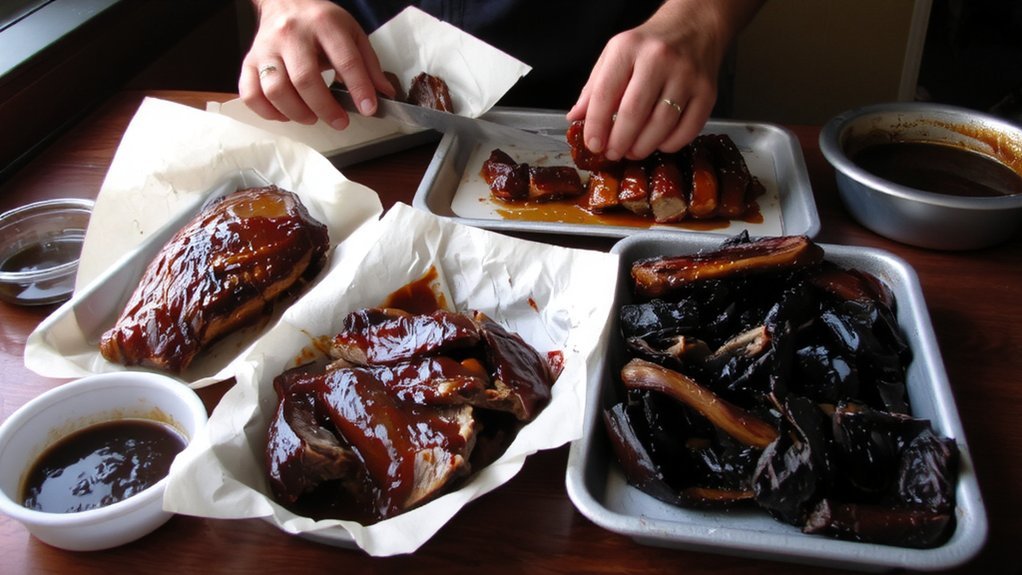
You walk into Kansas City barbecue and you’ll notice how smoke clings to shirts, sweet molasses glosses ribs, and peppery bark flakes under your fork. You’ll find Joe’s crisp, flakey bites, Gates’ balanced vinegary‑sweet pull, Arthur Bryant’s dense, blackened chew, and Q39’s modern, spice‑polished cuts. Each tells a different story of wood, sauce, and timing — and you’ll want to know why.
History and Roots of Kansas City Barbecue
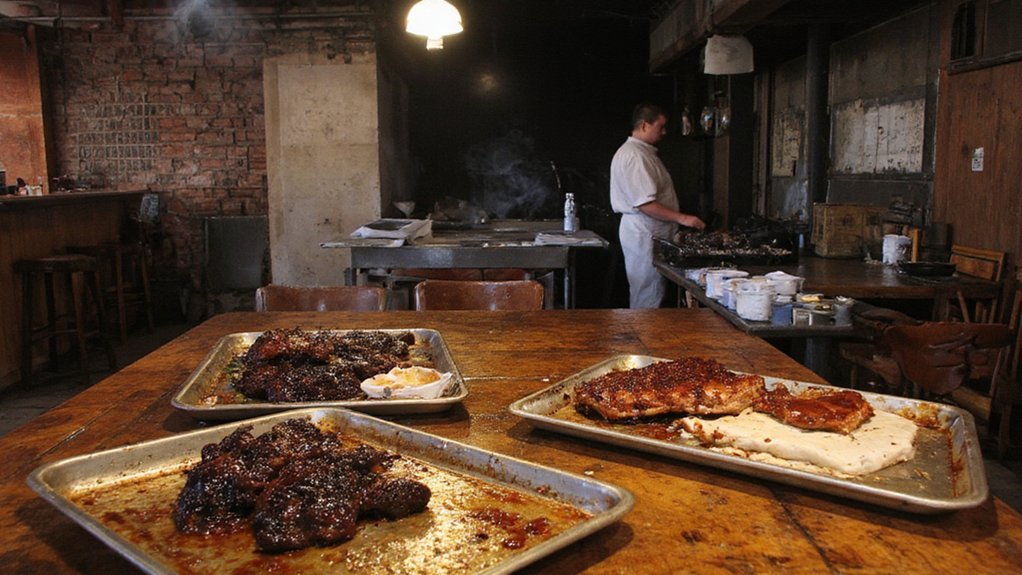
In the late 19th century, Kansas City’s barbecue scene coalesced where smoke, salt, and molasses met immigrant grills and Black pitmasters, and you can still taste that layered history in every bite.
In late 19th-century Kansas City, smoke, salt, and molasses met immigrant grills and Black pitmasters—history you taste
You trace African influences in rhythm of wood tending, in spice layering that echoes West African markets, and you imagine smoke curling like river mist over stockyards.
You compare early backyard pits to streamlined smokehouses and see Smokehouse evolution as practical innovation: wider pits, hotter coals, calibrated airflow.
You feel grease-slick ropes of meat, smell sweet and sour molasses tang against hickory, and notice how cooks adapted techniques from diverse communities.
You want forward-thinking twists rooted in tradition, so you prioritize technique over nostalgia and experiment with respectful reinvention and sustainable sourcing sustainably.
Signature Flavors and Must‑Try Dishes
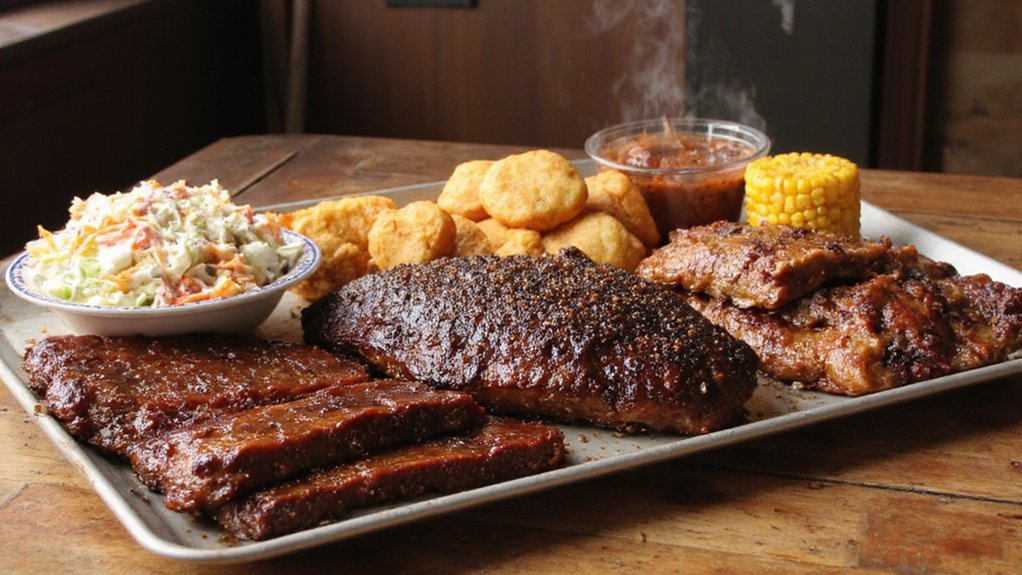
How do Kansas City flavors announce themselves?
You smell sweet smoke first, then taste a molasses-thick sweetness cut by tang and smoke; Burnt Ends deliver caramelized crust and tender interior, a textural crescendo.
You’ll explore Sauce Varieties from thin tangs to syrupy, spicy blends, each altering the same cut into new terrain.
- Burnt Ends: smoky, sticky, crisped edges—meat transformed into candy and ash.
- Brisket: long-smoked, moist center contrasted with peppery bark.
- Ribs: glaze-balanced, chew that yields to layered smoke.
- Sampling Sauces: compare vinegar-bright, tomato-forward, and experimental spice riffs.
You’re invited to taste contrasts, remix traditions, and imagine future riffs on classic profiles. Push boundaries by pairing unexpected aromatics, citrus acids, and smoke levels to reframe what barbecue can become today.
Deep Dives: Joe’s, Gates, Arthur Bryant’s, and Q39
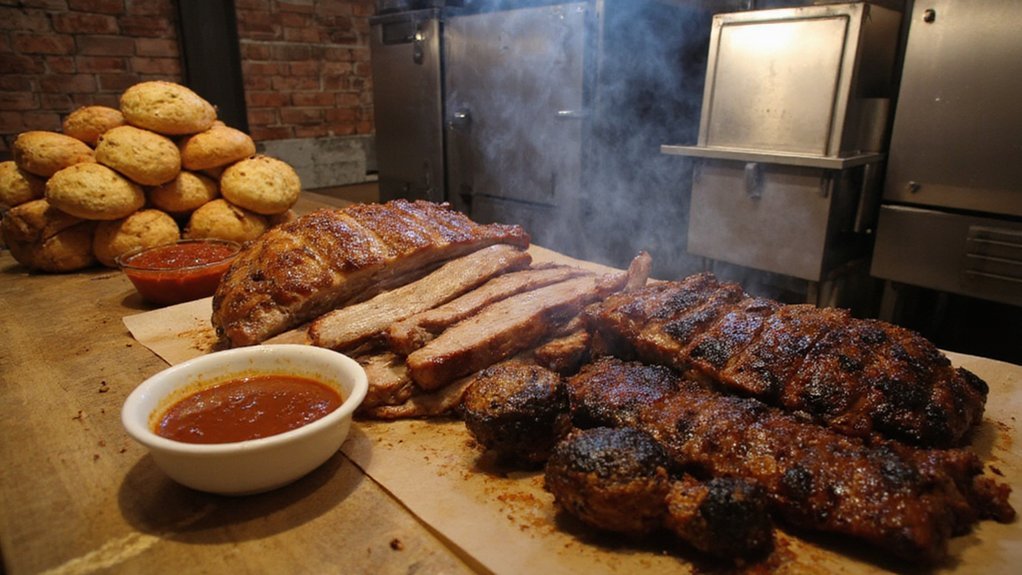
You’ll find those molasses-sweet smoke and peppery barks take on distinct personalities at Joe’s, Gates, Arthur Bryant’s, and Q39. You can taste Joe’s crisp, sauced exterior and charcoal whisper; Gates hits brighter, vinegary-sweet and instantly nostalgic; Arthur Bryant’s offers dense, blackened bark and anise notes; Q39 layers smoke with modern spice blends and glossy reductions.
Molasses-sweet smoke and peppery barks—Joe’s, Gates, Bryant’s, Q39, each with distinct savory signatures.
Compare textures—Joe’s flake, Gates’ peel-back bark, Bryant’s chew, Q39’s lacquered bite. Read Chef Profiles to see how leadership shapes technique and menu evolution.
Inspect Ingredient Sourcing: locally cured pork, heirloom spices, and wood choices reveal intent. You’ll appreciate how tradition and innovation converse in each bite, and how subtle adjustments—temperature, rub ratio, finishing syrup—define their signatures.
Study plating, smoke timing, and sauce viscosity for actionable inspiration and creative technique.
Planning Your Kansas City Barbecue Crawl
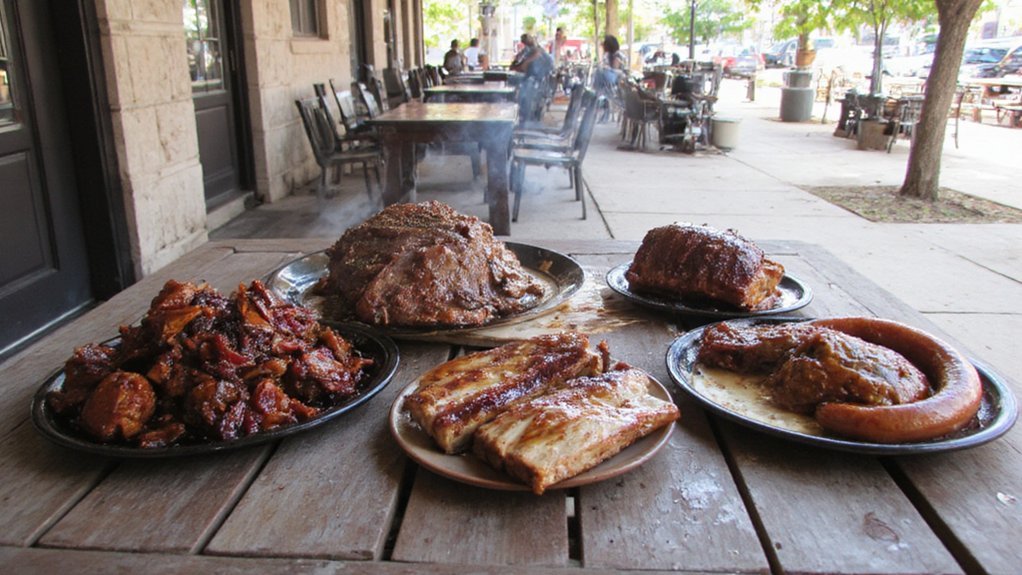
When you map your route across Kansas City’s barbecue landmarks, balance flavor contrasts and practical pacing so each stop lands distinct: Joe’s crisp, charcoal-whispered exterior will read light after Gates’ bright, vinegary-sweet slices, while Arthur Bryant’s dense, blackened bark begs slower chewing and Q39’s glossy, spice-layered cuts demand palate resets.
Use route planning that sequences textures and temperatures, and build a timing strategy around peak smoke windows and rest times.
Sample in small portions, rinse palate with sparkling water or dry crackers, and note how sauce viscosity shifts perception.
Prioritize sensory contrast over quantity, iterate adventurous pairings, and keep notes for future refinements.
- Start early to catch fresh smoke
- Alternate heavy and light plates
- Schedule palate resets between stops, intentionally
- Record temps, sauces, textures notes
Conclusion
You’ve tasted molasses‑licked smoke at Joe’s, felt Gates’ vinegary tang peel from tender ribs, wrestled Arthur Bryant’s dense, blackened chew, and savored Q39’s glossy, spice‑layered reductions. You can hear wood crackle, smell peppered bark, and watch sauces bead and run. Move between them to map textures and sweetness, compare smoke depth, and let each pit’s rhythm rewrite what Kansas City barbecue means to you. You’ll leave comparing residues, savor memories, and craving smoky, saucy bite.